Kitchen notes · a little help before you start
Maple Dijon Chicken and Vegetables
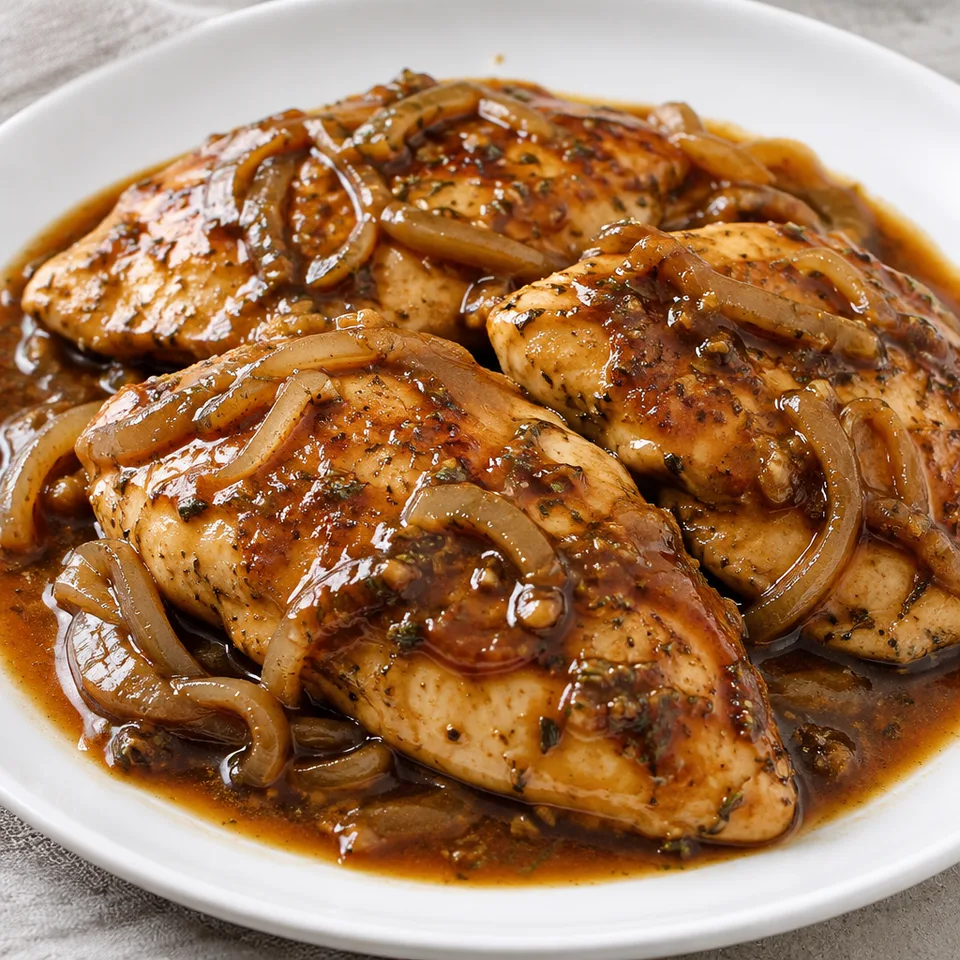
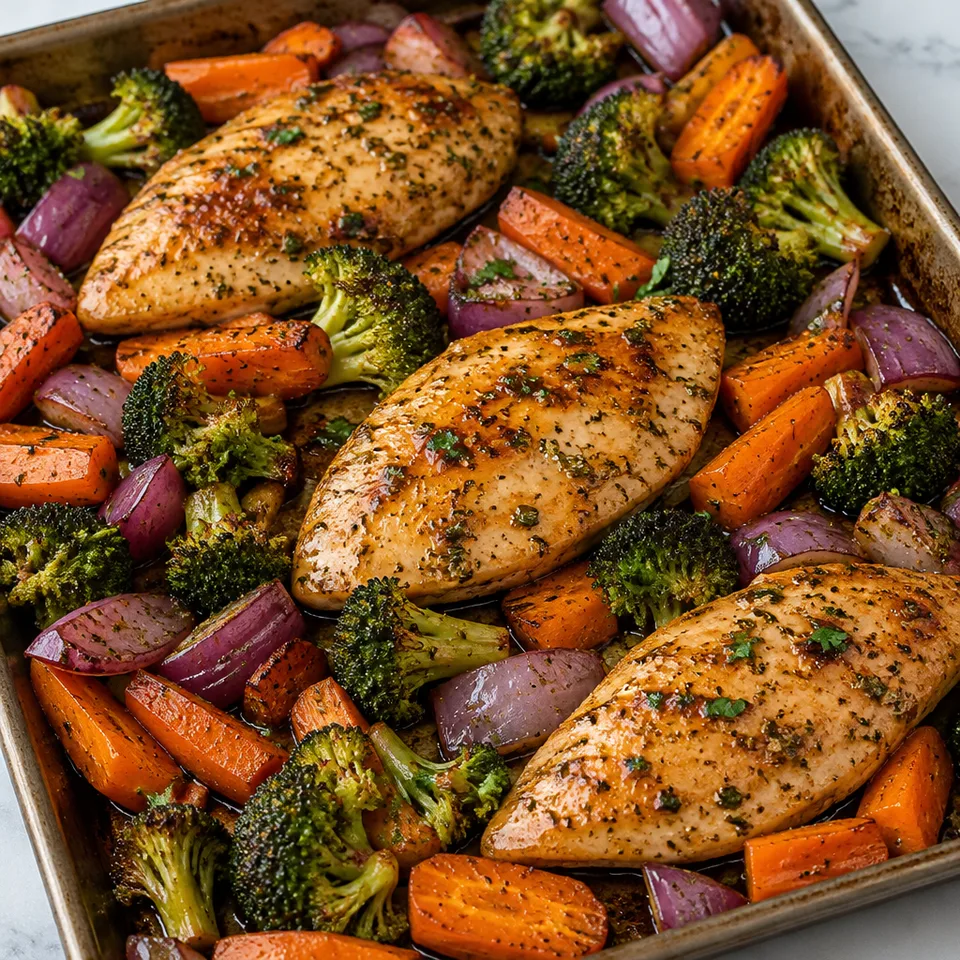
Maple and Dijon give this chicken dinner a tangy sweetness that suits the browned vegetables alongside it. Balsamic adds a deeper note to the chicken's coating. A plate with both chicken and a generous helping of vegetables lets those flavors meet in each forkful.
- Prep
- 15 min
- Cook
- 30 min
- Total
- 45 min
- Original yield
- Serves 4
- Ingredients
- 14 listed
Make it part of your week
Recipe categories & planning details
- Meal type
- Main course
- Primary protein
- Chicken
- Cuisine
- American
- Cooking method
- Roasting · Baked & roasted
- Preparation & total time
- Prep: 15 minutes or less · Total: 31–60 minutes
A few quick notes
1. Pound the chicken first
Getting the chicken breasts to an even 1/2-inch thickness helps them cook in the same window as the vegetables. It also makes brushing on the maple-Dijon mixture much easier.
2. Keep the vegetables spread out
After tossing the vegetables with the first drizzle of sauce, spread them into a single layer before the chicken goes on top. Crowding them makes browning harder, especially for the broccoli and onion.
3. Save sauce for the chicken
Only part of the maple-Dijon mixture goes on the vegetables. The reserved portion gets balsamic vinegar whisked in, then it’s brushed over the chicken before roasting.
Get to know the ingredients
Chicken thickness matters
Use boneless skinless breasts pounded to 1/2-inch thickness. That detail is worth following because the chicken roasts on top of the vegetables and still needs to reach 165 degrees F.
Cut the broccoli large
Use large-cut florets, about 1 1/4 inches wide, so they can handle the full roast without turning too soft. Smaller pieces may brown faster than the chicken cooks.
Add the balsamic later
The balsamic vinegar is not mixed into the first drizzle for the vegetables. It goes into the reserved sauce, which is brushed over the chicken for that tangy finish on top.
Let’s make it
Choose your servings, then check things off as you go.
Original recipe: Serves 4. Original quantities shown.
Check ingredients as you prepare them. These checks stay on this page.
How to make it
0 of 4 steps completeMake room for Maple Dijon Chicken and Vegetables
Review ingredients in your pantry before anything is added. Meal plans use your household size; grocery-only additions use the servings selected above.
The last little job
The last little job
Check the chicken for 165 degrees F, then move it to a plate and let it rest for a few minutes. If the vegetables need more color, slide them back into the oven briefly before adding parsley.
A little more help as you go
A spouted cup helps
The sauce is drizzled over the vegetables first, then brushed over the chicken after balsamic is added. A small measuring cup with a spout makes it easier to pour neatly without using extra tools.
Expect a little timing range
The roast time depends on the size of the chicken breasts. Start checking for doneness in the given window, and use the internal temperature rather than the clock alone.
A few questions you might have
Can I put all the sauce on at once?
Keep some back. The vegetables get about 3 tablespoons first, then balsamic vinegar is whisked into the reserved mixture and brushed onto the chicken.
Should the chicken go beside the vegetables or on top?
Put the pounded chicken breasts on top of the coated vegetables. That’s how the roasting step is written, and it keeps everything on one baking sheet.
What if the chicken is done but the vegetables look pale?
Take the chicken off the sheet, cover it, and let it rest. The vegetables can go back into the oven for a few more minutes to brown.
Do I need fresh parsley?
The parsley is the final sprinkle after roasting. It adds a fresh finish, so use it at the end rather than mixing it into the sauce before the pan goes in the oven.
How should leftovers be handled?
The recipe is best the day it’s made, but leftovers may be refrigerated for up to three days. Reheat the vegetables in a 350 degree F oven; chicken breasts can dry out when reheated.
Any more cooking tips?
TO STORE : This recipe is best enjoyed the day it’s prepared. However, leftovers may be stored in the fridge for up to three days. TO REHEAT : For best results, warm the vegetables to crisp them back up in a 350 degree F oven. I found that reheating chicken breasts tends to dry them out. If you must, do so in a pan with a bit of water for extra moisture. Or enjoy the chicken breasts at room temperature atop greens for a quick and delicious salad.
Storage & reheating safety
For cooked, perishable leftovers, refrigerate within 2 hours (1 hour above 90°F), using shallow containers for prompt cooling. Keep the refrigerator at 40°F or below, use refrigerated leftovers within 3–4 days, and reheat hot leftovers to 165°F, checked with a food thermometer. Follow any shorter package limit.
These are general safety limits, not a tested storage or freezing recommendation for this particular dish. USDA leftovers guidance · Safe cooking temperatures
Recipe source: wellplated.com. Ingredient names and quantities may be adapted for the pantry.
Preparation notes follow the recipe shown here.