Kitchen notes · a little help before you start
Maple Balsamic Chicken
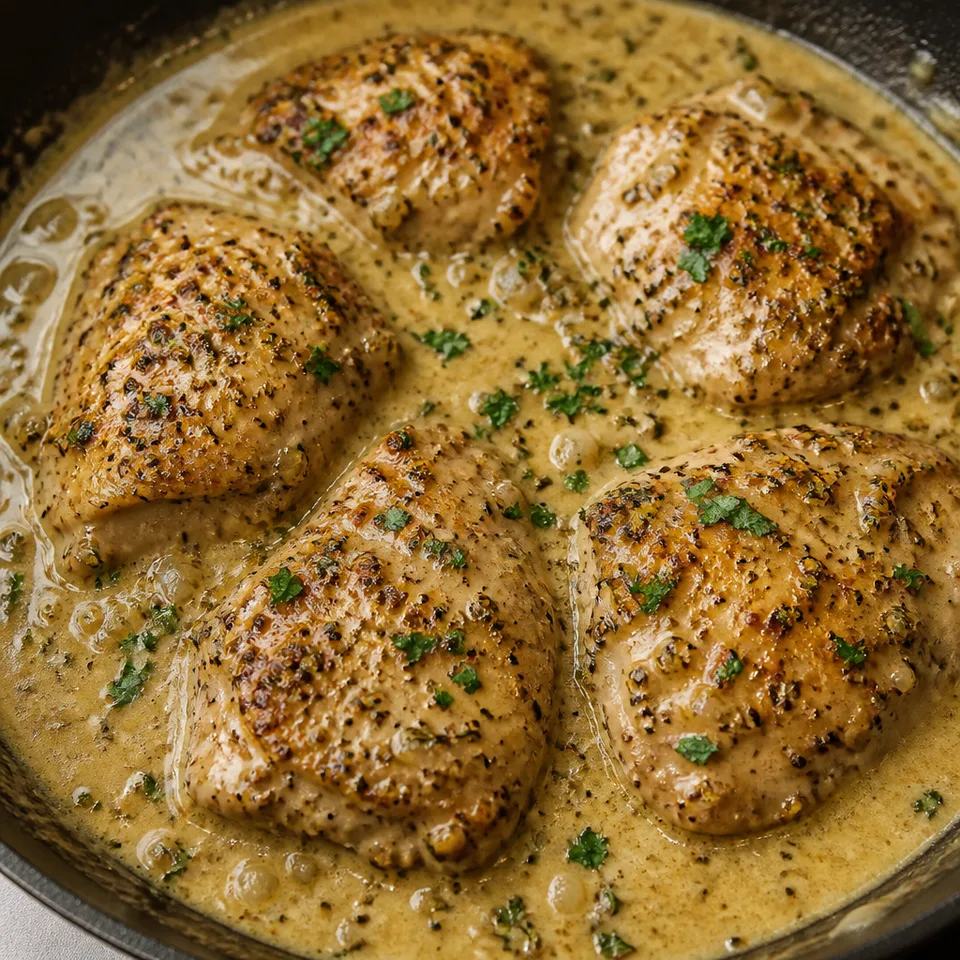
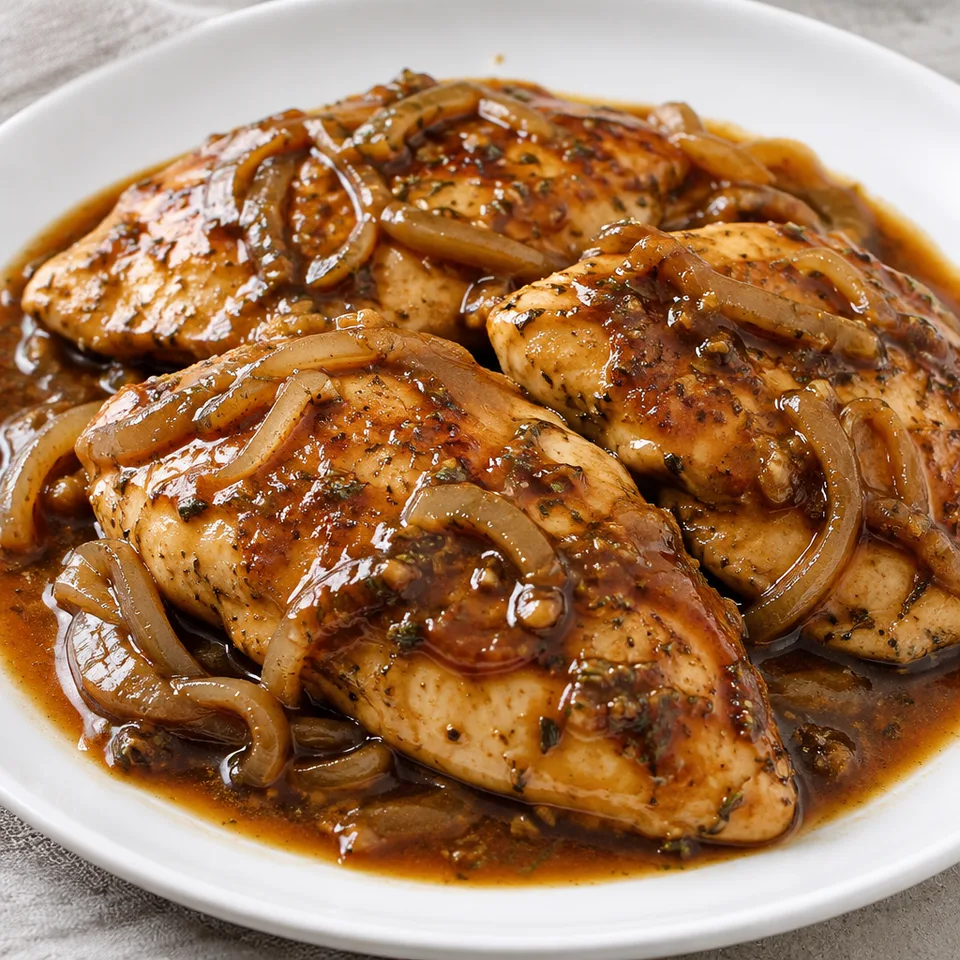
Maple and balsamic make a glossy sauce with a sweet, tangy bite that suits golden chicken. Soft onion settles around the pieces, catching the sauce alongside them. It's the sort of plate that encourages you to save a little sauce for your last forkful.
- Prep
- 5 min
- Cook
- 20 min
- Total
- 25 min
- Original yield
- Serves 4
- Ingredients
- 11 listed
Make it part of your week
Recipe categories & planning details
- Meal type
- Main course
- Primary protein
- Chicken
- Cuisine
- American
- Preparation & total time
- Prep: 15 minutes or less · Total: 30 minutes or less
A few quick notes
1. Pound the chicken thin
The chicken is cooked quickly in the skillet, so the pieces need to be thin and fairly even. That helps them brown and cook through in the same short window.
2. Keep the sauce at a low boil
After the broth, vinegar, maple syrup and Dijon go in, let the sauce bubble gently until it thickens a bit. You’re looking for glossy and syrupy, not dry.
3. Cover the chicken while it waits
Once the chicken is cooked, move it to a plate and cover it. It only sits while the onion cooks and the sauce reduces, but covering keeps it warm for the final nestle-back-in step.
Get to know the ingredients
Chicken breasts
Use boneless, skinless chicken breasts that have been pounded thin and cut into serving-size pieces. The thin pieces match the quick skillet timing and give more surface area for browning and sauce.
Thyme options
Fresh thyme and dried thyme both work here, but the amounts are different. Use the fresh amount listed, or the smaller dried amount noted in the ingredient line.
Pure maple syrup
The sauce only uses a small spoonful of pure maple syrup. It’s there to round out the balsamic vinegar and Dijon, so measure it rather than letting the sauce turn overly sweet.
Let’s make it
Choose your servings, then check things off as you go.
Original recipe: Serves 4. Original quantities shown.
Check ingredients as you prepare them. These checks stay on this page.
How to make it
0 of 2 steps completeMake room for Maple Balsamic Chicken
Review ingredients in your pantry before anything is added. Meal plans use your household size; grocery-only additions use the servings selected above.
The last little job
The last little job
Take the skillet off the heat before the chicken goes back in. Nestle the cooked pieces into the syrupy sauce, spoon a little over the top, and serve while everything is still warm.
A little more help as you go
Season in two passes
Season the first side of the chicken when it goes into the pan, then season the second side after flipping. That gets the salt, pepper and thyme onto both sides as it cooks.
Use the same skillet for the sauce
Don’t wipe out the pan after the chicken comes out. The onion, garlic, broth and vinegar go into that same skillet, which is where the sauce comes together.
A few questions you might have
How do I know when the chicken is ready to come out of the skillet?
It should be browned and completely cooked through after cooking on both sides. Since the pieces are pounded thin, the timing is short, so don’t walk too far away from the pan.
Should the onion get deeply browned?
No, just lightly browned. The onion and garlic only cook for a minute or two before the liquids go in, so keep them moving and don’t let the garlic scorch.
What should the sauce look like before I add the chicken back?
It should have reduced a bit and look syrupy after a few minutes at a low boil. It won’t be a huge amount of sauce, but it should be glossy enough to spoon over the chicken.
Do I simmer the chicken in the sauce to finish cooking it?
No. The chicken is already cooked before it leaves the skillet. At the end, it just goes back into the sauce so it can be coated and served.
Can I use dried thyme instead of fresh?
Yes. Use the dried thyme amount listed in the ingredient line, then add it with the salt and pepper as the chicken cooks.
Storage & reheating safety
For cooked, perishable leftovers, refrigerate within 2 hours (1 hour above 90°F), using shallow containers for prompt cooling. Keep the refrigerator at 40°F or below, use refrigerated leftovers within 3–4 days, and reheat hot leftovers to 165°F, checked with a food thermometer. Follow any shorter package limit.
These are general safety limits, not a tested storage or freezing recommendation for this particular dish. USDA leftovers guidance · Safe cooking temperatures
Recipe source: fromvalerieskitchen.com. Ingredient names and quantities may be adapted for the pantry.
Preparation notes follow the recipe shown here.