Kitchen notes · a little help before you start
Slow Cooker Beef Stew
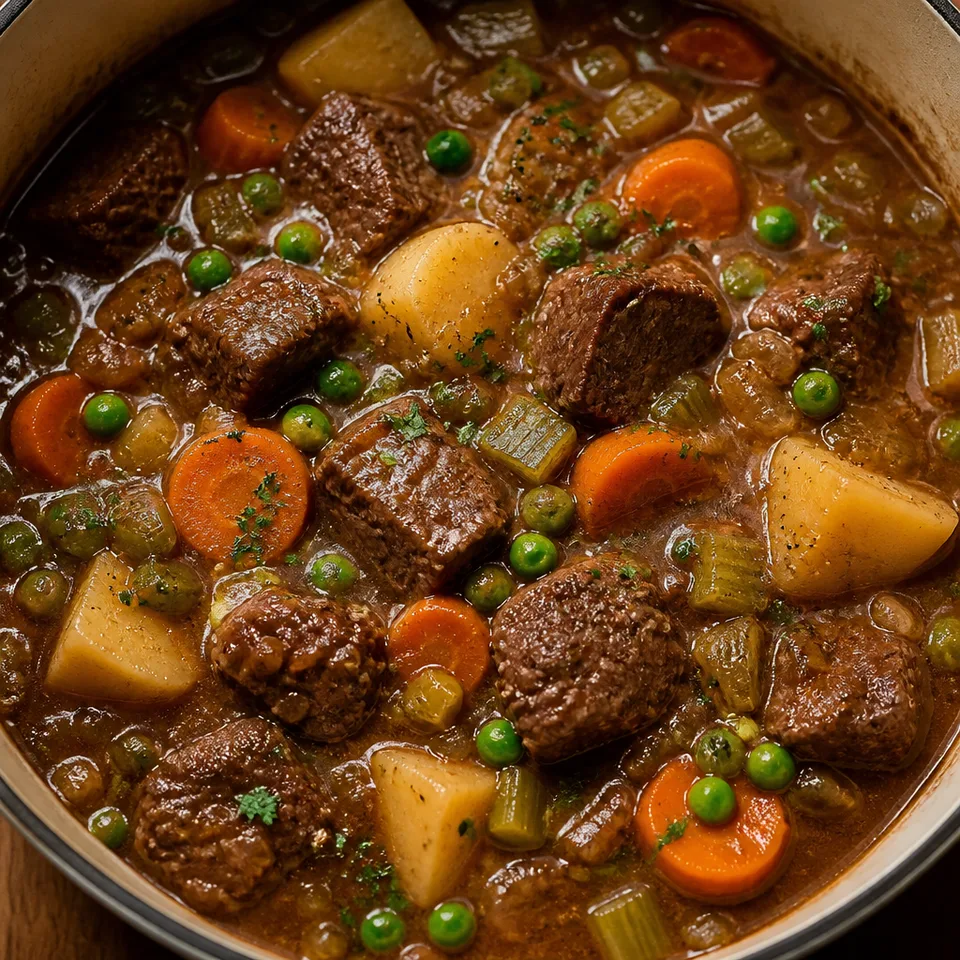
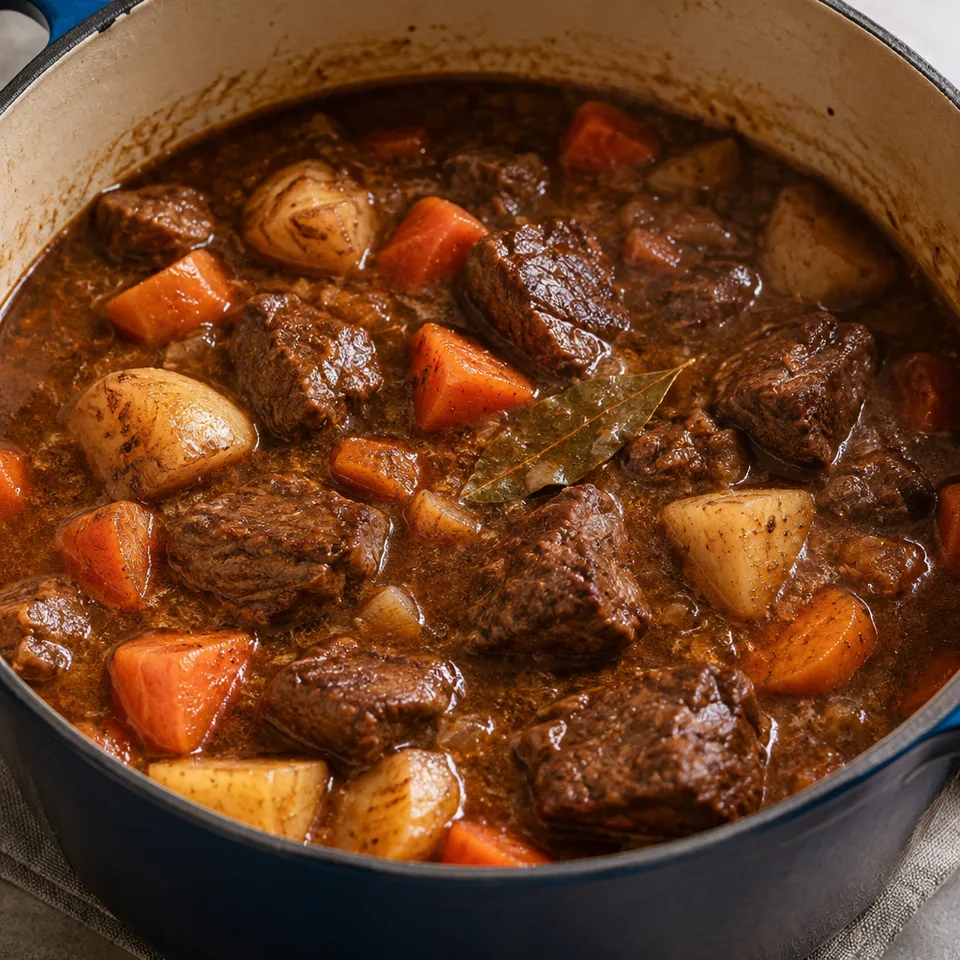
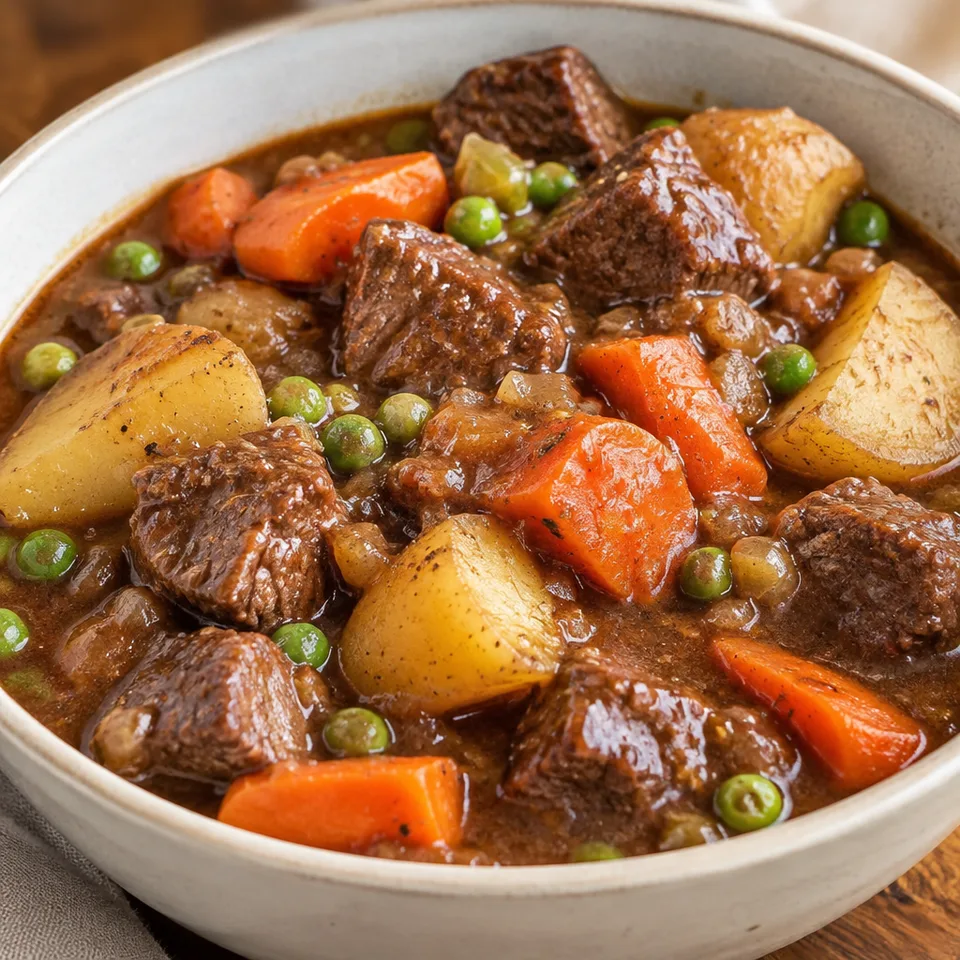
Beef stew is a welcome meal when you want tender potatoes and carrots in a rich, savory broth. This one has wine in the background and little green peas among the beef. A spoonful with some of everything makes a satisfying place to begin.
- Prep
- 20 min
- Cook
- 240 min
- Total
- 260 min
- Original yield
- Serves 6
- Ingredients
- 21 listed
Make it part of your week
Recipe categories & planning details
- Meal type
- Main course
- Cuisine
- American
- Cooking method
- Slow cooker
- Preparation & total time
- Prep: 16–30 minutes · Total: over 60 minutes
- Dish type
- Soups · Soups & stews · Stews
A few quick notes
1. Brown in batches
Give the beef room in the skillet so it browns instead of steaming. A quick sear on each side is enough here, then it can go straight into the slow cooker.
2. Save the browned bits
After the onions and garlic cook, use a splash of wine to loosen the browned bits from the pan. They carry a lot of the beefy flavor into the stew.
3. Keep the peas for the end
The peas only need the last stretch of cooking. Add them near the end so they warm through without spending hours in the slow cooker.
Get to know the ingredients
Stew meat
Choose chuck roast if you are picking the cut yourself. Cut it into one-inch cubes and trim away large pieces of fat; marbling through the meat is fine.
Red wine
Cabernet sauvignon or merlot both work here. The wine is used to pick up the browned bits in the skillet before everything moves into the slow cooker.
Baby Yukon gold potatoes
Halve or quarter the potatoes before they go in. They're ready when the vegetables have softened and the potatoes are fork tender.
Let’s make it
Choose your servings, then check things off as you go.
Original recipe: Serves 6. Original quantities shown.
Check ingredients as you prepare them. These checks stay on this page.
How to make it
0 of 9 steps completeMake room for Slow Cooker Beef Stew
Review ingredients in your pantry before anything is added. Meal plans use your household size; grocery-only additions use the servings selected above.
The last little job
The last little job
Once the heat is off, swirl in the cold butter for a smoother finish. If you're using Gravy Master, add just a few drops at the end for a darker color.
A little more help as you go
Thickening is optional
If you want a thicker stew, stir together cold water and cornstarch first, then add it slowly. The stew will keep thickening a bit as it stands.
Low or high works
Use low if you want the longer, gentler cook. High is the shorter route, and either way you're looking for softened vegetables and fork-tender potatoes before finishing.
A few questions you might have
Do I need to cook the beef all the way through when searing it?
No. The skillet step is just for browning the outside. The beef finishes cooking in the slow cooker with the rest of the stew.
Why toss the beef with flour before browning?
The flour goes on after the seasonings and before searing, so it coats the meat as it browns. It also goes into the slow cooker with the beef.
Can I add everything to the slow cooker at once?
Hold back the peas, the optional cornstarch mixture, and the last bit of cold butter. Those are added at the end so the peas don't overcook and the finish stays smooth.
What should I remove before serving?
Take out the bay leaves and the rosemary stem after the peas go in near the end of cooking.
What if I don't want to use wine?
You can use an equal amount of beef broth or red grape juice instead of wine, plus red wine vinegar. The vinegar adds the acidity used here for tenderizing.
Any more cooking tips?
Best cuts of Beef for Stew Chuck roasts -The best option. Aim for nicely marbled meat. It is preferred over other cuts because of the connective tissue, which makes it more tender. (Bonus: It's also a less expensive cut than other types.) Rump roasts Bottom rounds You can also season and sear a whole roast for about 8 minutes total, and then cut it into cubes. This results in less moisture loss, but there is also less surface area to season and add a seared texture to. Red Wine Substitute An equal amount of beef broth or red grape juice may be used instead of wine, along with 2 Tablespoons of Red Wine Vinegar. The acidity helps to break down and tenderize the meat. For an Irish twist on this recipe, use 1 cup of extra stout Guinness instead of wine. (And try my Corned Beef and Cabbage recipe next!) Storage Store in an airtight container and refrigerate for up to 3 days or freeze for up to 3 months. Stove Top Method: Follow steps 1-3. After searing the meat, add the 1/2 cup wine (don’t use the full 1 cup) and let it bubble and reduce over medium heat until reduced by half (about 5 minutes). Resume with step 4. Then bring to a boil, and reduce to a simmer. Add the seared beef along with any juices from the plate. Cover partially and let it bubble very gently over medium-low heat for 1-2 hours, or until the potatoes are fork tender. This will cook the meat slowly, keeping it tender. It will also concentrate the broth. Stir it occasionally as it cooks and decrease heat if it starts to boil. Add the peas during the last 10-15 minutes of cooking. From there, you can thicken with cornstarch if desired and/or swirl in cold butter as outlined in the recipe. Enjoy! Optional ingredient addition: Celery, green beans, parsnips, and sweet potatoes. This recipe is in The Cozy Cookbook on page 47 ! Nutritional information is an estimate and is per serving. This recipe makes 6 servings.
Storage & reheating safety
For cooked, perishable leftovers, refrigerate within 2 hours (1 hour above 90°F), using shallow containers for prompt cooling. Keep the refrigerator at 40°F or below, use refrigerated leftovers within 3–4 days, and reheat hot leftovers to 165°F, checked with a food thermometer. Follow any shorter package limit.
These are general safety limits, not a tested storage or freezing recommendation for this particular dish. USDA leftovers guidance · Safe cooking temperatures
Recipe source: thecozycook.com. Ingredient names and quantities may be adapted for the pantry.
Preparation notes follow the recipe shown here.