Kitchen notes · a little help before you start
Beef Barley Soup
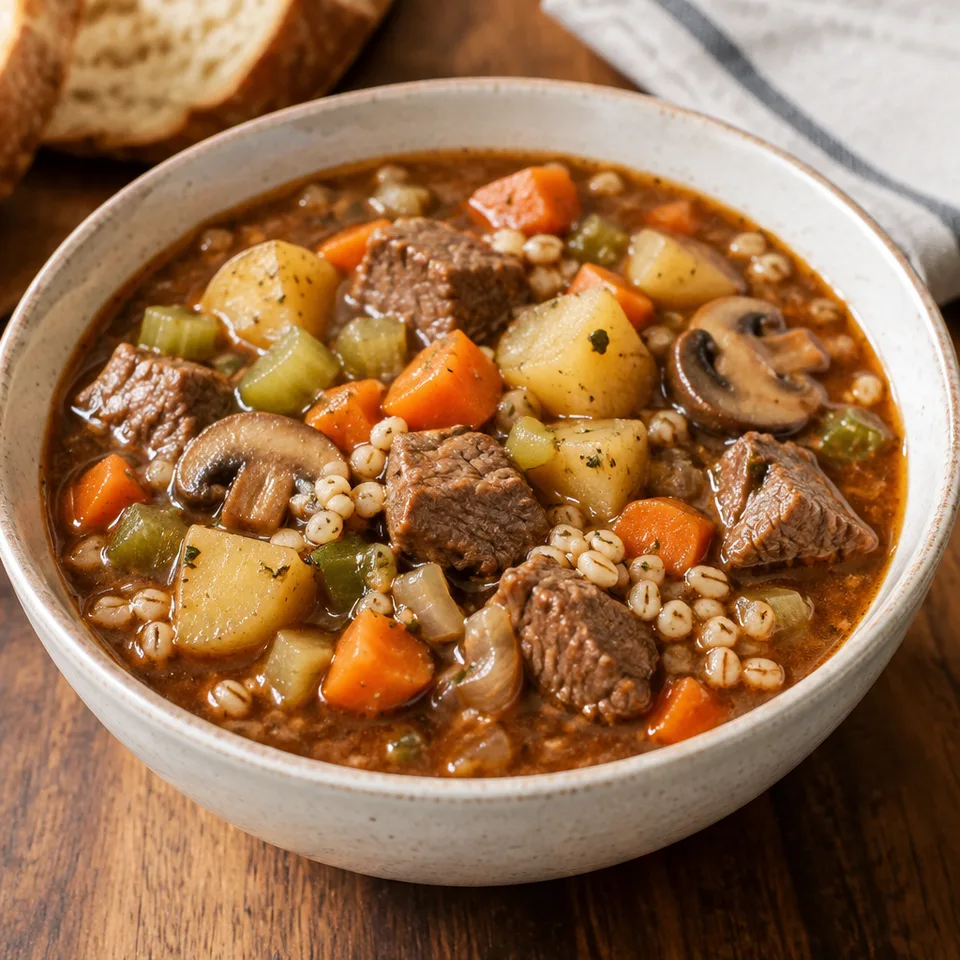
Beef barley soup has a good, substantial feel to it, with chewy grains and tender bites that give your spoon something to find. This is a bowl to sit down with properly.
- Prep
- 20 min
- Cook
- 80 min
- Total
- 100 min
- Original yield
- Serves 8
- Ingredients
- 27 listed
Make it part of your week
Recipe categories & planning details
- Meal type
- Main course
- Primary protein
- Beef
- Cuisine
- American
- Preparation & total time
- Prep: 16–30 minutes · Total: over 60 minutes
- Dish type
- Soups · Soups & stews
A few quick notes
1. Brown the beef in roomy batches
Give the beef space in the pot and keep the sear quick. The goal is browned edges, not cooked-through beef. It finishes gently in the soup, where it has time to turn tender.
2. Keep the simmer gentle
Once the beef goes back in, keep the soup at a calm simmer and don't let it boil. The timing can vary by cut, so use tenderness as your cue more than the clock.
3. Cook the barley separately
Pearl barley soaks up broth fast, even after cooking. Simmer it in its own saucepan, drain it, then add it to the bowls before ladling the soup over top.
Get to know the ingredients
Best beef cuts for the pot
Chuck roast is the recommended pick because it has good flavor and becomes tender as it simmers. Sirloin can work too and usually needs less time, while leaner cuts may need longer.
Why baby bella mushrooms work well
Baby bella mushrooms hold up nicely in the soup, especially when they're sliced thickly. They cook down with the vegetables before the broth goes in, so they have a head start on flavor and texture.
About the broths
Most of the liquid is beef broth, with a little chicken broth for extra dimension. If you'd rather keep it all beef, you can use more beef broth in place of the chicken broth.
Let’s make it
Choose your servings, then check things off as you go.
Original recipe: Serves 8. Original quantities shown.
Check ingredients as you prepare them. These checks stay on this page.
How to make it
0 of 10 steps completeMake room for Beef Barley Soup
Review ingredients in your pantry before anything is added. Meal plans use your household size; grocery-only additions use the servings selected above.
The last little job
The last little job
Fish out the bay leaf, then build each bowl with cooked barley first and soup over the top. That small step keeps the broth from disappearing into the barley before you sit down to eat.
A little more help as you go
Scrape up the browned bits
After the tomato paste and garlic cook, the wine loosens all the browned bits from the pot. Use the spatula to work along the bottom and sides while it bubbles and reduces.
Potatoes go in later
The potatoes join after the beef has already had time to start tenderizing. That way they can become fork tender without spending the whole simmer in the pot.
A few questions you might have
Should the beef be fully cooked after searing?
No. Sear it just long enough to brown the outside, about 45 seconds per side. The middle should still be uncooked when it comes out of the pot.
Can I skip the wine?
Yes, use additional beef broth instead. Chicken broth adds a pleasant flavor contrast if you'd like to keep it.
Why add the barley to bowls instead of the soup pot?
Barley absorbs liquid as it sits. Adding it to each bowl keeps the soup brothy and lets you decide how much barley you want in each serving.
How do I know when the beef is ready?
Use the texture of the beef as your guide. The recipe gives a simmering window, but the exact time depends on the cut and the size of the cubes.
What should I do with the juices on the beef plate?
Pour them back into the pot with the seared beef. Those juices go into the soup before the longer simmer, so none of that beef flavor gets left behind.
Any more cooking tips?
Pro Tips: Beef: Chuck roast is my top choice for this recipe. It has great flavor and becomes increasingly tender as it cooks. Sirloin is another good option and requires less cooking time, although it is more expensive and doesn't need as much time to become tender. Rump roast and bottom round may also be used, although these leaner, tougher cuts may require additional simmering time to become tender. Packaged stew meat will also work, although I prefer to purchase a whole roast and cut it myself so that I can choose the cut and ensure the pieces are evenly sized. Stew meat isn't always labeled with the specific cut of beef that was used. The amount of time needed for the beef to become tender will vary based on the cut and the size of the cubes. Let the texture of the beef be your guide rather than relying strictly on cooking time. Wine: Cabernet Sauvignon is the best dry red wine choice for this recipe, followed by merlot, then pinot noir. If you don't cook with wine, additional beef broth may be used. Chicken broth would add a nice flavor contrast as well! Mushrooms: Baby Bella (Cremini) mushrooms are best for this recipe, they hold up well after being simmered in the soup. Aim for thickly sliced mushrooms. White Button mushrooms may also be used if needed. Potatoes: I love using mini yellow potatoes for this recipe. Yukon Golds are another great option, while red potatoes hold their shape especially well in soups and stews due to their lower starch content. Russet potatoes may also be used, although they’re starchier and more prone to becoming crumbly as they cook. Broth: Using a little chicken broth along with the beef broth adds a little more dimension to the soup as opposed to using all beef broth, but you can use all beef if preferred. Barley: Barley absorbs liquid like a sponge, especially as it continues to sit. In this recipe, we cook it separately and add it directly to serving bowls to ensure it doesn't soak up all the broth. Leftover soup/barley should be kept separate as well. For more flavorful barley, salt the cooking water, add a bouillon cube, or cook it in beef or chicken broth instead of water. Storage: Store in an airtight container and refrigerate for up to 3–4 days or freeze for up to 3 months. Store the cooked barley separately from the soup, as it will continue to absorb the broth during storage. Add the barley directly to individual serving bowls when reheating. Reheating: Reheat gently on the stovetop or in the microwave until heated through. Slow Cooker Method: *Note: Due to condensation/lack of evaporation, consider preparing this with 5 cups of beef broth instead of 6. Either way works though! Prepare and sear the beef as outlined in the recipe, then transfer it to the slow cooker. Melt the butter in the same skillet. Add the onions, carrots, and celery and cook for 5 minutes. Add the mushrooms and cook for 4–5 more minutes. Add the garlic and tomato paste and cook for 2 minutes. Add the wine and use a silicone spatula to “clean” the bottom and sides of the skillet. Let it bubble gently until reduced by half, about 4 minutes. Transfer to the slow cooker. A dd the Worcestershire sauce, Dijon mustard, thyme, oregano, parsley, beef broth, chicken broth, bouillon cube, bay leaf, and potatoes. Stir to combine. Cook on low for 7 ½ to 8 hours or high for 3½ to 4 hours, until the vegetables are softened and the potatoes are fork tender. Cook the barley in 2 cups of water or broth according to package instructions until tender, about 45 minutes. Drain excess liquid and set aside. Add the desired amount of cooked barley to serving bowls and ladle the soup on top. Store leftover barley separately from the soup. Nutritional information is an estimate and is per serving. There are 8 servings in this recipe, each is about 1 ¾ cups. The entire batch makes 14 cups total.
Storage & reheating safety
For cooked, perishable leftovers, refrigerate within 2 hours (1 hour above 90°F), using shallow containers for prompt cooling. Keep the refrigerator at 40°F or below, use refrigerated leftovers within 3–4 days, and reheat hot leftovers to 165°F, checked with a food thermometer. Follow any shorter package limit.
These are general safety limits, not a tested storage or freezing recommendation for this particular dish. USDA leftovers guidance · Safe cooking temperatures
Recipe source: thecozycook.com. Ingredient names and quantities may be adapted for the pantry.
Preparation notes follow the recipe shown here.