Kitchen notes · a little help before you start
Classic Beef Stew
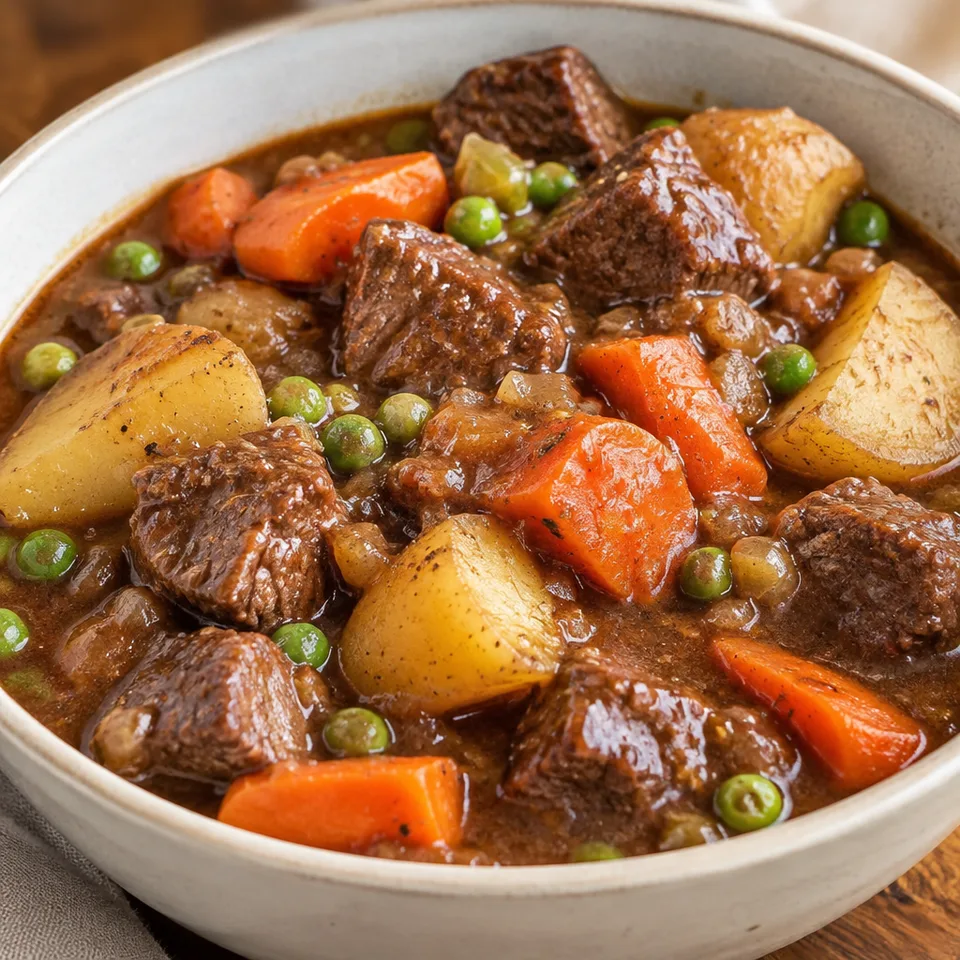
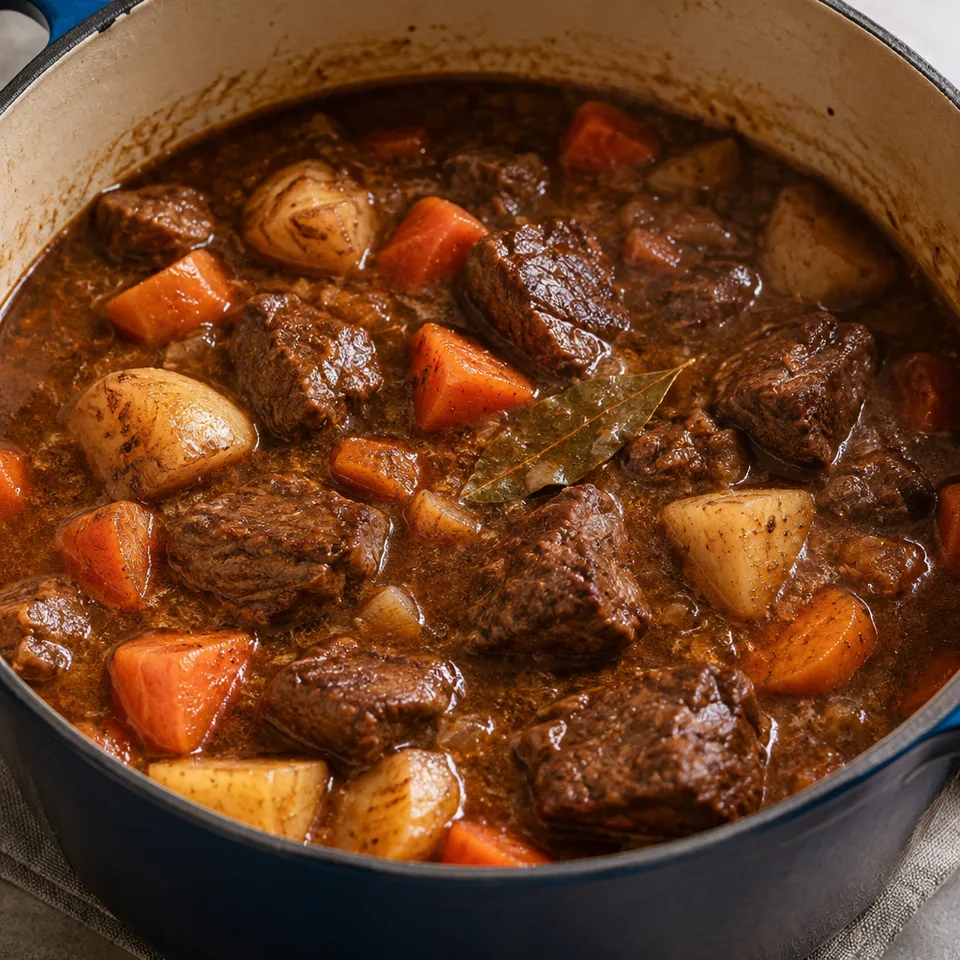
Tender beef and soft vegetables fill a rich broth in this familiar stew. The potatoes catch the savory cooking juices, while thyme and a little Worcestershire sauce deepen the flavor that gathers around each generous chunk of meat.
- Prep
- 20 min
- Cook
- 180 min
- Total
- 200 min
- Original yield
- Serves 8
- Ingredients
- 15 listed
Make it part of your week
Recipe categories & planning details
- Meal type
- Main course
- Cuisine
- American
- Preparation & total time
- Prep: 16–30 minutes · Total: over 60 minutes
- Dish type
- Soups · Soups & stews · Stews
A few quick notes
1. Brown in batches
Give the beef room in the pot so it can brown on all sides instead of crowding together. Those browned bits are part of what makes the stew taste deep and savory later.
2. Use the oven time
Once the beef is back in and the pot is covered, the stew cooks low and steady in the oven for 3 hours. That long covered cook is where the chuck roast has time to soften.
3. Keep the vegetables chunky
The carrots are cut into 2 inch chunks, and the potatoes go in before the long oven cook. Bigger pieces make sense here because they need to hold up in the stew.
Get to know the ingredients
Chuck roast is the right cut here
Chuck roast suits this stew because it goes through a long covered cook after browning. Cut it into 2-inch chunks as listed so the pieces feel substantial in the finished bowl.
Flour goes on the beef first
Season the beef, then dredge it in flour before browning. That coating is part of the recipe from the start, so don’t wait and add the flour later to the pot.
Tomato paste gets stirred into the broth
The tomato paste goes in with the broth, bay leaf, thyme and Worcestershire sauce. Stir well at that point so it blends into the liquid before the beef returns to the pot.
Let’s make it
Choose your servings, then check things off as you go.
Original recipe: Serves 8. Original quantities shown.
Check ingredients as you prepare them. These checks stay on this page.
How to make it
0 of 4 steps completeMake room for Classic Beef Stew
Review ingredients in your pantry before anything is added. Meal plans use your household size; grocery-only additions use the servings selected above.
The last little job
Pull out the bay leaf
Before serving, fish out the bay leaf. It’s there to flavor the stew during the oven cook, but it isn’t something you want to leave in anyone’s bowl.
A little more help as you go
A little caramelizing helps
After the beef comes out, the onions, garlic and carrots cook for a few minutes until slightly caramelized. Don’t skip past that too quickly, since it builds flavor before the liquid goes in.
Stir before the beef goes back
Add the potatoes, broth, tomato paste, bay leaf, thyme and Worcestershire, then stir to combine before returning the beef. That helps the paste and seasonings spread through the stew.
A few questions you might have
Do I need to brown every side of the beef?
Yes, brown the beef on all sides in batches. It takes a few minutes per batch, and that step gives the stew a better base before the vegetables and liquid go in.
Can I put the potatoes in later?
Follow the recipe and add the potatoes with the broth and seasonings before the oven cook. They’re meant to simmer along with the beef in the covered pot.
Why take the beef out after browning?
Removing the beef gives you space to cook the onions, garlic and carrots until they’re slightly caramelized. Then the potatoes and liquid go in, and the beef returns for the long oven cook.
Should the pot be covered in the oven?
Yes. Add the beef back to the pot, cover it, and cook it in the oven for 3 hours. The covered cook is part of how the stew braises.
When does the Worcestershire sauce go in?
Add it with the broth, tomato paste, bay leaf and thyme, then stir everything together before the beef goes back into the pot.
Storage & reheating safety
For cooked, perishable leftovers, refrigerate within 2 hours (1 hour above 90°F), using shallow containers for prompt cooling. Keep the refrigerator at 40°F or below, use refrigerated leftovers within 3–4 days, and reheat hot leftovers to 165°F, checked with a food thermometer. Follow any shorter package limit.
These are general safety limits, not a tested storage or freezing recommendation for this particular dish. USDA leftovers guidance · Safe cooking temperatures
Recipe source: dinnerthendessert.com. Ingredient names and quantities may be adapted for the pantry.
Preparation notes follow the recipe shown here.