Kitchen notes · a little help before you start
Creole Shrimp Étouffée
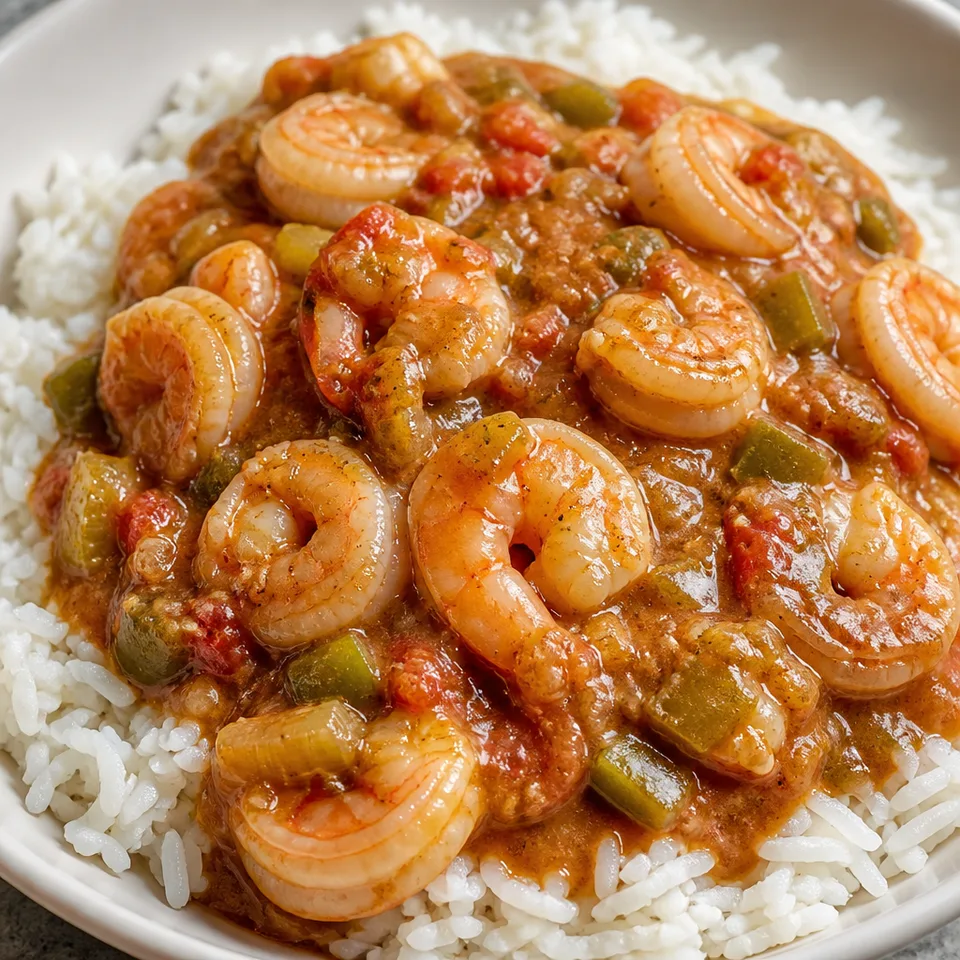
Shrimp etouffee gives you a deep, savory sauce to spoon over a bowl of white rice. The golden roux brings a warm flavor beneath the tomato and Cajun seasoning. Add the optional fresh garnish and enjoy the shrimp with plenty of sauce in each bite.
- Prep
- 15 min
- Cook
- 40 min
- Total
- 55 min
- Original yield
- Serves 8
- Ingredients
- 15 listed
Make it part of your week
Recipe categories & planning details
- Meal type
- Main course
- Primary protein
- Seafood
- Cuisine
- American
- Preparation & total time
- Prep: 15 minutes or less · Total: 31–60 minutes
A few quick notes
1. Refrigerate prepared shrimp
Peel, devein and remove tails, then keep the covered shrimp chilled while making the sauce base.
2. Stir the roux constantly
Cook butter and flour over medium heat, stirring until golden brown and keeping it from burning.
3. Soften vegetables in the roux
Stir onion, celery and bell pepper through the roux and cook until softened before adding garlic.
Get to know the ingredients
Large shrimp
Prepare large shrimp by removing shells, veins and tails; save shells only if making the optional homemade stock.
Seeded green pepper
Dice the green bell pepper after removing seeds, ready to join the onion and celery in the roux.
Cooked white rice
Have white rice cooked for serving beneath the finished shrimp and sauce; it doesn't cook in the etouffee pot.
Let’s make it
Choose your servings, then check things off as you go.
Original recipe: Serves 8. Original quantities shown.
Check ingredients as you prepare them. These checks stay on this page.
How to make it
0 of 7 steps completeMake room for Creole Shrimp Étouffée
Review ingredients in your pantry before anything is added. Meal plans use your household size; grocery-only additions use the servings selected above.
The last little job
Spoon over rice
After the covered shrimp cooking stage, serve over cooked white rice and add parsley or sliced green onion if desired.
A little more help as you go
Simmer tomatoes before shrimp
Combine broth, clam juice, sauces, seasoning and crushed tomatoes for the first simmer before the shrimp go in.
Homemade stock is an option
You can make stock from the shrimp shells. Simmer them with vegetable scraps, then strain the stock before using it in the recipe.
A few questions you might have
Is the pot covered once shrimp are added?
Yes, add shrimp to the simmered sauce base, then cover for the final cooking period given.
Does the garlic cook with onion from the beginning?
Let onion, celery and bell pepper soften in the roux first, then stir in the minced garlic.
When do I add the hot sauce?
Stir it in with Cajun seasoning, salt and Worcestershire after adding broth and clam juice, before the tomatoes simmer.
Can I save the shrimp shells?
Yes, save them if you'd like to make the optional homemade shrimp stock.
What color should the roux reach?
Cook it to golden brown while stirring constantly over medium heat before adding the prepared vegetables.
Any more cooking tips?
Homemade Shrimp Stock: if desired make your own shrimp stock to use in this recipe! Make sure you purchase Unpeeled shrimp. Shells from peeling shrimp Scraps from celery, onion, and bell pepper lemon wedge 2 quarts water Bring this to a boil, cover and let simmer for 45 mins to an hour. Strain out the veggies and shells. Use this broth in the recipe above.
Storage & reheating safety
For cooked, perishable leftovers, refrigerate within 2 hours (1 hour above 90°F), using shallow containers for prompt cooling. Keep the refrigerator at 40°F or below, use refrigerated leftovers within 3–4 days, and reheat hot leftovers to 165°F, checked with a food thermometer. Follow any shorter package limit.
These are general safety limits, not a tested storage or freezing recommendation for this particular dish. USDA leftovers guidance · Safe cooking temperatures
Recipe source: therecipecritic.com. Ingredient names and quantities may be adapted for the pantry.
Preparation notes follow the recipe shown here.