Kitchen notes · a little help before you start
Maple Walnut Crusted Salmon
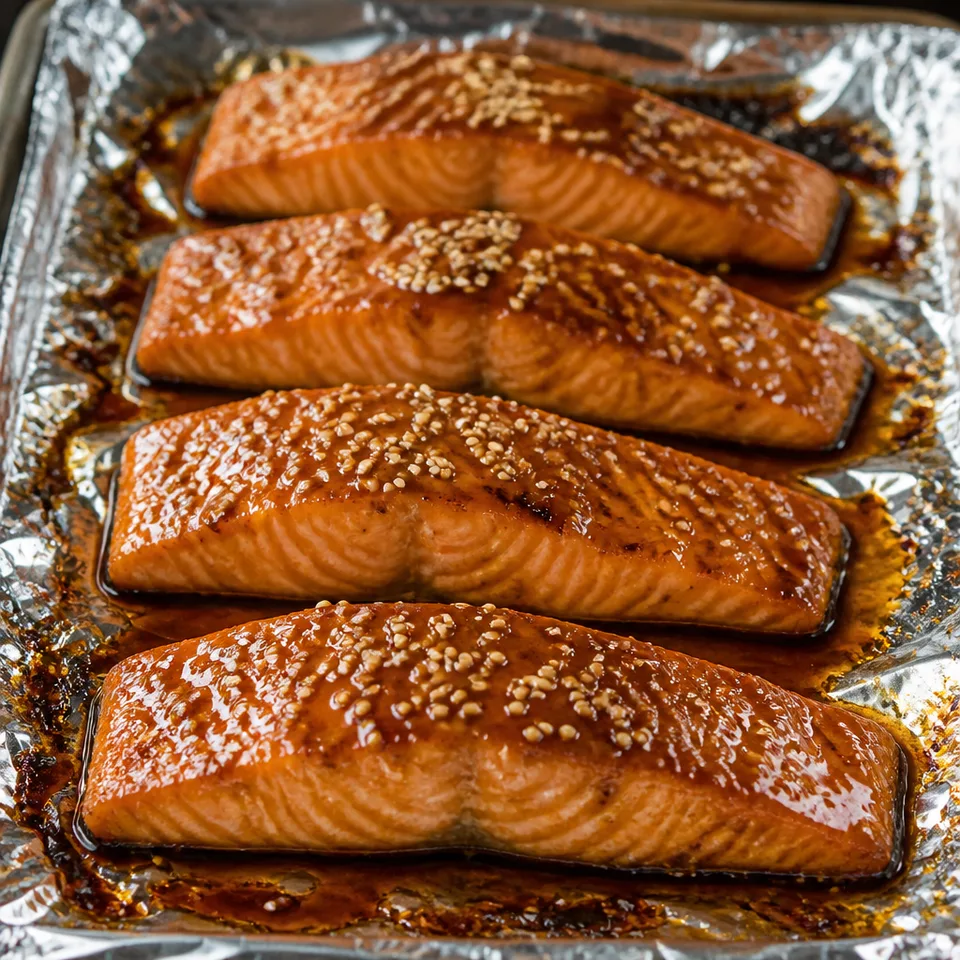
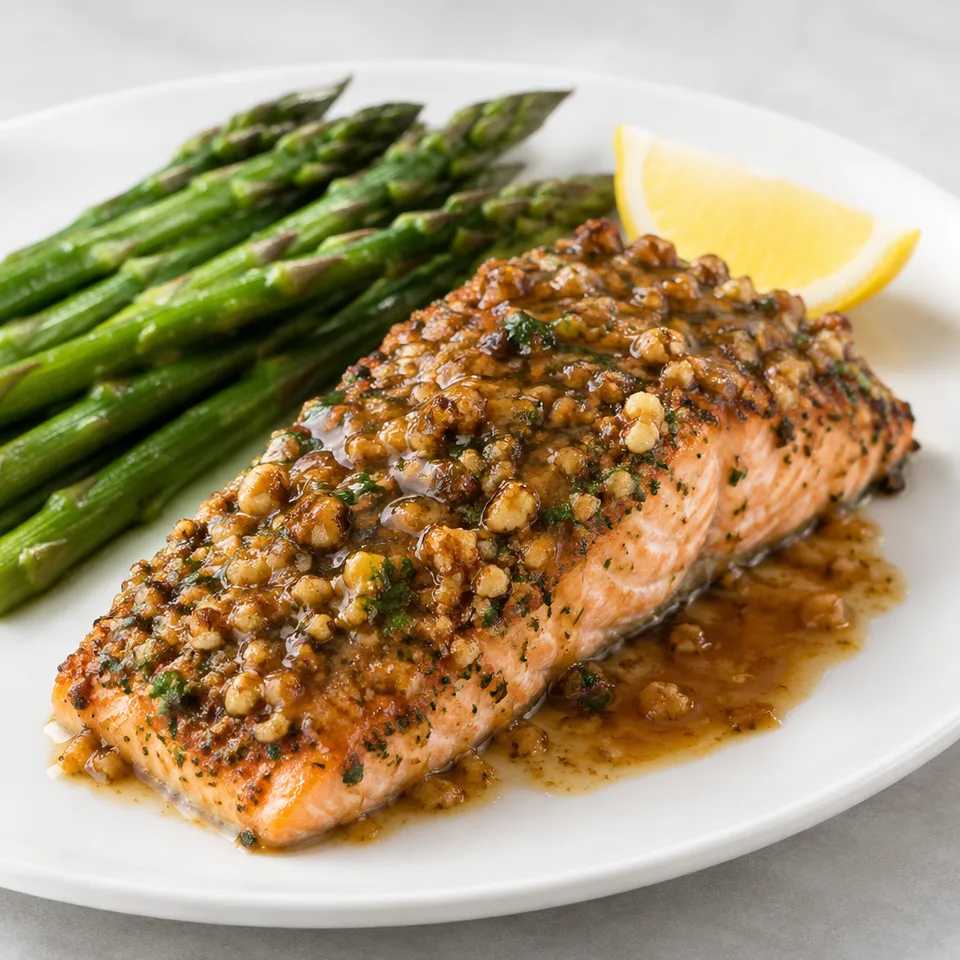
Walnut crust gives a tender piece of salmon a welcome bit of crunch, and maple glaze adds a sweet, glossy finish. The two make each other even more appealing. Choose a forkful with some of that crust intact to enjoy it with the soft fish beneath.
- Prep
- 10 min
- Cook
- 15 min
- Total
- 25 min
- Original yield
- Serves 4
- Ingredients
- 15 listed
Make it part of your week
Recipe categories & planning details
- Meal type
- Main course
- Primary protein
- Fish
- Cuisine
- American
- Cooking method
- Baking · Baked & roasted
- Preparation & total time
- Prep: 15 minutes or less · Total: 30 minutes or less
A few quick notes
1. Chop the crust finely
The walnut mixture needs to be fine enough to cling to the salmon. Let the food processor run until the nuts, parsley, breadcrumbs, garlic and seasonings look evenly chopped, rather than leaving big walnut chunks behind.
2. Split the glaze before serving
Use half the maple glaze on the salmon before it goes into the oven, then keep the rest back for serving. That way the baked crust gets flavor, and you still have a glossy finish at the table.
3. Watch for slight thickening
The glaze is ready for the salmon once it has boiled, simmered on low, and thickened a little. It doesn’t need to cook down into a heavy sauce before you pour it over the crust.
Get to know the ingredients
Walnut pieces
Walnut pieces are going into the food processor, so there’s no need to start with perfect halves. What matters is processing them with the parsley, breadcrumbs, garlic and seasonings until the coating is fine and even.
Unsalted ghee or butter
The glaze starts with unsalted ghee, or butter if that’s what you’re using. Since the salmon and crust are already seasoned, keeping this unsalted helps the maple glaze stay balanced.
Arrowroot powder
Arrowroot powder is part of the glaze, not the walnut crust. It helps the maple mixture thicken slightly as it boils and simmers, so add it with the other glaze ingredients in the saucepan.
Let’s make it
Choose your servings, then check things off as you go.
Original recipe: Serves 4. Original quantities shown.
Check ingredients as you prepare them. These checks stay on this page.
How to make it
0 of 4 steps completeMake room for Maple Walnut Crusted Salmon
Review ingredients in your pantry before anything is added. Meal plans use your household size; grocery-only additions use the servings selected above.
The last little job
The last little job
Before serving, spoon over the reserved maple glaze. It’s already been simmered, so this final pour is just about bringing back that sweet, savory shine after the salmon comes out of the oven.
A little more help as you go
Two garlic moments
Garlic shows up twice here: cloves in the walnut crust and minced garlic in the glaze. Keep them in their own places so the crust and the sauce each get their share.
Season the fish first
Season the salmon with salt and pepper before adding the walnut coating.
A few questions you might have
Do I pour all of the glaze over the salmon before baking?
No. Pour half over the walnut-crusted filets before baking and save the other half to add immediately before serving.
How finely should I process the walnut crust?
Process it until the mixture is finely chopped. It should be small and even enough to dredge onto each salmon filet, rather than loose, chunky pieces that fall away.
Does the glaze need to be very thick?
No. Bring it to a boil, lower the heat, and simmer until it’s slightly thickened. That’s enough for pouring over the crust and finishing the salmon later.
When does the salmon bake?
After the filets are coated with the walnut mixture and half the glaze has been poured over them, bake them at 400 F for 15 minutes.
Where does the lemon juice go?
The lemon juice goes into the glaze saucepan with the maple syrup, coconut aminos, ginger, minced garlic, ghee or butter, and arrowroot powder.
Storage & reheating safety
For cooked, perishable leftovers, refrigerate within 2 hours (1 hour above 90°F), using shallow containers for prompt cooling. Keep the refrigerator at 40°F or below, use refrigerated leftovers within 3–4 days, and reheat hot leftovers to 165°F, checked with a food thermometer. Follow any shorter package limit.
These are general safety limits, not a tested storage or freezing recommendation for this particular dish. USDA leftovers guidance · Safe cooking temperatures
Recipe source: deliciousmeetshealthy.com. Ingredient names and quantities may be adapted for the pantry.
Preparation notes follow the recipe shown here.