Kitchen notes · a little help before you start
Country Chicken and Vegetable Skillet
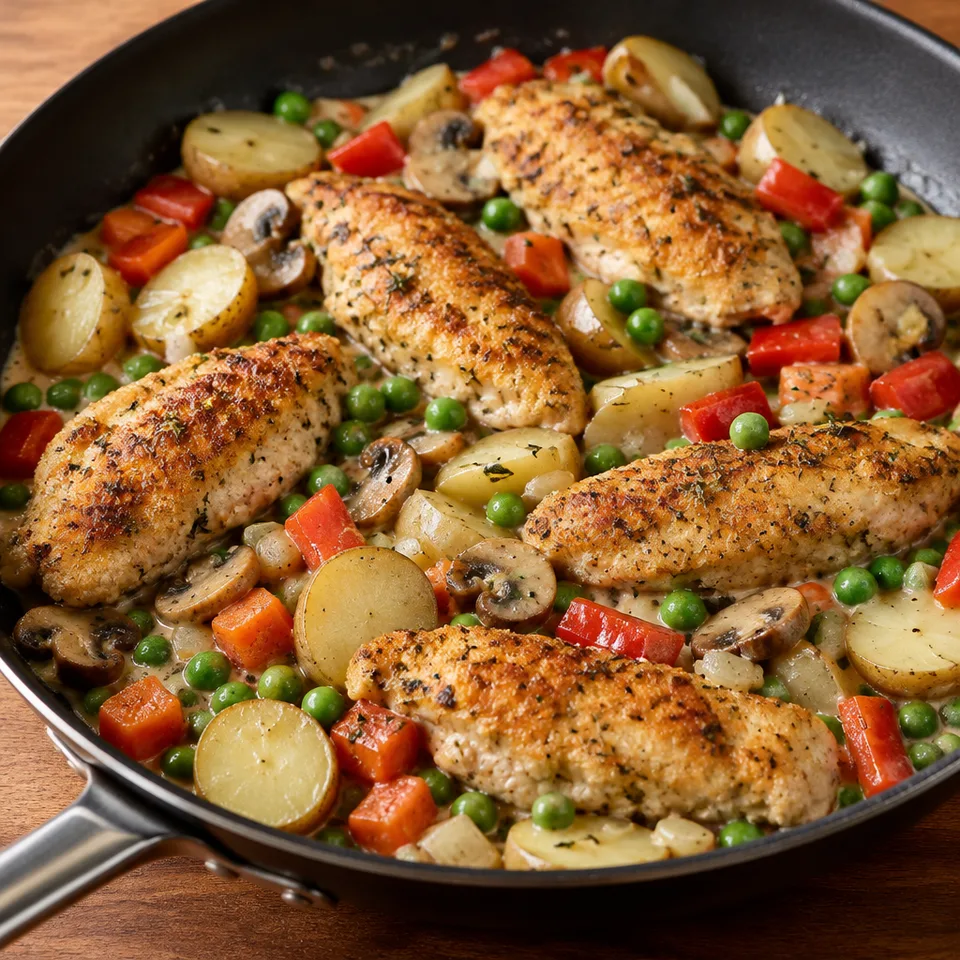
Breaded chicken and a creamy mustard sauce make this vegetable skillet particularly inviting. Tender potatoes catch the sauce, and the peas bring little bursts of sweetness. It's a generous plate with enough different textures to make each forkful worth paying attention to.
- Prep
- 10 min
- Cook
- 20 min
- Total
- 30 min
- Original yield
- Serves 4
- Ingredients
- 17 listed
Make it part of your week
Recipe categories & planning details
- Meal type
- Main course
- Primary protein
- Chicken
- Cuisine
- American
- Preparation & total time
- Prep: 15 minutes or less · Total: 30 minutes or less
A few quick notes
1. Slice the potatoes after boiling
Boil the peeled potatoes first, then slice them into rounds once they’re done. They’ll be tender enough to finish in the skillet without needing a long simmer in the sauce.
2. Give the chicken its own moment
Cook the breaded tenderloins until they’re no longer pink in the middle, then move them to a plate. That keeps the coating from getting soggy while the vegetables and sauce come together.
3. Peas go in right at the end
The frozen sweet peas are added last, along with the cooked chicken. They only need a short warm-through, so don’t add them with the carrots and onion.
Get to know the ingredients
Small potatoes
Use the potatoes peeled, as written, and boil them before they meet the skillet. Cutting them into rounds after boiling helps them sit neatly among the vegetables and sauce.
Chicken tenderloins
Tenderloins cook quickly, so the timing here is fairly short. Season them before breading, coat all sides, and cook until the centers are no longer pink.
Coconut cream and arrowroot
The sauce is mixed before it goes into the pan: mustard, broth, coconut cream, and arrowroot starch. Stirring the starch in first helps it blend into the sauce instead of clumping in the skillet.
Let’s make it
Choose your servings, then check things off as you go.
Original recipe: Serves 4. Original quantities shown.
Check ingredients as you prepare them. These checks stay on this page.
How to make it
0 of 6 steps completeMake room for Country Chicken and Vegetable Skillet
Review ingredients in your pantry before anything is added. Meal plans use your household size; grocery-only additions use the servings selected above.
The last little job
The last little job
Once the potatoes, mushrooms, and garlic have had a little time in the sauce, add the peas and return the chicken to the skillet. Taste and season if it needs it, then serve it warm.
A little more help as you go
Season in layers
Salt and pepper show up more than once here: on the chicken, with the vegetables, and again near the end if needed. A little seasoning at each stage will make the whole skillet taste more rounded.
Keep the heat moderate after the chicken
The chicken starts over medium-high heat, but the vegetables cook over medium to medium-high. That gives the onion, pepper, and carrot time to soften without rushing the pan before the sauce goes in.
A few questions you might have
Do I bread the chicken before or after seasoning it?
Season the chicken tenderloins with salt and pepper first, then coat them in the gluten-free breadcrumbs on all sides before they go into the skillet.
Should the potatoes be raw when I add them to the skillet?
No. Boil the peeled potatoes first, slice them into rounds, and set them aside. They’re added back later with the mushrooms and garlic.
When do the mushrooms go in?
Add the sliced mushrooms after the sauce mixture has gone into the skillet, along with the cooked potato rounds and minced garlic.
Can I use sour cream instead of coconut cream?
Yes, you can use sour cream instead of canned coconut cream if you’re not keeping it Paleo. It’s mixed with the mustard, broth, and arrowroot before going into the skillet.
Can I use cornstarch instead of arrowroot starch?
Yes, cornstarch works too if you’re not keeping it Paleo. Mix it into the mustard, broth, and coconut cream before adding the sauce to the pan.
Storage & reheating safety
For cooked, perishable leftovers, refrigerate within 2 hours (1 hour above 90°F), using shallow containers for prompt cooling. Keep the refrigerator at 40°F or below, use refrigerated leftovers within 3–4 days, and reheat hot leftovers to 165°F, checked with a food thermometer. Follow any shorter package limit.
These are general safety limits, not a tested storage or freezing recommendation for this particular dish. USDA leftovers guidance · Safe cooking temperatures
Recipe source: deliciousmeetshealthy.com. Ingredient names and quantities may be adapted for the pantry.
Preparation notes follow the recipe shown here.