Kitchen notes · a little help before you start
French Onion Pot Roast Recipe
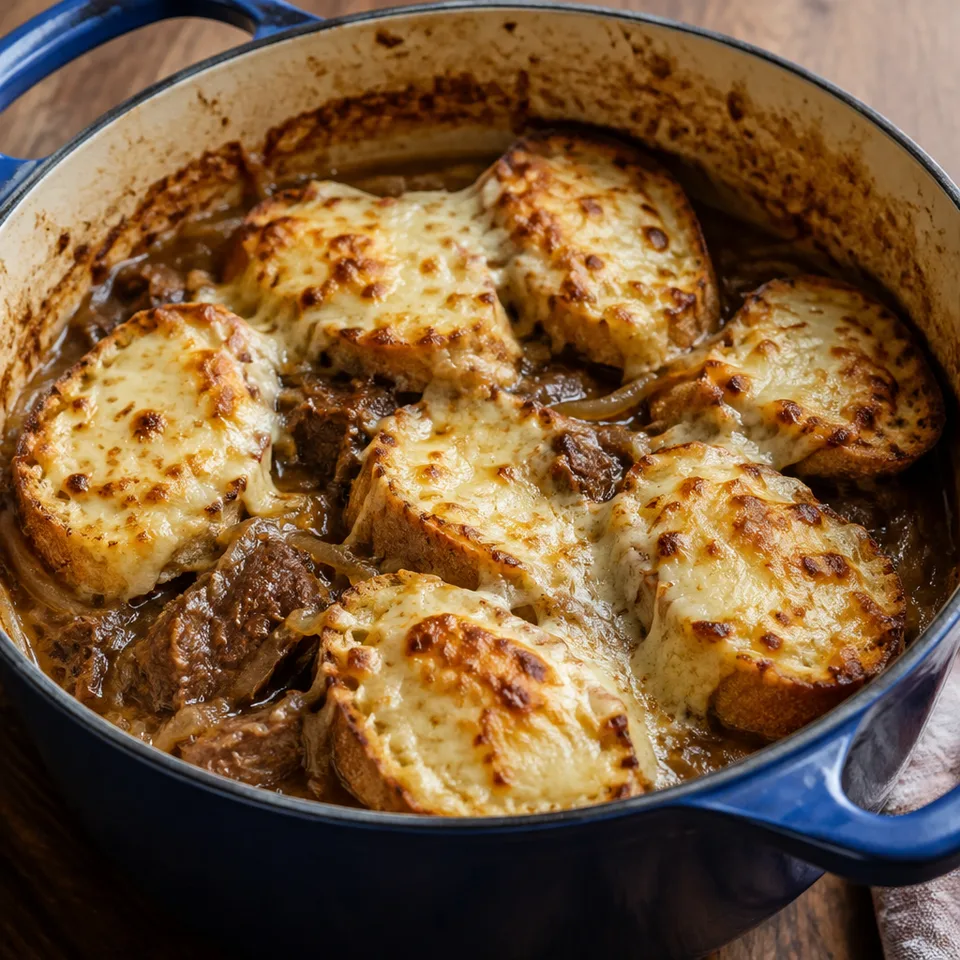
French onion flavors give pot roast a very tempting finish, especially beneath bubbling Gruyere and slices of baguette. The beef pulls into generous pieces among the onions. A helping with some of that cheese-covered bread is worth looking forward to as dinner comes together.
- Prep
- 15 min
- Cook
- 225 min
- Total
- 240 min
- Original yield
- Serves 8
- Ingredients
- 10 listed
Make it part of your week
Recipe categories & planning details
- Meal type
- Dinner
- Cuisine
- American
- Cooking method
- Roasting · Baked & roasted
- Preparation & total time
- Prep: 15 minutes or less · Total: over 60 minutes
A few quick notes
1. Brown the beef well
Let the roast get a deep brown crust before it goes into the oven. That first sear is where the pot roast starts picking up the savory, French onion soup feel.
2. Keep the beef chunky
After the long oven cook, pull the beef into very large chunks rather than fine shreds. Bigger pieces sit better under the baguette and cheese, and they keep the dish feeling like pot roast.
3. Stay close at the broiler
The broil at the end is quick. You only need the Gruyere to bubble and brown, and the baguette can go from golden to too dark fast.
Get to know the ingredients
Chuck roast
Chuck roast is the right cut for the long covered cook here. It has time to soften in the broth and onions, so don't rush the oven step before shredding it into large pieces.
Thinly sliced onions
Halve and thinly slice the onions before adding them to cook in the broth around the beef.
Gruyere cheese
Use shredded Gruyere for the topping so it melts quickly under the broiler. Since the pot is only under high heat for a minute or two, small shreds help it bubble and brown evenly.
Let’s make it
Choose your servings, then check things off as you go.
Original recipe: Serves 8. Original quantities shown.
Check ingredients as you prepare them. These checks stay on this page.
How to make it
0 of 10 steps completeMake room for French Onion Pot Roast Recipe
Review ingredients in your pantry before anything is added. Meal plans use your household size; grocery-only additions use the servings selected above.
The last little job
The last little job
Once the thyme sprigs are out and the beef is in big chunks, add the baguette and Gruyere and broil uncovered. Watch the pot the whole time, then serve right away while the cheese is still melted and bubbly.
A little more help as you go
Use an oven-safe pot
The same pot goes from stovetop to oven, then back under the broiler. A Dutch oven or large pot works as long as it can handle that final uncovered broil.
Remove the thyme sprigs
The thyme flavors the roast while it cooks, but the sprigs should come out before you shred the beef and add the topping. It's a small step that makes serving much nicer.
A few questions you might have
Should the roast be covered in the oven?
Yes. After the onions, broth, Worcestershire sauce, and thyme go in, the pot roasts covered in the oven until the beef is tender enough to shred into large chunks.
Do I slice the baguette before adding it?
Yes. The baguette goes on top in slices, then the shredded Gruyere goes over it before broiling. The slices make that French onion soup-style top layer.
How do I know the topping is done?
Pull it when the cheese is bubbling and starting to brown. That usually happens fast under a high broiler, so keep an eye on it instead of walking away.
Do the thyme sprigs stay in the pot?
No. Take the thyme sprigs out after the roast comes out of the oven and before you shred the beef. The flavor has already done its work by then.
Should I shred the beef finely?
No. Use very large chunks. That keeps the roast hearty and gives the baguette and cheese a sturdier base.
Storage & reheating safety
For cooked, perishable leftovers, refrigerate within 2 hours (1 hour above 90°F), using shallow containers for prompt cooling. Keep the refrigerator at 40°F or below, use refrigerated leftovers within 3–4 days, and reheat hot leftovers to 165°F, checked with a food thermometer. Follow any shorter package limit.
These are general safety limits, not a tested storage or freezing recommendation for this particular dish. USDA leftovers guidance · Safe cooking temperatures
Recipe source: dinnerthendessert.com. Ingredient names and quantities may be adapted for the pantry.
Preparation notes follow the recipe shown here.