Kitchen notes · a little help before you start
Slow Cooker Pot Roast
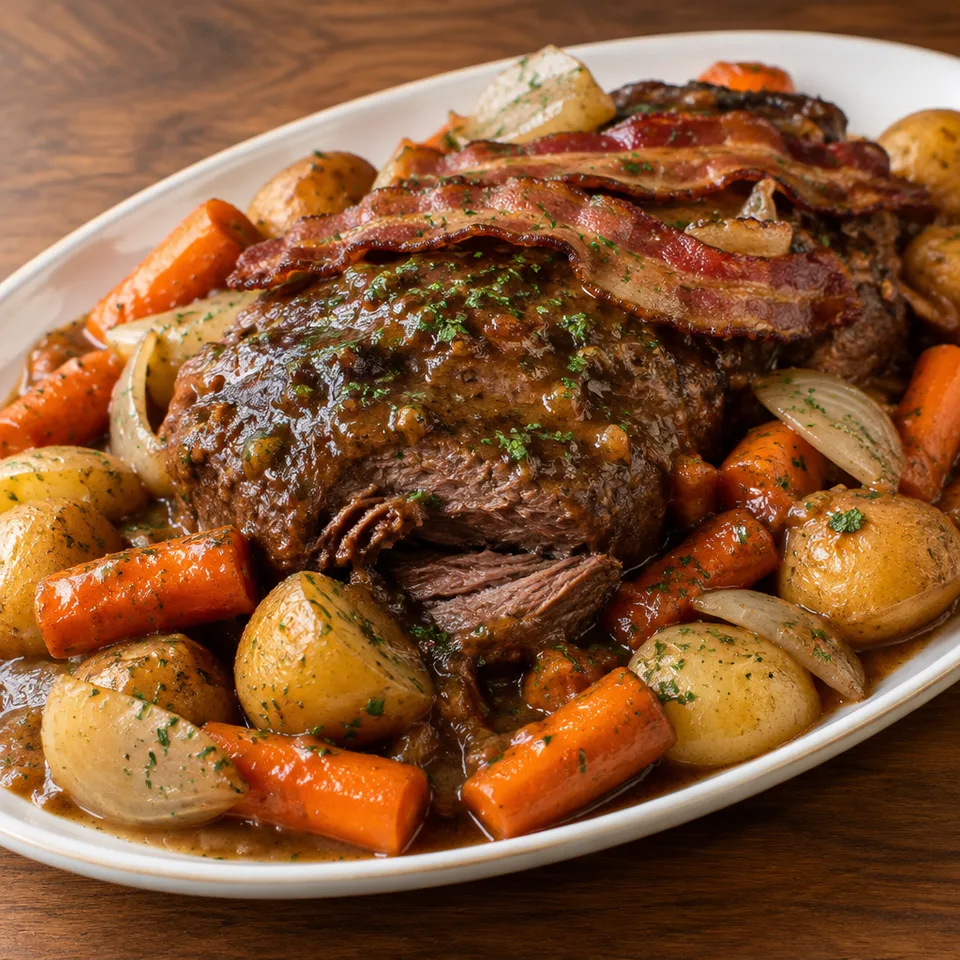
A tender pot roast with warm gravy makes dinner feel welcoming before the first slice is served. The vegetables share the savory cooking juices, ready to gather around the beef on a platter. Spoon over the finished gravy and bring everyone to the table while it is hot.
- Prep
- 15 min
- Cook
- 420 min
- Total
- 435 min
- Original yield
- Serves 8
- Ingredients
- 17 listed
Make it part of your week
Recipe categories & planning details
- Meal type
- Main course
- Primary protein
- Pork
- Cuisine
- American
- Cooking method
- Roasting · Baked & roasted · Slow cooker
- Preparation & total time
- Prep: 15 minutes or less · Total: over 60 minutes
A few quick notes
1. Brown the seasoned roast
Season the beef all over, then brown each side in hot oil before moving it into the slow cooker.
2. Keep the vegetables underneath
Arrange the onions, carrots and potatoes in the seasoned liquid before setting the browned roast on top of them.
3. Strain before gravy
Pass the cooking liquid through a strainer and skim off fat before simmering it in the saucepan for gravy.
Get to know the ingredients
Large vegetable pieces
Keep carrots and potatoes in substantial pieces. Smaller pieces can turn mushy during the long cooking.
Bacon slices
Lay the bacon over the roast before cooking. It and the bay leaf are discarded when the meat comes out.
Cornstarch slurry
Whisk cornstarch with the specified cold water before adding it to the simmering juices and boiling until just thickened.
Let’s make it
Choose your servings, then check things off as you go.
Original recipe: Serves 8. Original quantities shown.
Check ingredients as you prepare them. These checks stay on this page.
How to make it
0 of 9 steps completeMake room for Slow Cooker Pot Roast
Review ingredients in your pantry before anything is added. Meal plans use your household size; grocery-only additions use the servings selected above.
The last little job
Gravy over the platter
Arrange the roast and vegetables together, pour over the thickened sauce and sprinkle with parsley just before serving.
A little more help as you go
Keep the listed liquid
Avoid adding extra liquid. The beef releases more as it cooks in the covered slow cooker.
A day-ahead dinner
You can make this a day ahead. Store covered, then reheat in a 325°F oven until warmed through.
A few questions you might have
Should the tomato paste be spread on the beef?
Whisk it into the broth with the Worcestershire sauce and seasonings in the slow cooker before arranging the vegetables.
What cut of beef is listed?
The recipe uses a four-pound chuck roast, browned in a pot before it is placed over the vegetables.
Does the bay leaf stay on the platter?
Discard it after cooking, along with the bacon. The beef and vegetables go onto the serving platter together.
What setting does the slow cooker use?
Cover and cook on low for six to eight hours, with the bacon laid across the top of the roast.
How long does the gravy boil?
Boil for about a minute after adding the slurry, or until the gravy has just thickened, then pour it over the platter.
Any more cooking tips?
Make sure to cut your carrots and potatoes into large pieces so that they do not get mushy during the long cooking time. Do not be tempted to add more liquid to the pot. The meat will release a lot of liquid as it cooks. This dish is even better when made a day in advance. Store the roast and vegetables in a covered dish, then reheat in the oven at 325 degrees F until warmed through.
Storage & reheating safety
For cooked, perishable leftovers, refrigerate within 2 hours (1 hour above 90°F), using shallow containers for prompt cooling. Keep the refrigerator at 40°F or below, use refrigerated leftovers within 3–4 days, and reheat hot leftovers to 165°F, checked with a food thermometer. Follow any shorter package limit.
These are general safety limits, not a tested storage or freezing recommendation for this particular dish. USDA leftovers guidance · Safe cooking temperatures
Recipe source: dinneratthezoo.com. Ingredient names and quantities may be adapted for the pantry.
Preparation notes follow the recipe shown here.