Kitchen notes · a little help before you start
Sake and Soy Braised Pork Belly
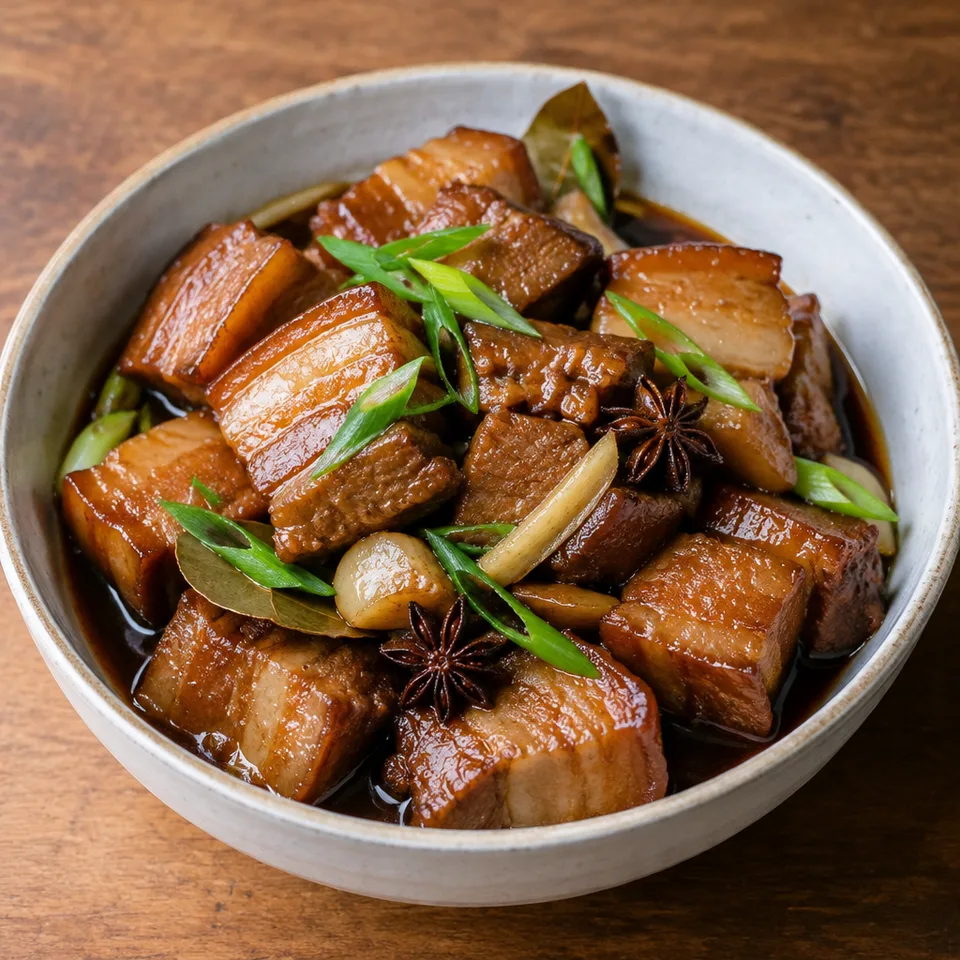
Glossy braised pork belly makes a rich, savory plate to take your time over. Ginger and soy sit in the coating, with tender pieces that are satisfying to pick up one by one.
- Prep
- 10 min
- Cook
- 60 min
- Total
- 70 min
- Original yield
- Serves 6
- Ingredients
- 11 listed
Make it part of your week
Recipe categories & planning details
- Meal type
- Main course
- Primary protein
- Pork
- Cooking method
- Braising
- Preparation & total time
- Prep: 15 minutes or less · Total: over 60 minutes
A few quick notes
1. Blanch and dry before searing
Boil the pork briefly in covering water, then rinse, drain and pat dry before moving it to the hot pot.
2. Turn with tongs for browning
Sear each side until lightly golden and the pork releases its oil before adding ginger, scallion and garlic.
3. Stir during the covered braise
Keep the simmer gentle and stir at the stated intervals to prevent burning while the sauce reduces around the pork.
Get to know the ingredients
Skin-on pork belly chunks
Cut the belly into inch-sized chunks before blanching. A leaner piece is suggested if you prefer less oil.
Ginger strips
Cut the thick ginger slices into thin strips before their fragrant cook with the scallion and crushed garlic.
Rock sugar options
You can halve the rock sugar for less sweetness, or use the stated granulated-sugar replacement instead.
Let’s make it
Choose your servings, then check things off as you go.
Original recipe: Serves 6. Original quantities shown.
Check ingredients as you prepare them. These checks stay on this page.
How to make it
0 of 5 steps completeMake room for Sake and Soy Braised Pork Belly
Review ingredients in your pantry before anything is added. Meal plans use your household size; grocery-only additions use the servings selected above.
The last little job
Serve the glossy tender pork
Finish when the meat is fork-tender and the reduced sauce coats it without excess liquid, then add finely sliced scallions.
A little more help as you go
Sear without extra oil
The pork is seared without adding oil, using the fat it releases as the surfaces brown.
Sake has an included alternative
You can use beer in place of sake, adding it with the soy sauces, sugar and spices before braising.
A few questions you might have
Does the pork need to be submerged for braising?
Add hot water just to cover the meat after mixing in the sauce ingredients, then bring to a boil before lowering the heat.
When do star anise and bay leaves go in?
They join rock sugar, soy sauces and sake after the ginger, scallion and garlic become fragrant around the seared pork.
Should I keep the sauce at a rolling boil?
After bringing it to a boil, lower to a gentle simmer and cover for the braise, stirring periodically.
How much sauce should remain?
Look for a glossy coating without extra liquid once the pork is fork-tender, rather than leaving a loose broth around it.
Does the blanched pork go straight into the pot wet?
Rinse and drain after blanching, then pat dry with paper towels before the searing stage in the heavy-bottomed pot.
Any more cooking tips?
Choose the leaner pork belly for this recipe if you prefer less oil in the final dish. Blanching the pork before cooking helps to remove the impurities. Searing the pork belly in the pot without extra oil reduces greasiness and adds a crisp exterior. You may reduce the sweetness by cutting the rock sugar to half. Rock sugar can be substituted with 2 tablespoons of granulated sugar. Sake can be substituted with beer in this recipe. Braise pork belly with beer will not only bring a depth of flavor to the dish but also help to tenderize the meat while cooking.
Storage & reheating safety
For cooked, perishable leftovers, refrigerate within 2 hours (1 hour above 90°F), using shallow containers for prompt cooling. Keep the refrigerator at 40°F or below, use refrigerated leftovers within 3–4 days, and reheat hot leftovers to 165°F, checked with a food thermometer. Follow any shorter package limit.
These are general safety limits, not a tested storage or freezing recommendation for this particular dish. USDA leftovers guidance · Safe cooking temperatures
Recipe source: rasamalaysia.com. Ingredient names and quantities may be adapted for the pantry.
Preparation notes follow the recipe shown here.