Kitchen notes · a little help before you start
Shanghai Fried Noodles (上海粗炒面)
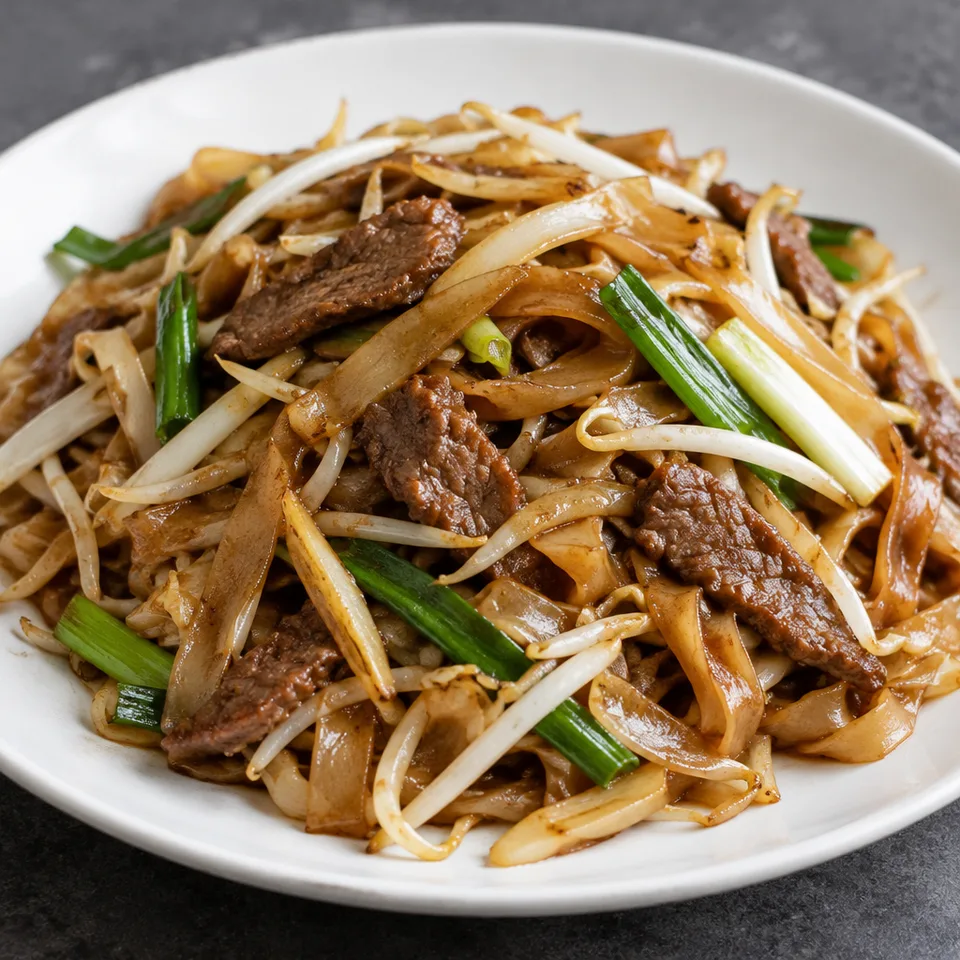
A glossy tangle of thick noodles is an inviting start, and these Shanghai fried noodles have tender pork tucked through the greens. Shiitake mushrooms give each mouthful a deeper savory flavor. Reach for a bowl and enjoy the noodles with a little of that bok choy alongside.
- Prep
- 15 min
- Cook
- 15 min
- Original yield
- Serves 4
- Ingredients
- 13 listed
Make it part of your week
Recipe categories & planning details
- Meal type
- Main course
- Primary protein
- Pork
- Cuisine
- Chinese · Asian
- Cooking method
- Steaming
- Preparation & total time
- Prep: 15 minutes or less
- Dish type
- Noodles
A few quick notes
1. Get the small bowls sorted first
Once the skillet is hot, there isn't much pausing. Soak and slice the mushrooms, marinate the pork, mix the sauce and cook the noodles before you start stir-frying.
2. Cook the noodles just shy of done
The noodles go back into the skillet with sauce and vegetables, so stop them a little early. Rinsing with cold water keeps them from carrying on cooking while you stir-fry the pork.
3. Give the pork space
Spread the julienned pork out in the pan so it cooks quickly and evenly. Once it turns white throughout, move it to a plate before building the noodles in the same skillet.
Get to know the ingredients
Dried shiitakes need a head start
Cover the mushrooms with hot water and let them soften before slicing. They join the scallion whites early in the skillet, where that first minute helps bring out their fragrance.
Thick noodles are the point
Shanghai thick noodles give the dish its chewy, saucy feel. Japanese udon noodles work too; use 8 oz dried udon if fresh noodles aren't available.
Separate the bok choy parts
The sliced bok choy whites need a short steam before the greens go in. Adding the greens later keeps the timing tidy and lets everything finish together with the pork.
Let’s make it
Choose your servings, then check things off as you go.
Original recipe: Serves 4. Original quantities shown.
Check ingredients as you prepare them. These checks stay on this page.
How to make it
0 of 7 steps completeMake room for Shanghai Fried Noodles (上海粗炒面)
Review ingredients in your pantry before anything is added. Meal plans use your household size; grocery-only additions use the servings selected above.
The last little job
The last little job
After the greens, scallion tops and pork are back in, cover the pan briefly so the bok choy fully softens. Then lower the heat, taste carefully and add just a pinch of salt if it needs it before serving hot.
A little more help as you go
Why the scallions go in twice
The white parts cook with the mushrooms at the start of the noodle step, while the green parts go in near the end. It gives each part the amount of heat it needs.
Tongs make the saucing easier
Toss the noodles with tongs after they hit the pan. This coats them with oil first, then the soy-based sauce, without breaking them up too much.
A few questions you might have
Can I skip soaking the dried shiitake mushrooms?
No. They need to soften in hot water before you can slice them into strips and stir-fry them with the scallion whites.
Why do I rinse the noodles after boiling?
Rinsing with cold water stops the cooking after they're boiled just shy of the package time. That helps them hold up when they go back into the skillet with the sauce.
Do the bok choy whites and greens really need to be added separately?
Yes, because the whites take longer. They steam first, then the greens go in with the scallion greens and cooked pork for the final minute or two.
When does the pork go back into the pan?
Cook it first, transfer it to a plate, then add it back near the end with the bok choy greens and scallion greens so it finishes without overcooking.
What should I do if the noodles taste a little flat at the end?
Lower the heat and taste carefully, then add a pinch of salt if needed. The sauce is already in the pan, so this final seasoning should be small.
Any more cooking tips?
If fresh noodles are not available, use 8 oz dried udon noodles instead.
Storage & reheating safety
For cooked, perishable leftovers, refrigerate within 2 hours (1 hour above 90°F), using shallow containers for prompt cooling. Keep the refrigerator at 40°F or below, use refrigerated leftovers within 3–4 days, and reheat hot leftovers to 165°F, checked with a food thermometer. Follow any shorter package limit.
These are general safety limits, not a tested storage or freezing recommendation for this particular dish. USDA leftovers guidance · Safe cooking temperatures
Recipe source: omnivorescookbook.com. Ingredient names and quantities may be adapted for the pantry.
Preparation notes follow the recipe shown here.