Kitchen notes · a little help before you start
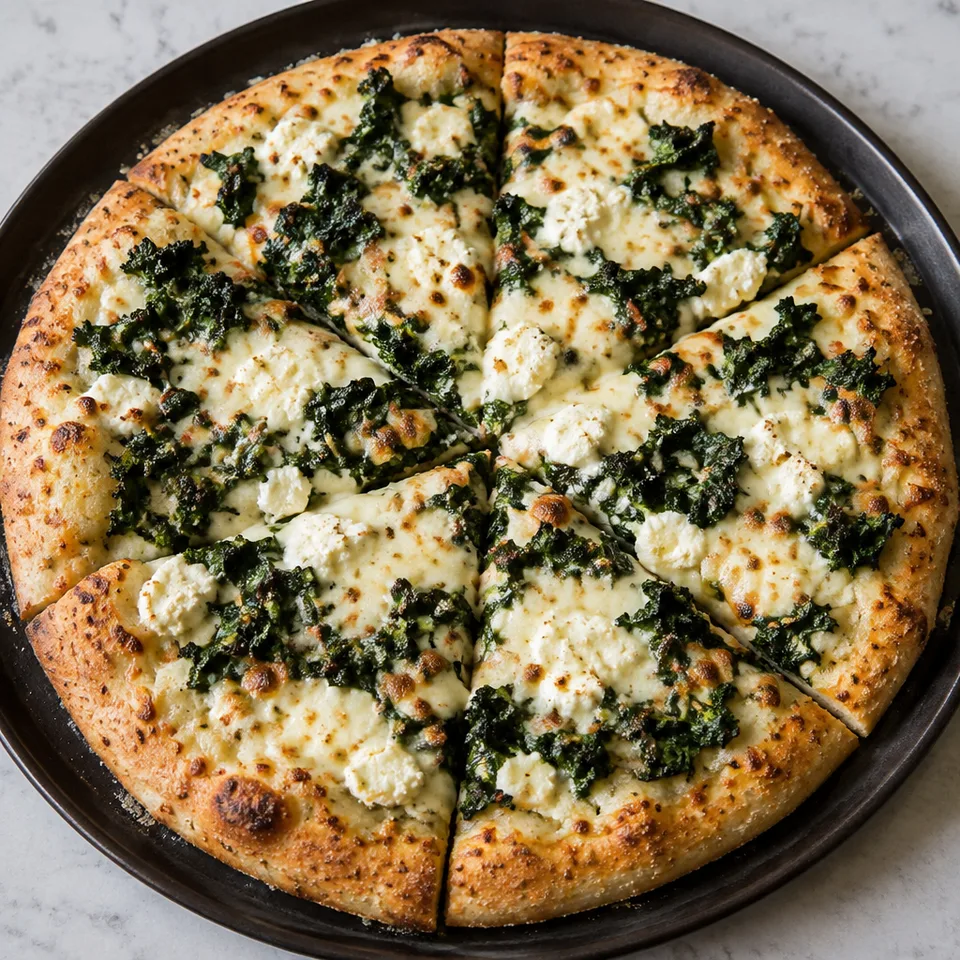
Garlicky Kale and Ricotta Pizza
Pizza night is a good place to give kale another chance. Here it has plenty of creamy ricotta for company, and enough garlic to make each slice worth reaching for.
- Prep
- 15 min
- Cook
- 15 min
- Total
- 30 min
- Original yield
- Serves 4
- Ingredients
- 8 listed
Make it part of your week
Recipe categories & planning details
- Meal type
- Dinner · Lunch · Main course
- Cuisine
- American
- Cooking method
- Baking · Baked & roasted
- Preparation & total time
- Prep: 15 minutes or less · Total: 30 minutes or less
- Dish type
- Pizza
A few quick notes
1. Wilt the kale first
The kale goes into the pot before it goes onto the pizza. That short sauté softens the leaves, seasons them with garlic, and keeps the topping from feeling rough or too bulky on the dough.
2. Brush the dough, then build
Mixing the oil with garlic powder gives the crust a quick flavor layer under the toppings. Brush it on before adding the kale, ricotta, and mozzarella so every bite starts with that garlicky base.
3. Watch the edges
The pizza is ready when the crust has browned, the cheese is melted, and the cheese is starting to brown at the edges. That edge color is the best cue before slicing.
Get to know the ingredients
Kale leaves
Use the leaves, not the stems. Pull them off if needed, tear them into pieces, and rinse them well before they go into the pot.
Whole milk ricotta
Dollop the ricotta over the kale rather than trying to spread it. It stays in creamy pockets, with mozzarella filling in around it as the pizza bakes.
Pizza dough
Stretch the dough to about 12 to 14 inches before topping. Baking time and temperature can vary with the dough you use, so keep an eye on the crust.
Let’s make it
Choose your servings, then check things off as you go.
Original recipe: Serves 4. Original quantities shown.
Check ingredients as you prepare them. These checks stay on this page.
How to make it
0 of 4 steps completeMake room for Garlicky Kale and Ricotta Pizza
Review ingredients in your pantry before anything is added. Meal plans use your household size; grocery-only additions use the servings selected above.
The last little job
The last little job
Let the color tell you when to stop: browned crust, melted cheese, and a little browning on the cheese edges. Slice it into 8 pieces while it’s hot and serve.
A little more help as you go
Keep the garlic gentle
The minced garlic only needs about a minute in the oil, just until it smells good and softens. Let it go too far before the kale goes in and it can get harsh.
Salt the kale, not everything
A pinch of salt goes in after the kale wilts. That seasons the greens directly before they’re scattered over the dough with the cheeses.
A few questions you might have
Do I need to cook the kale before topping the pizza?
Yes. The kale is sautéed with garlic until wilted before it goes on the dough. It makes the leaves softer and easier to spread over the pizza.
Should the ricotta be mixed with the mozzarella?
No. Add the ricotta in dollops over the kale, then sprinkle the shredded mozzarella over the top. They each do their own job as the pizza bakes.
How do I know the pizza is done?
Look for a browned crust, melted cheese, and cheese that has begun to brown around the edges. Those are the doneness cues given for this pizza.
What if my pizza dough bakes differently?
Cooking time and temperature may vary with the dough you use. Watch the browned crust and melted cheese for the visual cues given in the directions.
Why use both minced garlic and garlic powder?
They show up in different places. The minced garlic flavors the kale in the pan, while the garlic powder is mixed with oil and brushed onto the dough.
Any more cooking tips?
I used my classic Pizza Dough recipe. The cooking time and temperature for your pizza may vary depending on what type of dough you are using.
Storage & reheating safety
For cooked, perishable leftovers, refrigerate within 2 hours (1 hour above 90°F), using shallow containers for prompt cooling. Keep the refrigerator at 40°F or below, use refrigerated leftovers within 3–4 days, and reheat hot leftovers to 165°F, checked with a food thermometer. Follow any shorter package limit.
These are general safety limits, not a tested storage or freezing recommendation for this particular dish. USDA leftovers guidance · Safe cooking temperatures
Recipe source: budgetbytes.com. Ingredient names and quantities may be adapted for the pantry.
Preparation notes follow the recipe shown here.