Kitchen notes · a little help before you start
Kung Pao Cauliflower (宫保菜花)
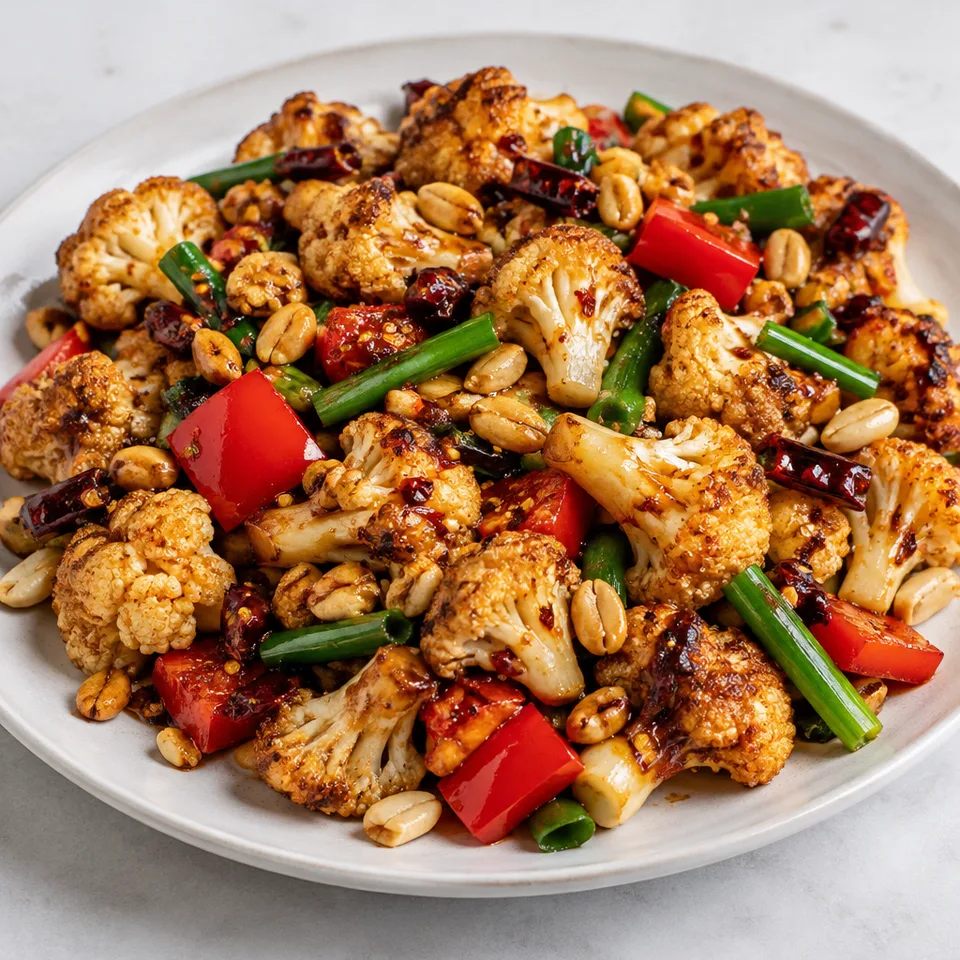
Cauliflower earns its place in the middle of the table here. The browned edges catch that sharp, spicy sauce, and the peanuts give you something crunchy to chase around the plate. If you like dinner with a little bite, pull up a chair.
- Prep
- 20 min
- Cook
- 40 min
- Total
- 60 min
- Original yield
- Serves 4
- Ingredients
- 19 listed
Make it part of your week
Recipe categories & planning details
- Meal type
- Main course
- Cuisine
- Chinese · Asian
- Cooking method
- Roasting · Baked & roasted
- Preparation & total time
- Prep: 16–30 minutes · Total: 31–60 minutes
A few quick notes
1. Give each floret room
Leave space between the florets on the tray so the moisture can escape as they roast.
2. Keep the cut faces down
Start with the flat sides against the lined tray, then turn the cauliflower for the second stretch of roasting.
3. Wake up the sauce again
Stir the mixed sauce just before pouring it in; the cornstarch needs to be completely dissolved.
Get to know the ingredients
Cauliflower size matters
Cut the cored cauliflower into the listed large florets. Keeping their size similar helps them brown evenly.
Prepare the dried chilies
Halve the dried peppers across the middle and remove their seeds before they go in with the aromatics.
Use roasted peanuts
The peanuts join the cauliflower at the end, so have the roasted ones ready when the sauce thickens.
Let’s make it
Choose your servings, then check things off as you go.
Original recipe: Serves 4. Original quantities shown.
Check ingredients as you prepare them. These checks stay on this page.
How to make it
0 of 8 steps completeMake room for Kung Pao Cauliflower (宫保菜花)
Review ingredients in your pantry before anything is added. Meal plans use your household size; grocery-only additions use the servings selected above.
The last little job
Toss, then serve hot
Turn the cauliflower and peanuts through the thickened sauce until coated, then move everything to a serving plate.
A little more help as you go
Choose your pepper texture
The bell pepper gets a brief cook. Use the longer end of the listed window if you prefer it more tender.
If dinner has to wait
For a delayed serving, let the roasted cauliflower cool a little before saucing it to help preserve its crispness.
A few questions you might have
What if the cauliflower looks dry in the oven?
The directions allow extra oil spray during roasting if the cauliflower looks dry. Check it when you turn the pieces.
When do I add the green onions?
They go into the wok with the bell pepper, after the ginger, garlic and dried spices have become fragrant.
Does the cauliflower cook in the sauce?
Roast it until cooked through and browned first. The final toss brings the cooked cauliflower and thickened sauce together.
Can I spread the cauliflower across two trays?
Yes. You can use a second tray on another rack when one tray cannot hold the florets with space between them.
What tells me the sauce is ready for the cauliflower?
Cook and stir it until it thickens. That is the point to return the cauliflower and add the peanuts.
Any more cooking tips?
It’s important to cut the cauliflower to the right size to ensure even roasting and browning. See the blog post above to see how to cut the cauliflower. It’s very important to leave some space between the cauliflower florets, so the cauliflower will release steam and turn crispy once baked. If your baking tray does not have enough space, bake the rest in a separate tray. You can bake both trays at the same time by place the smaller tray on a different rack. If you’re not serving the dish immediately, let the cauliflower cool off for a bit before tossing in the sauce. The cauliflower will stay crispy better this way.
Storage & reheating safety
For cooked, perishable leftovers, refrigerate within 2 hours (1 hour above 90°F), using shallow containers for prompt cooling. Keep the refrigerator at 40°F or below, use refrigerated leftovers within 3–4 days, and reheat hot leftovers to 165°F, checked with a food thermometer. Follow any shorter package limit.
These are general safety limits, not a tested storage or freezing recommendation for this particular dish. USDA leftovers guidance · Safe cooking temperatures
Recipe source: omnivorescookbook.com. Ingredient names and quantities may be adapted for the pantry.
Preparation notes follow the recipe shown here.