Kitchen notes · a little help before you start
Quinoa and Vegetable Stew
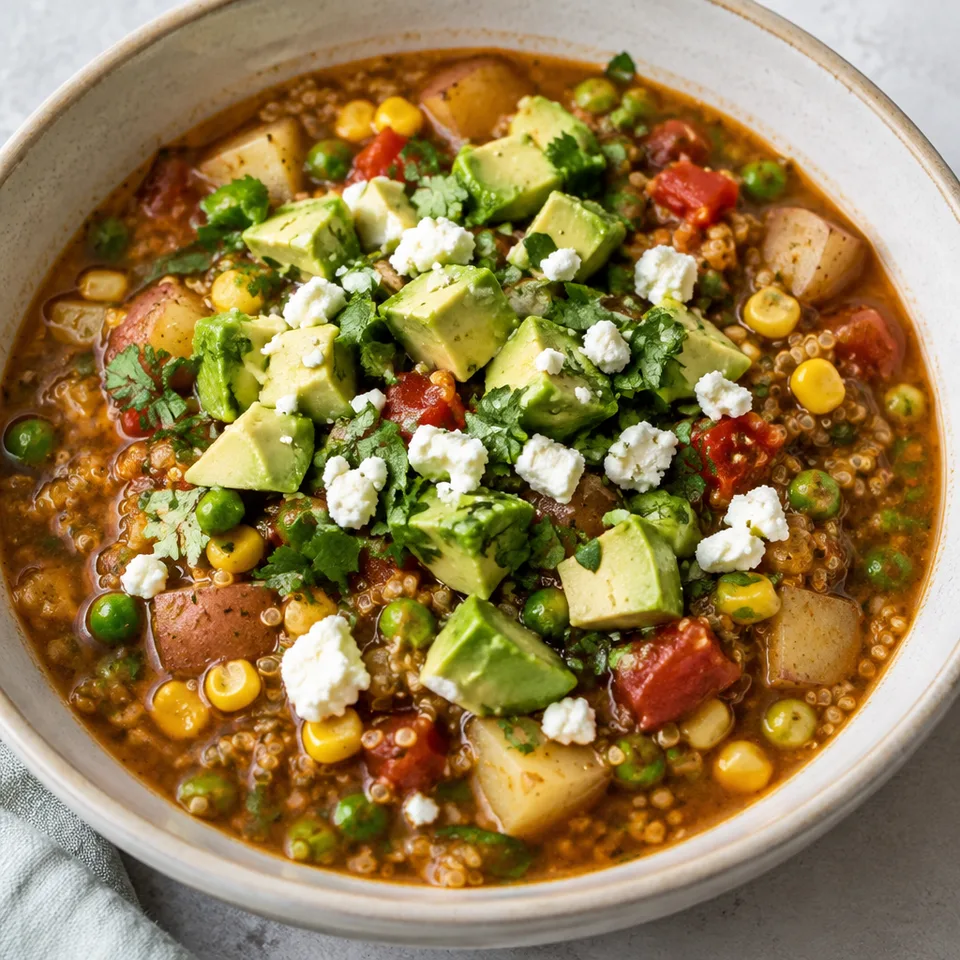
A warm bowl of quinoa and vegetable stew becomes especially inviting with cool avocado and crumbly cheese on top. The spiced broth has an earthy, savory flavor beneath them. Spoon down through the toppings to enjoy that creamy finish with the tender potatoes below.
- Prep
- 15 min
- Cook
- 40 min
- Total
- 55 min
- Original yield
- Serves 6
- Ingredients
- 18 listed
Make it part of your week
Recipe categories & planning details
- Meal type
- Main course
- Cuisine
- Mexican
- Preparation & total time
- Prep: 15 minutes or less · Total: 31–60 minutes
- Dish type
- Soups · Soups & stews · Stews
A few quick notes
1. Build the flavor early
Give the onion and bell pepper time to soften before the garlic and spices go in. That short fragrant moment with the paprika, coriander, and cumin seasons the broth before the potatoes start simmering.
2. Watch the quinoa and potatoes together
The quinoa goes in after the potatoes have had a head start. From there, simmer just until both are tender so the stew stays hearty rather than mushy.
3. Save the fresh-feeling bits for last
Tomatoes and peas only need a couple of minutes to warm through. Adding them late keeps them from disappearing into the stew before you season it.
Get to know the ingredients
Rinse the quinoa well
Use white quinoa, and rinse and drain it before it goes into the pot. It simmers right in the broth with the vegetables, so you don't need to cook it separately.
Keep the potatoes small
The red potatoes are unpeeled and cut into small pieces so they can become tender in the stew's simmering time. Bigger chunks may lag behind the quinoa.
Fresh or frozen corn both work
Fresh or frozen corn works. Add frozen corn with the peas instead of earlier, since it only needs to heat through.
Let’s make it
Choose your servings, then check things off as you go.
Original recipe: Serves 6. Original quantities shown.
Check ingredients as you prepare them. These checks stay on this page.
How to make it
0 of 7 steps completeMake room for Quinoa and Vegetable Stew
Review ingredients in your pantry before anything is added. Meal plans use your household size; grocery-only additions use the servings selected above.
The last little job
The last little job
Don't skip the toppings here. The cheese, avocado, and cilantro are added to each serving, and they bring the salty, creamy, fresh finish that makes the stew feel complete.
A little more help as you go
If it thickens later
The stew can be refrigerated for up to 2 days. Add more broth as needed when reheating to loosen it back up.
Season after simmering
Wait until the vegetables and quinoa are cooked before adding salt and pepper. The broth, cheese, and toppings all affect the final balance.
A few questions you might have
Should the pot be covered while it simmers?
Reduce the heat, cover the pot and simmer gently from that point onward.
Do I cook the quinoa before adding it?
No. Rinse and drain the white quinoa, then stir it straight into the stew. It cooks in the broth after the potatoes have simmered for a bit.
When should frozen corn go in?
Add corn before the tomatoes and peas, or add frozen corn with the peas. Either way, keep it in the later part of cooking so it heats through without overcooking.
Can I use feta instead of queso fresco?
Yes. The topping is written as queso fresco or feta, crumbled. Add it to each serving with the avocado and cilantro, rather than stirring it into the pot.
Why are the tomatoes added so late?
They only cook for about 2 minutes with the peas, just until warmed through. That keeps them distinct in the finished stew instead of breaking down during the longer simmer.
Any more cooking tips?
Keep the toppings; they add a lot of the stew's flavor. You can refrigerate the stew for up to 2 days. Add a little broth while reheating if it needs thinning.
Storage & reheating safety
For cooked, perishable leftovers, refrigerate within 2 hours (1 hour above 90°F), using shallow containers for prompt cooling. Keep the refrigerator at 40°F or below, use refrigerated leftovers within 3–4 days, and reheat hot leftovers to 165°F, checked with a food thermometer. Follow any shorter package limit.
These are general safety limits, not a tested storage or freezing recommendation for this particular dish. USDA leftovers guidance · Safe cooking temperatures
Recipe source: cookingclassy.com. Ingredient names and quantities may be adapted for the pantry.
Preparation notes follow the recipe shown here.