Kitchen notes · a little help before you start
Pork & Kimchi Udon Noodle Soup
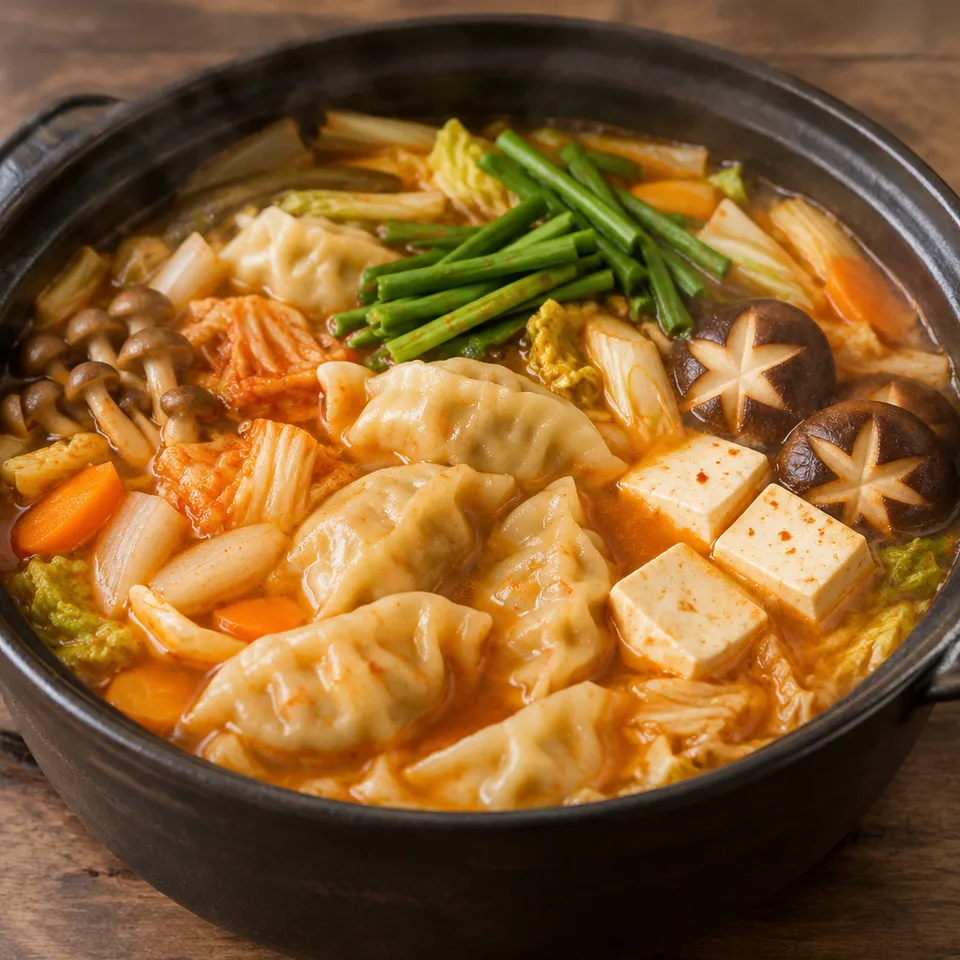
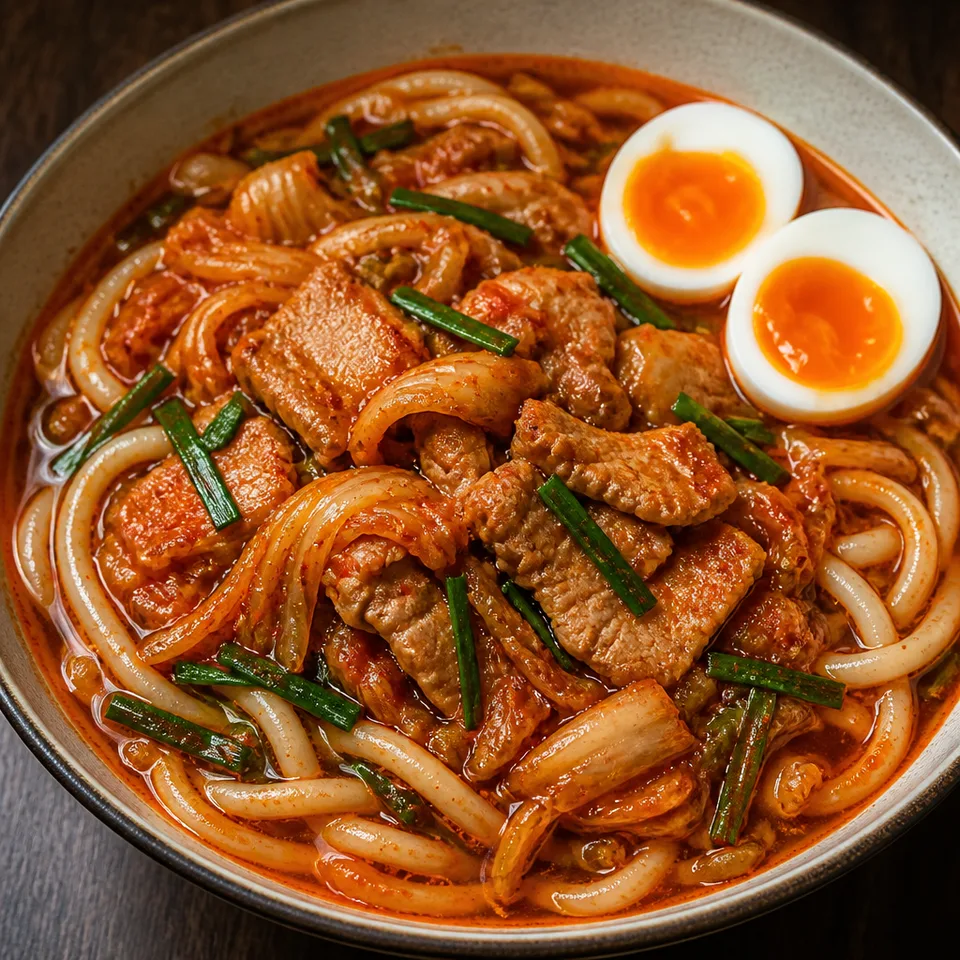
Kimchi gives this udon soup a lively, tangy broth, with pork belly and a little chili warmth behind every mouthful. The thick noodles make it a satisfying bowl to settle into. Top it with the soft-boiled egg and enjoy some soup between the noodles.
- Prep
- 5 min
- Cook
- 7 min
- Total
- 12 min
- Original yield
- Serves 2
- Ingredients
- 12 listed
Make it part of your week
Recipe categories & planning details
- Meal type
- Main course
- Primary protein
- Pork
- Cuisine
- Japanese · Asian
- Cooking method
- Stir fry
- Preparation & total time
- Prep: 15 minutes or less · Total: 30 minutes or less
- Dish type
- Stews · Soups & stews · Noodles · Soups
A few quick notes
1. Marinate while you prepare
Mix the bite-sized pork with grated garlic, ginger and soy sauce while getting the other ingredients ready.
2. Save the kimchi juice
Squeeze the kimchi over a bowl and keep the liquid; it goes into the soup after browning.
3. Let the first layer fry
Spread pork and squeezed kimchi evenly in the pan and leave undisturbed until fat renders and kimchi starts browning.
Get to know the ingredients
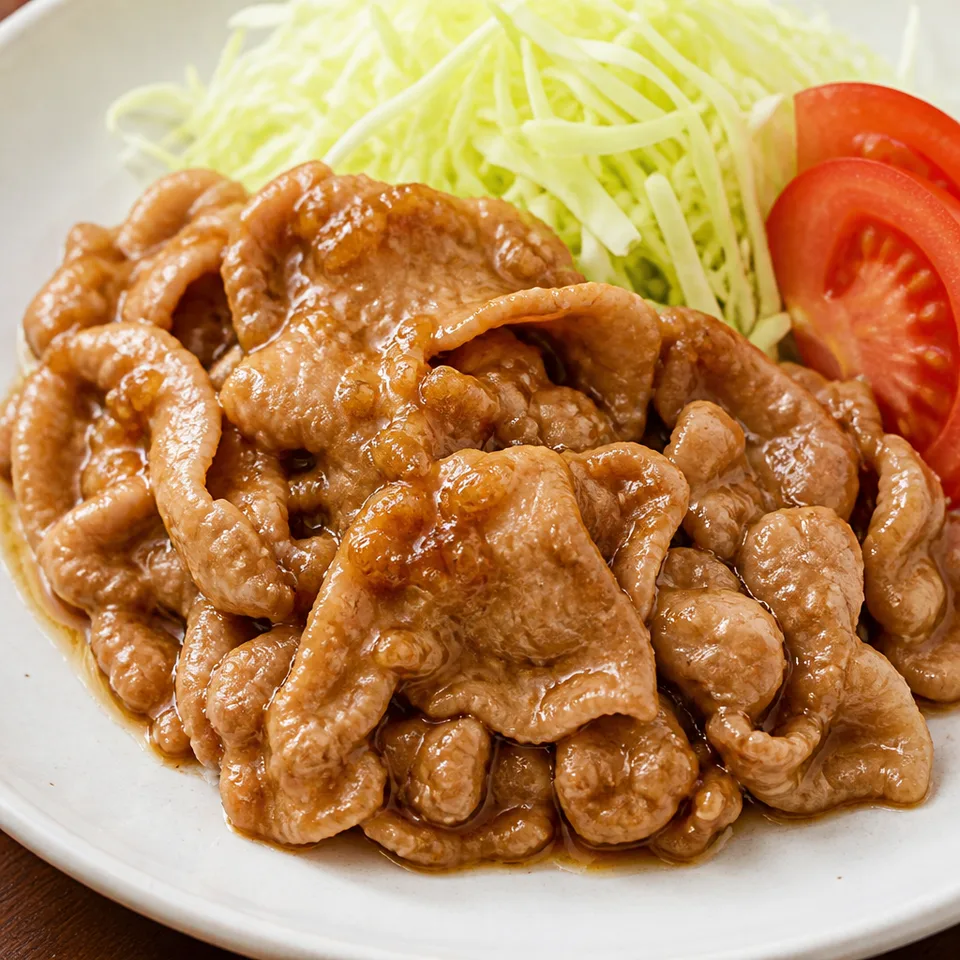
Thin pork belly
Cut the thin pork belly slices into bite-sized pieces before coating them in the garlic, ginger and soy mixture.
Grated aromatics
Grate the garlic and fresh ginger for the pork marinade so they're mixed through before frying begins.
Garlic chives or scallions
Either is listed for the soup; they join the udon during its final warming stage.
Let’s make it
Choose your servings, then check things off as you go.
Original recipe: Serves 2. Original quantities shown.
Check ingredients as you prepare them. These checks stay on this page.
How to make it
0 of 7 steps completeMake room for Pork & Kimchi Udon Noodle Soup
Review ingredients in your pantry before anything is added. Meal plans use your household size; grocery-only additions use the servings selected above.
The last little job
Build the bowls
Divide the heated noodles between bowls, top with pork and kimchi, ladle over soup and add the soft-boiled egg garnish.
A little more help as you go
Taste before adjusting heat
After the soup's brief simmer, check salt and spice and adjust with salt and gochugaru to taste.
Fresh udon needs preparation
Pre-boil fresh udon for two minutes less than its package directions, then drain and cold-rinse before adding to soup.
A few questions you might have
Can I use frozen precooked udon?
Yes, add it directly to the kimchi soup with the garlic chives, cover and simmer until warmed through.
When does the gochujang go in?
Stir it into the browned pork and kimchi with water and the reserved kimchi juice before simmering.
Do I need oil for pork belly?
The pork belly renders fat in the pan. The directions call for added oil if using a leaner cut instead.
Should I add all the gochugaru automatically?
Taste the simmered soup first and adjust its spice with gochugaru to taste, as directed.
Does the pork cook before water is added?
Stir-fry until the pork is cooked and the mixture browns around its edges before adding the soup liquids.
Storage & reheating safety
For cooked, perishable leftovers, refrigerate within 2 hours (1 hour above 90°F), using shallow containers for prompt cooling. Keep the refrigerator at 40°F or below, use refrigerated leftovers within 3–4 days, and reheat hot leftovers to 165°F, checked with a food thermometer. Follow any shorter package limit.
These are general safety limits, not a tested storage or freezing recommendation for this particular dish. USDA leftovers guidance · Safe cooking temperatures
Recipe source: norecipes.com. Ingredient names and quantities may be adapted for the pantry.
Preparation notes follow the recipe shown here.