Kitchen notes · a little help before you start
Chicken Potato Casserole
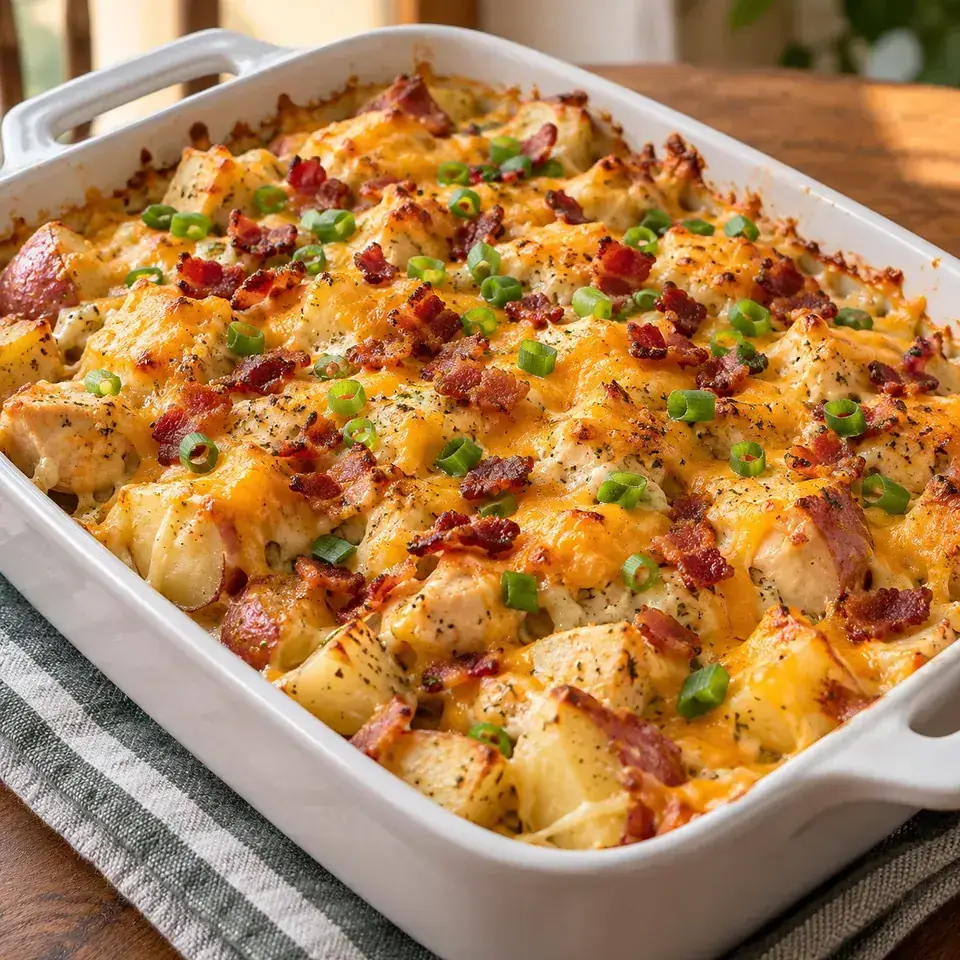
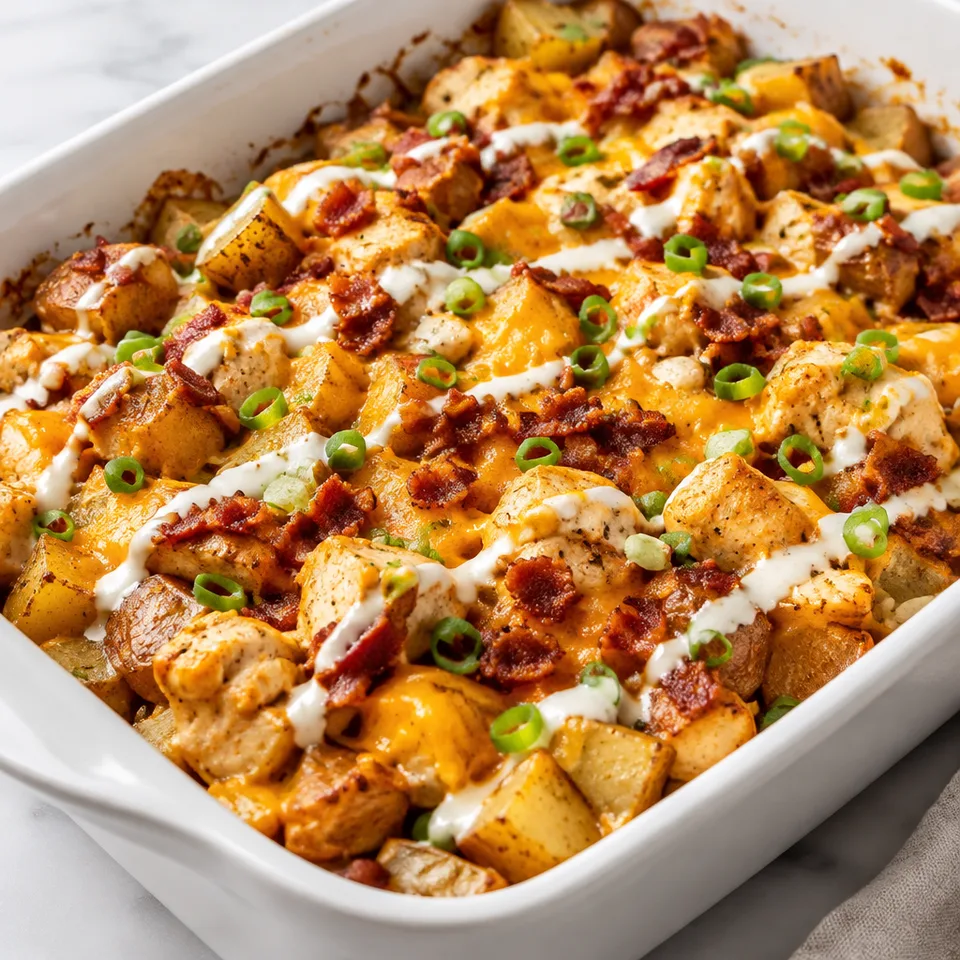
There are good things under that melted cheddar, so get your spoon right down to the potatoes. This is generous, savory casserole food with a tangy drizzle to keep it lively. A good choice when you want dinner to feel hearty and familiar from the first bite.
- Prep
- 15 min
- Cook
- 45 min
- Total
- 60 min
- Original yield
- Serves 6
- Ingredients
- 15 listed
Make it part of your week
Recipe categories & planning details
- Meal type
- Dinner
- Primary protein
- Chicken · Pork
- Cuisine
- American
- Cooking method
- Baking · Baked & roasted · Roasting
- Preparation & total time
- Prep: 15 minutes or less · Total: 31–60 minutes
- Dish type
- Casseroles
A few quick notes
1. Give the potatoes their head start
The potatoes roast before the chicken goes in, which keeps the chicken from drying out while the potatoes get tender. Stir them halfway through so the seasoned oil and bacon drippings keep moving around the pan.
2. Keep the chicken pieces even
Aim for fairly even 1-inch pieces of chicken. They are added after the potatoes, so similar sizing helps them cook through at the same pace and makes the 165°F check more reliable.
3. Save the bacon and cheese for late
The bacon and cheddar go on near the end. That way the cheese melts and bubbles without overcooking, and the bacon keeps more of its crisp texture instead of disappearing into the bake.
Get to know the ingredients
Russet potatoes
Cut the potatoes into 3/4-inch cubes so they have enough time to turn tender in the oven. The even layer in the baking dish matters too, since crowded chunks will cook less evenly.
Reserved bacon drippings
Keep 1 tablespoon of the drippings after cooking the bacon. It gets tossed with the potatoes before roasting and adds smoky flavor right where it does the most good.
Dijon mustard
Dijon shows up in two places here: a little with the chicken seasoning, then more in the sour cream drizzle. It gives both parts a bit of tang without turning the casserole into a mustardy dish.
Let’s make it
Choose your servings, then check things off as you go.
Original recipe: Serves 6. Original quantities shown.
Check ingredients as you prepare them. These checks stay on this page.
How to make it
0 of 8 steps completeMake room for Chicken Potato Casserole
Review ingredients in your pantry before anything is added. Meal plans use your household size; grocery-only additions use the servings selected above.
The last little job
The last little job
Let the casserole sit for a few minutes after it comes out of the oven, then drizzle over the sour cream mixture and scatter on the green onions. Adding that topping after baking keeps it cool, tangy, and fresh against the hot casserole.
A little more help as you go
Check the chicken
The bake time gives you a good window, but the chicken is done when the thickest pieces reach 165°F. Pull it then, even if you were expecting to leave it a little longer.
Thin the sour cream only if it needs it
Whisk the sour cream and Dijon first. If it is too thick to drizzle neatly, stir in the water or milk called for, just enough to loosen it.
A few questions you might have
Why do the potatoes cook before the chicken is added?
The potatoes need more time to soften and pick up browned edges. Adding the chicken later lets it cook through without spending the whole potato roasting time in the oven.
Should I mix the raw chicken with the potatoes from the beginning?
No. Roast the seasoned potatoes first, then stir in the seasoned chicken and bake until the chicken reaches 165°F. That order is part of what keeps the textures on track.
When do I crumble the bacon?
Cook it until crisp, let it cool on the paper towel-lined plate, then crumble it into small pieces. It gets sprinkled on with the cheddar near the end of baking.
Do I have to use the water or milk in the sour cream topping?
Only if the sour cream mixture is too thick to drizzle. Whisk the sour cream with Dijon first, then loosen it with 1 tablespoon of water or milk if needed.
How do I know the casserole is ready before adding the cheese?
The chicken should reach 165°F in the thickest pieces, and the potatoes should be tender. Once both are there, add the cheddar and bacon for the final short bake.
Any more cooking tips?
Cut the potatoes and chicken pieces evenly so they cook at the same rate. Roast the potatoes before adding the chicken so they have enough time to become tender and develop browned edges. Don’t overcook the chicken. Remove the casserole from the oven as soon as the chicken reaches 165°F. Reserve some of the bacon drippings for the potatoes. It adds a deeper smoky flavor without needing additional ingredients. Add the bacon and cheese near the end so the bacon stays crisp and the cheese doesn’t overcook. The sour cream mixture is best added after baking for a fresh, tangy contrast to the hot casserole.
Storage & reheating safety
For cooked, perishable leftovers, refrigerate within 2 hours (1 hour above 90°F), using shallow containers for prompt cooling. Keep the refrigerator at 40°F or below, use refrigerated leftovers within 3–4 days, and reheat hot leftovers to 165°F, checked with a food thermometer. Follow any shorter package limit.
These are general safety limits, not a tested storage or freezing recommendation for this particular dish. USDA leftovers guidance · Safe cooking temperatures
Recipe source: diethood.com. Ingredient names and quantities may be adapted for the pantry.
Preparation notes follow the recipe shown here.