Kitchen notes · a little help before you start
Thai Peanut Noodles
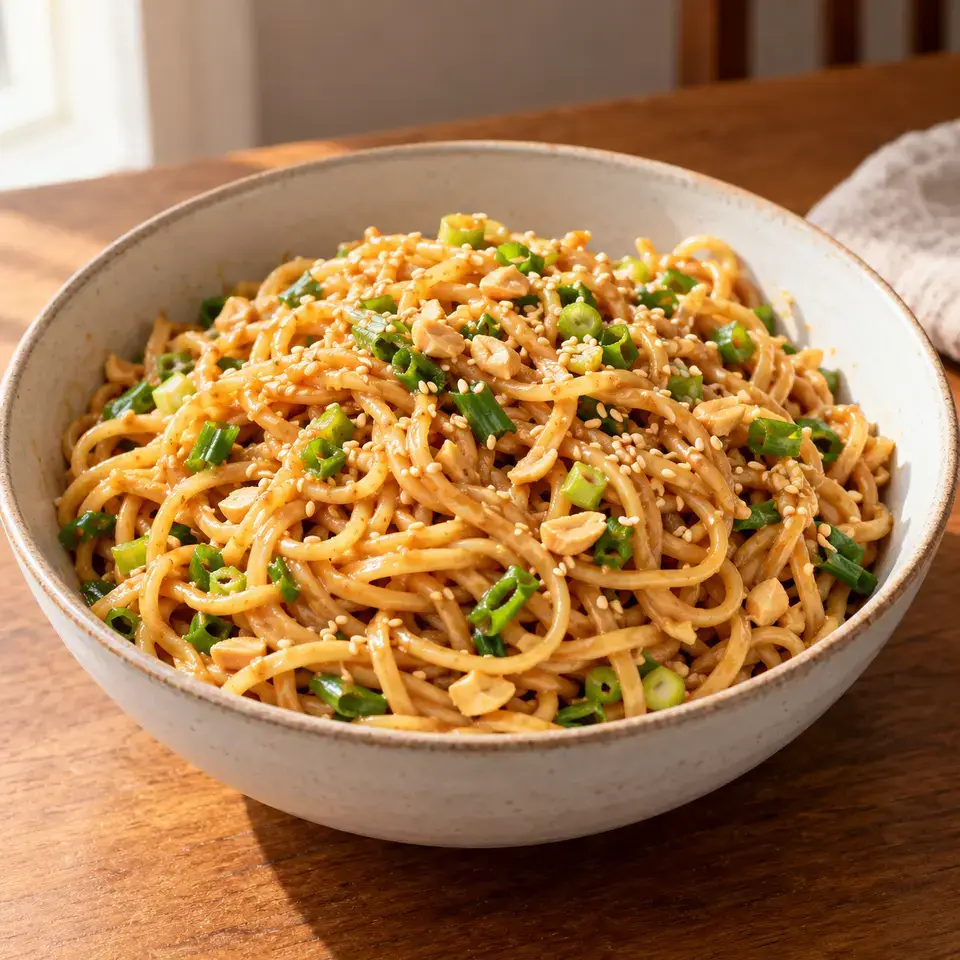
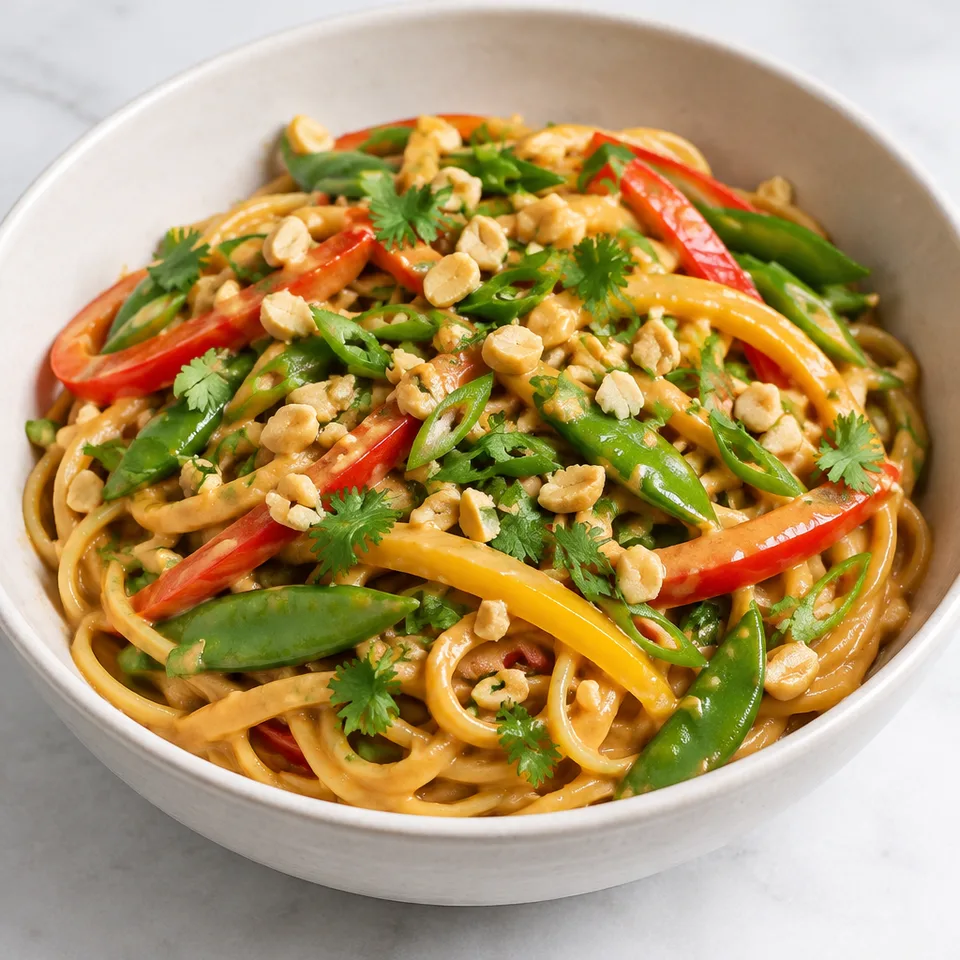
Creamy peanut sauce clings to long noodles, with crisp snap peas and bell pepper tucked through the bowl. Lime gives the rich sauce a tangy edge, while chopped roasted peanuts add the crunch that makes another forkful tempting.
- Prep
- 10 min
- Cook
- 10 min
- Total
- 20 min
- Original yield
- Serves 4
- Ingredients
- 13 listed
Make it part of your week
Recipe categories & planning details
- Meal type
- Main course
- Cuisine
- Asian
- Preparation & total time
- Prep: 15 minutes or less · Total: 30 minutes or less
- Dish type
- Noodles
A few quick notes
1. Add the snap peas at the end
Drop the trimmed snap peas into the pasta water only for the last 2 minutes. They’ll soften just enough while keeping their sweet crunch, which is exactly what works well against the creamy peanut sauce.
2. Whisk the sauce while the pasta cooks
The sauce comes together in the time it takes the noodles to boil. Stir until it’s smooth before it meets the pasta, then loosen it with a tiny splash of water if it looks too thick.
3. Toss everything back in the pot
After draining, return the noodles and snap peas to the pot before adding the peppers and sauce. The warm pot gives you room to toss and helps the peanut sauce coat the noodles evenly.
Get to know the ingredients
Long noodles work best here
Linguine is called for, but another long pasta or noodle is fine. The shape matters because the peanut sauce clings well to long strands and gives you a good mix of noodles and vegetables in each bite.
Use creamy peanut butter
Creamy peanut butter makes the sauce smooth quickly with the soy sauce, honey, lime juice, sesame oil, chili garlic sauce, and warm water. Chopped roasted peanuts still bring crunch at the end.
Slice the peppers thinly
The bell peppers go in after the noodles are drained, so thin slices are the way to go. They’ll stay fresh and crisp instead of needing time to cook through.
Let’s make it
Choose your servings, then check things off as you go.
Original recipe: Serves 4. Original quantities shown.
Check ingredients as you prepare them. These checks stay on this page.
How to make it
0 of 4 steps completeMake room for Thai Peanut Noodles
Review ingredients in your pantry before anything is added. Meal plans use your household size; grocery-only additions use the servings selected above.
The last little job
The last little job
Once the noodles are sauced, pile them into bowls and add the peanuts, cilantro, and green onions. Those toppings go on at the end so the peanuts stay crunchy and the herbs taste fresh.
A little more help as you go
Thin the sauce slowly
Peanut sauce can tighten up as you stir it. If it needs loosening, add more water just 1 teaspoon at a time so it doesn’t swing from creamy to watery.
Salt the pasta water
Start with salted boiling water for the linguine. Since the noodles are the base of the dish, seasoning them as they cook helps the finished bowl taste balanced once the peanut sauce is tossed in.
A few questions you might have
Do the bell peppers cook in this recipe?
No. They’re added after the noodles and snap peas are drained, then tossed with the hot noodles and sauce. That keeps them crisp and fresh in the finished bowl.
Can I use a different noodle instead of linguine?
Yes, you can use another long pasta or noodle. Keep the same cooking cue: cook according to the package directions, then add the snap peas during the last 2 minutes.
Why is warm water in the peanut sauce?
Warm water helps the peanut butter stir into a smooth sauce. It also gives you a way to thin the sauce gently, 1 teaspoon at a time, if it’s too thick to coat the noodles.
When do the peanuts and herbs go on?
Add the chopped roasted peanuts, cilantro, and green onions after the noodles are in the bowl. They’re finishing toppings, so they don’t need to be tossed into the hot pot.
Are the snap peas boiled with the pasta the whole time?
No. Add them only during the last 2 minutes of the pasta cooking time. That gives them a quick cook without making them limp.
Storage & reheating safety
For cooked, perishable leftovers, refrigerate within 2 hours (1 hour above 90°F), using shallow containers for prompt cooling. Keep the refrigerator at 40°F or below, use refrigerated leftovers within 3–4 days, and reheat hot leftovers to 165°F, checked with a food thermometer. Follow any shorter package limit.
These are general safety limits, not a tested storage or freezing recommendation for this particular dish. USDA leftovers guidance · Safe cooking temperatures
Recipe source: dinneratthezoo.com. Ingredient names and quantities may be adapted for the pantry.
Preparation notes follow the recipe shown here.