Kitchen notes · a little help before you start
Soy-Glazed Eggplant Donburi
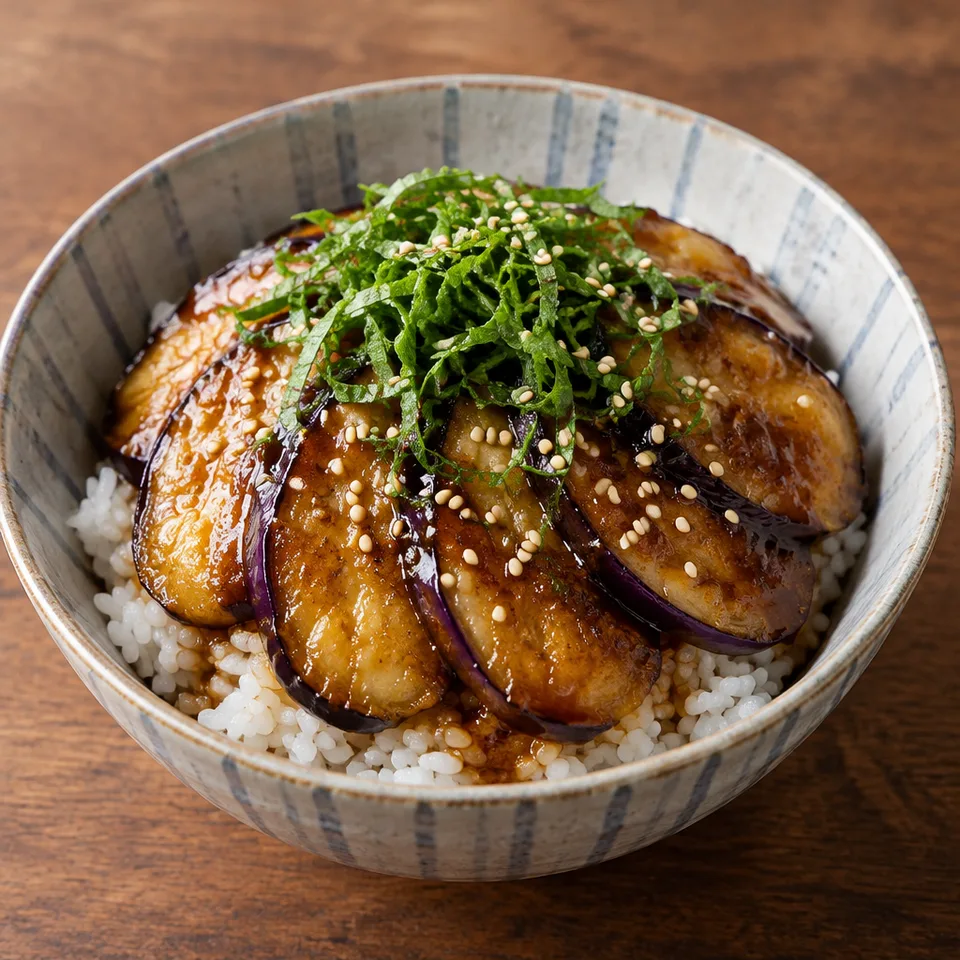
Soy-glazed eggplant over rice makes a deeply inviting bowl, with soft slices and a sauce that clings to their golden edges. Ginger gives the sweet, savory glaze a little warmth. A forkful with some rice underneath catches the sauce as well as the tender eggplant.
- Prep
- 10 min
- Cook
- 10 min
- Total
- 20 min
- Original yield
- Serves 2
- Ingredients
- 10 listed
Make it part of your week
Recipe categories & planning details
- Meal type
- Main course
- Cuisine
- Japanese · Asian
- Cooking method
- Pressure cooker
- Preparation & total time
- Prep: 15 minutes or less · Total: 30 minutes or less
A few quick notes
1. Salt, then blot well
The salted eggplant rests for 15 minutes, then gets wiped dry. Don’t skip the blotting, since extra moisture will fight the starch coating and make browning harder.
2. Give the slices room
Lay the eggplant in a single layer and leave it alone until the underside is golden. Moving it too soon makes it harder to get that nice seared surface.
3. Loosen the sauce if needed
The starch on the eggplant can thicken the sauce quickly once the mirin and soy go in. If it tightens up before the slices are coated, add water 1 tablespoon at a time.
Get to know the ingredients
Use slender eggplants
Japanese or Chinese eggplants are the ones called for here. Their long shape makes neat lengthwise slices, which brown well and sit nicely over the rice.
Shiso goes on at the end
Shiso is rinsed, dried, stemmed, rolled, and cut into fine strips. Keep it for the garnish so its fresh flavor doesn’t disappear into the hot pan.
Start with cooked rice
The bowl is assembled with cooked Japanese short-grain rice, not raw rice. If you’re making rice just for this, get it going before the eggplant so the donburi can be served right away.
Let’s make it
Choose your servings, then check things off as you go.
Original recipe: Serves 2. Original quantities shown.
Check ingredients as you prepare them. These checks stay on this page.
How to make it
0 of 13 steps completeMake room for Soy-Glazed Eggplant Donburi
Review ingredients in your pantry before anything is added. Meal plans use your household size; grocery-only additions use the servings selected above.
The last little job
The last little job
Spoon a little sauce over the rice first, then overlap the glazed eggplant on top. Sesame seeds and the cut shiso finish the bowl right before serving.
A little more help as you go
Coat lightly with starch
A thin coating is enough. It helps the eggplant brown and later gives the sauce something to cling to, so there’s no need for a heavy, dusty layer.
Add the oil in two parts
The recipe uses half the oil to start the eggplant, then drizzles the rest over the top before flipping. That helps the second side cook and brown too.
A few questions you might have
Can I use cornstarch instead of potato starch?
Yes. Use potato starch or cornstarch, and either one is used the same way: a thin coating on both sides of the eggplant before it goes into the pan.
Why shouldn’t I touch the eggplant while the first side cooks?
It needs a few minutes of steady contact with the hot pan to brown properly. Leave the slices in place until the bottom is golden, then flip them.
What if the glaze gets too thick before the eggplant is coated?
Turn to the water fix in the recipe: add 1 tablespoon at a time to loosen the sauce, then keep spooning it over the eggplant until the slices are well coated.
Do I need a donburi bowl?
Use individual donburi bowls if you have them. They’re a bit bigger than rice bowls, which gives room for the rice, sauce, and overlapping eggplant slices.
Can I use green onion instead of shiso?
Yes. The ingredient list allows 1 green onion in place of the shiso leaves. Add it as the fresh garnish at the end, where the shiso would go.
Storage & reheating safety
For cooked, perishable leftovers, refrigerate within 2 hours (1 hour above 90°F), using shallow containers for prompt cooling. Keep the refrigerator at 40°F or below, use refrigerated leftovers within 3–4 days, and reheat hot leftovers to 165°F, checked with a food thermometer. Follow any shorter package limit.
These are general safety limits, not a tested storage or freezing recommendation for this particular dish. USDA leftovers guidance · Safe cooking temperatures
Recipe source: justonecookbook.com. Ingredient names and quantities may be adapted for the pantry.
Preparation notes follow the recipe shown here.