Kitchen notes · a little help before you start
Char Siu (Chinese BBQ Pork, 叉烧肉)
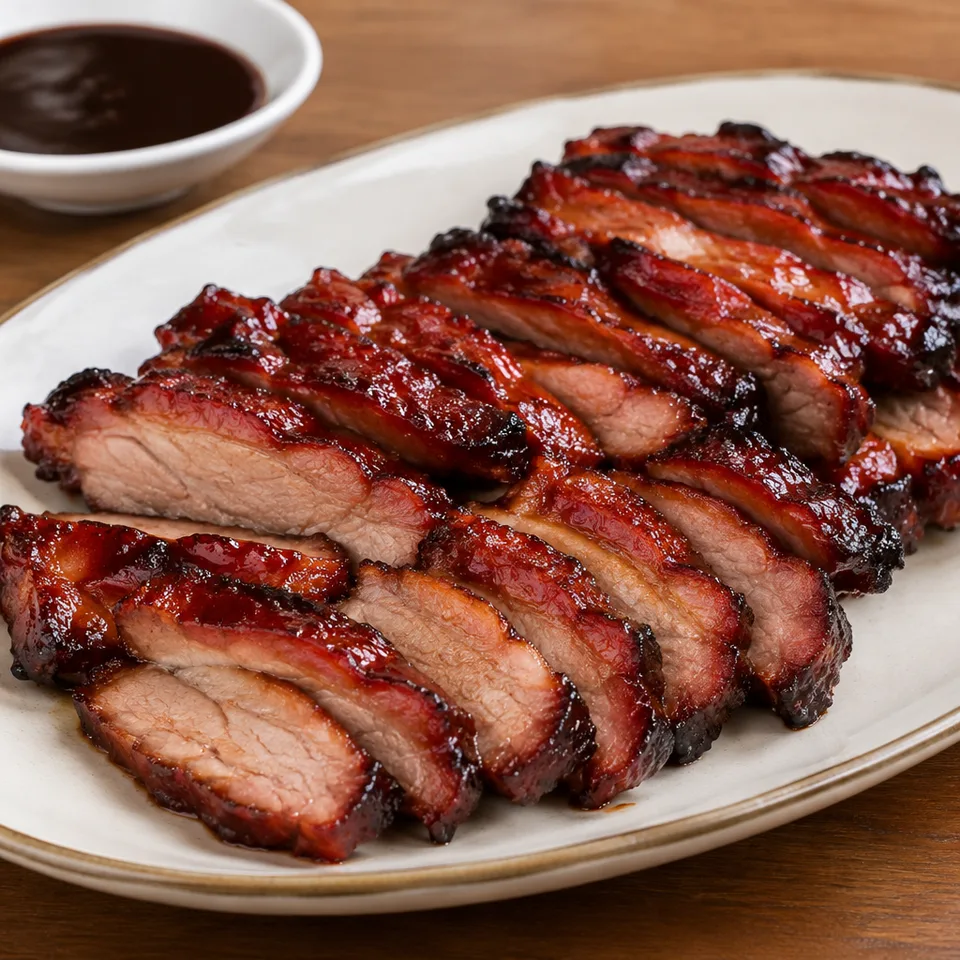
Char siu has an appealing sticky glaze, with charred edges that are hard to pass up when the pork is sliced. Five spice and garlic run through its savory sweetness. A plate of those glossy slices is a welcome sight if you enjoy meat with a generous coating.
- Prep
- 20 min
- Cook
- 30 min
- Total
- 770 min
- Original yield
- Serves 8
- Ingredients
- 12 listed
Make it part of your week
Recipe categories & planning details
- Meal type
- Appetizers · Appetizers & snacks · Main course
- Primary protein
- Pork
- Cuisine
- Chinese · Asian
- Cooking method
- Baking · Baked & roasted · Roasting
- Preparation & total time
- Prep: 16–30 minutes · Total: over 60 minutes
A few quick notes
1. Cut the strips evenly
Aim for long strips with a similar thickness, even if the shapes are a bit irregular. That helps the pork roast at the same pace and gives you better slices at the end.
2. Save the glaze base
Only part of the mixed sauce goes into the bag with the pork. Keep the rest in the fridge so it can be simmered with the maltose later for that clingy glaze.
3. Watch the broiler stage
The final broil is where the glaze tightens up and the edges char. If the pork still looks wet after flipping, skip that extra brushing so the coating can dry and stick.
Get to know the ingredients
Pork shoulder
Pork shoulder is the juicier choice here and handles the heat well. Pork loin works too, but it’s leaner, so the temperature checks matter more to keep it from drying out.
Red food coloring
The red coloring is optional. It gives the pork that familiar char siu color, but you can leave it out if you’d rather skip it.
Maltose
Maltose is thick and sticky, which is exactly why it makes such a glossy coating. Warm the jar and the spoon as directed so it’s easier to scoop and stir into the glaze.
Let’s make it
Choose your servings, then check things off as you go.
Original recipe: Serves 8. Original quantities shown.
Check ingredients as you prepare them. These checks stay on this page.
How to make it
0 of 18 steps completeMake room for Char Siu (Chinese BBQ Pork, 叉烧肉)
Review ingredients in your pantry before anything is added. Meal plans use your household size; grocery-only additions use the servings selected above.
The last little job
The last little job
Let the pork rest before slicing so the cooking can settle and the juices stay in the meat. Slice the strips crosswise, which is why the first cut along the grain matters.
A little more help as you go
Keep water below the rack
The tray gets a layer of water, but it shouldn’t touch the rack. The pork needs to sit above it so the glaze can roast onto the surface instead of steaming off.
Use the thermometer twice
Check once after the short bakes to see whether the pork needs longer, then again after broiling. The resting time will let the temperature rise a little more.
A few questions you might have
Why cut the pork along the grain at the start?
The cooked strips are sliced crosswise before serving. Cutting the raw pork along the grain first means those final slices end up across the grain, which is what you want.
Can I use honey instead of maltose?
Yes. You can use honey, but the glaze will be looser and may not cling as well. If needed, brush on more glaze after roasting or serve some alongside.
Do I need to glaze it every time?
During the oven bakes, yes, build up those layers. Near the end, use the pork as your guide: if it still looks wet after flipping, skip the extra glaze so the broiler can set the coating.
What temperature should the pork reach?
After the first roasting stage, the thickest part should read 140ºF to 150ºF. After broiling, check again for 150ºF to 155ºF before resting.
Why warm the maltose jar and spoon?
Maltose is very thick at room temperature. Warming the jar loosens it, and a warm, lightly oiled spoon helps it slide into the pan instead of clinging stubbornly.
Any more cooking tips?
Pork shoulder is highly recommended for the juiciest, most flavorful char siu. Pork loin creates a leaner result and should be monitored carefully to avoid overcooking. Traditionally, Chinese chefs use red yeast rice to give char siu its signature red color. Because red yeast rice can be difficult to find, I use a small amount of red food coloring. If you prefer a natural ingredient, check out my char siu chicken recipe, where I use red fermented tofu (furu) to add color, or simply omit the food coloring. Maltose is a very sticky syrup that stays semi-solid at room temperature and remains thick when heated. It is the key ingredient to give the char siu pork that glossy coating. These days it’s quite easy to find it on Amazon if you don’t live close to a Chinese market, and I highly recommend getting it for the best result. Honey is an OK replacement, but the glaze will be much looser and won’t stay on the pork as well. If using boneless pork shoulder, follow the natural seams where the bone was removed to divide the shoulder into large pieces. Cutting along the grain matters, because you’re eventually slicing the cooked strips crosswise. Cutting the initial slabs along the grain means the final serving slices will be across the grain. The sliced pieces won’t be very even in the shape but that’s OK. Try to keep the thickness the same though, so they roast at the same speed. Maltose is a very thick syrup and it’s hard to scoop at room temperature. Heating the jar loosens its texture, and heating the spoon makes it easier to scoop. The oil coating helps the maltose slide off the spoon and into the pan. The temperature of the pork will keep rising after resting, so I prefer to stop a bit earlier to prevent the pork from drying out. If you use pork loin, it’s important to stop cooking at this stage because the cut is lean and will dry out if over cooked. Pork shoulder handles higher temperatures better and will still taste very good if you roast it a little longer. If using maltose, the glaze should thicken and cling to the pork well. If using honey, the glaze will be thinner and may not stick as well. In that case, you can brush the pork with additional glaze after roasting, or serve some of the leftover glaze alongside the pork.
Storage & reheating safety
For cooked, perishable leftovers, refrigerate within 2 hours (1 hour above 90°F), using shallow containers for prompt cooling. Keep the refrigerator at 40°F or below, use refrigerated leftovers within 3–4 days, and reheat hot leftovers to 165°F, checked with a food thermometer. Follow any shorter package limit.
These are general safety limits, not a tested storage or freezing recommendation for this particular dish. USDA leftovers guidance · Safe cooking temperatures
Recipe source: omnivorescookbook.com. Ingredient names and quantities may be adapted for the pantry.
Preparation notes follow the recipe shown here.