Kitchen notes · a little help before you start
Spicy Shrimp Pasta
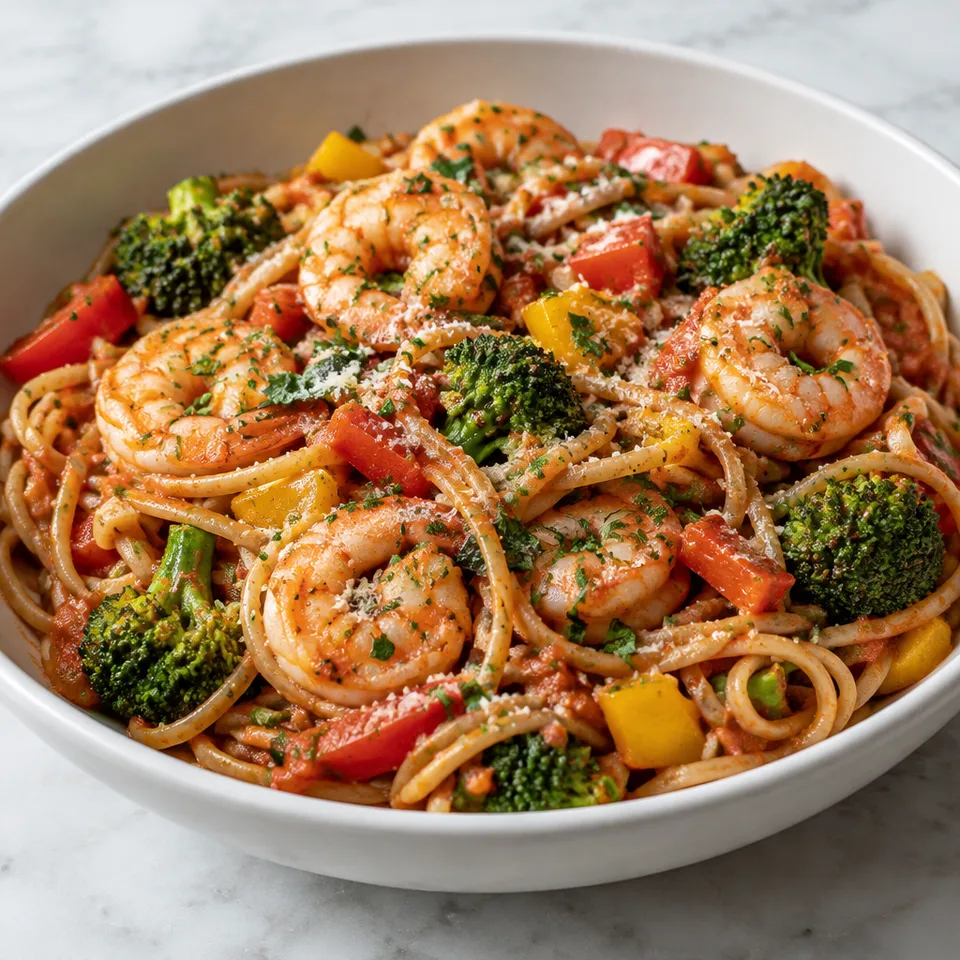
Spicy tomato sauce wraps around shrimp and pasta, with colorful vegetables adding a welcome crunch. The shrimp stay at the center of each forkful, and the arrabbiata sauce gives the whole bowl a lively heat that carries through the noodles.
- Prep
- 15 min
- Cook
- 15 min
- Total
- 30 min
- Original yield
- Serves 5
- Ingredients
- 12 listed
Make it part of your week
Recipe categories & planning details
- Meal type
- Main course
- Primary protein
- Seafood
- Cuisine
- Italian
- Preparation & total time
- Prep: 15 minutes or less · Total: 30 minutes or less
- Dish type
- Pasta
A few quick notes
1. Keep the vegetables crisp-tender
The broccoli and peppers get a short head start before the sauce goes in. You want them softened at the edges but still lively, since they'll sit in the hot sauce while the shrimp cooks.
2. Watch the shrimp
The shrimp are done when they turn pink and opaque. The timing is short, so keep the simmer gentle and start checking as soon as the color changes.
3. Add the pasta right away
Drain the noodles and move them straight into the skillet. Tossing while everything is hot helps the sauce cling and spreads the shrimp and vegetables through the pasta.
Get to know the ingredients
Whole wheat pasta
Cook the spaghetti, linguine, or fettuccini only to al dente. The noodles get tossed with hot sauce at the end, so stopping there keeps them from turning soft.
Arrabbiata sauce
Use the spicy arrabbiata sauce as the cooking liquid for the shrimp. Bring it up gently, then lower the heat so it simmers instead of boiling hard.
Raw peeled shrimp
Start with raw large shrimp that are peeled and deveined. They'll cook directly in the sauce, changing from gray-blue to pink and opaque when they're ready.
Let’s make it
Choose your servings, then check things off as you go.
Original recipe: Serves 5. Original quantities shown.
Check ingredients as you prepare them. These checks stay on this page.
How to make it
0 of 4 steps completeMake room for Spicy Shrimp Pasta
Review ingredients in your pantry before anything is added. Meal plans use your household size; grocery-only additions use the servings selected above.
The last little job
The last little job
Finish with parsley and Parmesan after the pasta has been tossed through the sauce. Then serve it right away, while the noodles are coated and the shrimp are still tender.
A little more help as you go
Give yourself room to toss
A large, deep skillet, Dutch oven, or big wok makes the final toss much easier. The pasta, shrimp, vegetables, and sauce all meet in that pan at the end.
Garlic goes in late
The garlic only needs about 30 seconds, just until fragrant. Adding it after the vegetables and shallot keeps it from sitting over the heat too long before the sauce goes in.
A few questions you might have
Can I use linguine or fettuccini instead of spaghetti?
Yes. Use whole wheat spaghetti, linguine, or fettuccini. Whichever shape you choose, cook it to al dente before tossing it with the sauce.
How do I know the shrimp are cooked through?
Look for the color and texture change. The shrimp go from gray-blue to pink and opaque, which should happen after a short gentle simmer in the sauce.
Why add the shallot after the broccoli and peppers?
The broccoli and peppers need a little more time in the pan. The minced shallot goes in after a couple of minutes so it can soften and start to brown without overcooking.
Do I need to rinse the pasta after draining it?
No. Drain it and add it immediately to the sauce. The hot noodles get tossed right in so they can coat well with the arrabbiata, shrimp, and vegetables.
Is the Parmesan required?
No, the Parmesan is optional. Sprinkle it on with the parsley at the end if you want it, or finish with just the parsley.
Storage & reheating safety
For cooked, perishable leftovers, refrigerate within 2 hours (1 hour above 90°F), using shallow containers for prompt cooling. Keep the refrigerator at 40°F or below, use refrigerated leftovers within 3–4 days, and reheat hot leftovers to 165°F, checked with a food thermometer. Follow any shorter package limit.
These are general safety limits, not a tested storage or freezing recommendation for this particular dish. USDA leftovers guidance · Safe cooking temperatures
Recipe source: wellplated.com. Ingredient names and quantities may be adapted for the pantry.
Preparation notes follow the recipe shown here.