Kitchen notes · a little help before you start
Lemon-Parmesan Angel Hair Pasta with Shrimp
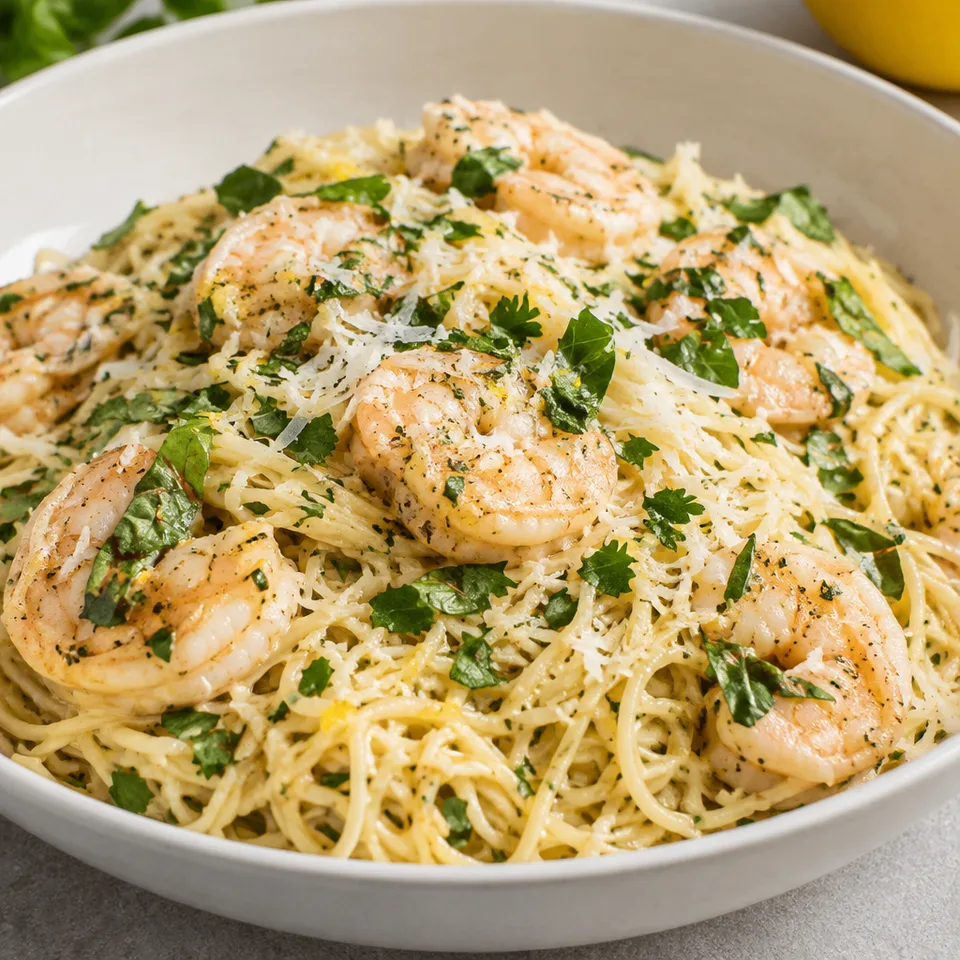
Lemon and Parmesan make a bright, savory partner for shrimp and delicate angel hair. The noodles catch little bits of garlic and fresh herbs, giving each forkful plenty of flavor. It's a pleasant dinner when you'd like pasta that feels buttery and lively at the same time.
- Prep
- 15 min
- Cook
- 20 min
- Total
- 35 min
- Original yield
- Serves 5
- Ingredients
- 12 listed
Make it part of your week
Recipe categories & planning details
- Meal type
- Main course
- Primary protein
- Seafood
- Cuisine
- Italian
- Preparation & total time
- Prep: 15 minutes or less · Total: 31–60 minutes
- Dish type
- Pasta
A few quick notes
1. Start the pasta at the right moment
Angel hair cooks very quickly, so it works well to drop it into the salted water when you begin cooking the shrimp. That keeps the pasta from waiting around while the shrimp finishes.
2. Save some pasta water
Scoop out the pasta water before draining. You'll use it to help the lemon, butter, oil and parmesan cling to the angel hair, with a little extra added only if the pasta needs loosening.
3. Add the garlic after the shrimp starts cooking
The shrimp gets a short head start before the garlic goes in. That way the garlic has time to soften and flavor the pan without spending the whole shrimp cooking time over medium-high heat.
Get to know the ingredients
Angel hair cooks fast
Keep an eye on the pasta package directions because angel hair can be done in about 4 minutes. It should be ready to toss with the shrimp right after draining.
Fresh lemon does the work
Use both the zest and the juice here. The zest goes in with the drained pasta, and the juice brings the sharp lemon flavor into the quick pan sauce.
Use fresh herbs
The basil and parsley are added at the end, with some tossed through the pasta and some scattered over the top. Fresh herbs matter here for both flavor and texture.
Let’s make it
Choose your servings, then check things off as you go.
Original recipe: Serves 5. Original quantities shown.
Check ingredients as you prepare them. These checks stay on this page.
How to make it
0 of 3 steps completeMake room for Lemon-Parmesan Angel Hair Pasta with Shrimp
Review ingredients in your pantry before anything is added. Meal plans use your household size; grocery-only additions use the servings selected above.
The last little job
Serve it while it's warm
Once the pasta has been tossed with the shrimp, lemon, herbs and parmesan, bring it straight to the table. Angel hair is best here while the sauce is still loose and glossy.
A little more help as you go
Tails are optional
The shrimp can go into the skillet with or without tails. If you want easier forkfuls once everything is tossed with the angel hair, remove them before cooking.
Season in the skillet
Salt and pepper go onto the shrimp as it cooks, so don't wait until the whole dish is finished to season. The pasta water is salted too, which helps the angel hair taste good on its own.
A few questions you might have
Should I cook the shrimp all the way before adding the pasta?
Yes. Cook the shrimp for the first couple of minutes, add the garlic, then continue until the shrimp is cooked through before tossing in the drained pasta and lemon.
Why add pasta water instead of just draining the pasta completely?
The reserved water helps bring the buttery, lemony pan juices together around the angel hair. Start with the amount called for, then add more a tablespoon at a time only if it needs it.
Do the herbs all go in at once?
No. Most of the parsley and basil get tossed into the pasta, then the remaining herbs are sprinkled over the top with the parmesan before serving.
Can I use dried basil or parsley?
Use fresh herbs here. Dried herbs won't give the same flavor or texture.
When should I add the parmesan?
Add it at the very end, after the pasta has been tossed with the shrimp, lemon and herbs. It gets sprinkled over the top with the last of the basil and parsley.
Any more cooking tips?
Fresh herbs are a must here! Dried herbs won't give you the same flavor or texture.
Storage & reheating safety
For cooked, perishable leftovers, refrigerate within 2 hours (1 hour above 90°F), using shallow containers for prompt cooling. Keep the refrigerator at 40°F or below, use refrigerated leftovers within 3–4 days, and reheat hot leftovers to 165°F, checked with a food thermometer. Follow any shorter package limit.
These are general safety limits, not a tested storage or freezing recommendation for this particular dish. USDA leftovers guidance · Safe cooking temperatures
Recipe source: cookingclassy.com. Ingredient names and quantities may be adapted for the pantry.
Preparation notes follow the recipe shown here.