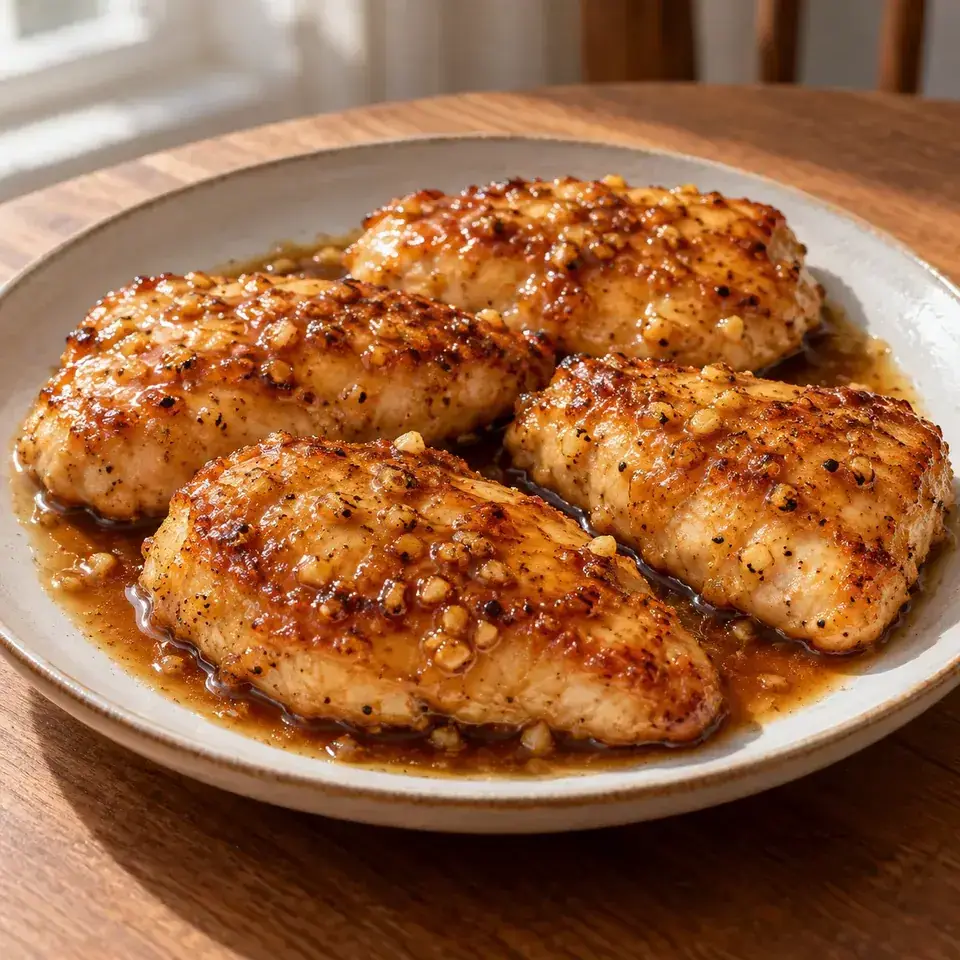
Kitchen notes · a little help before you start
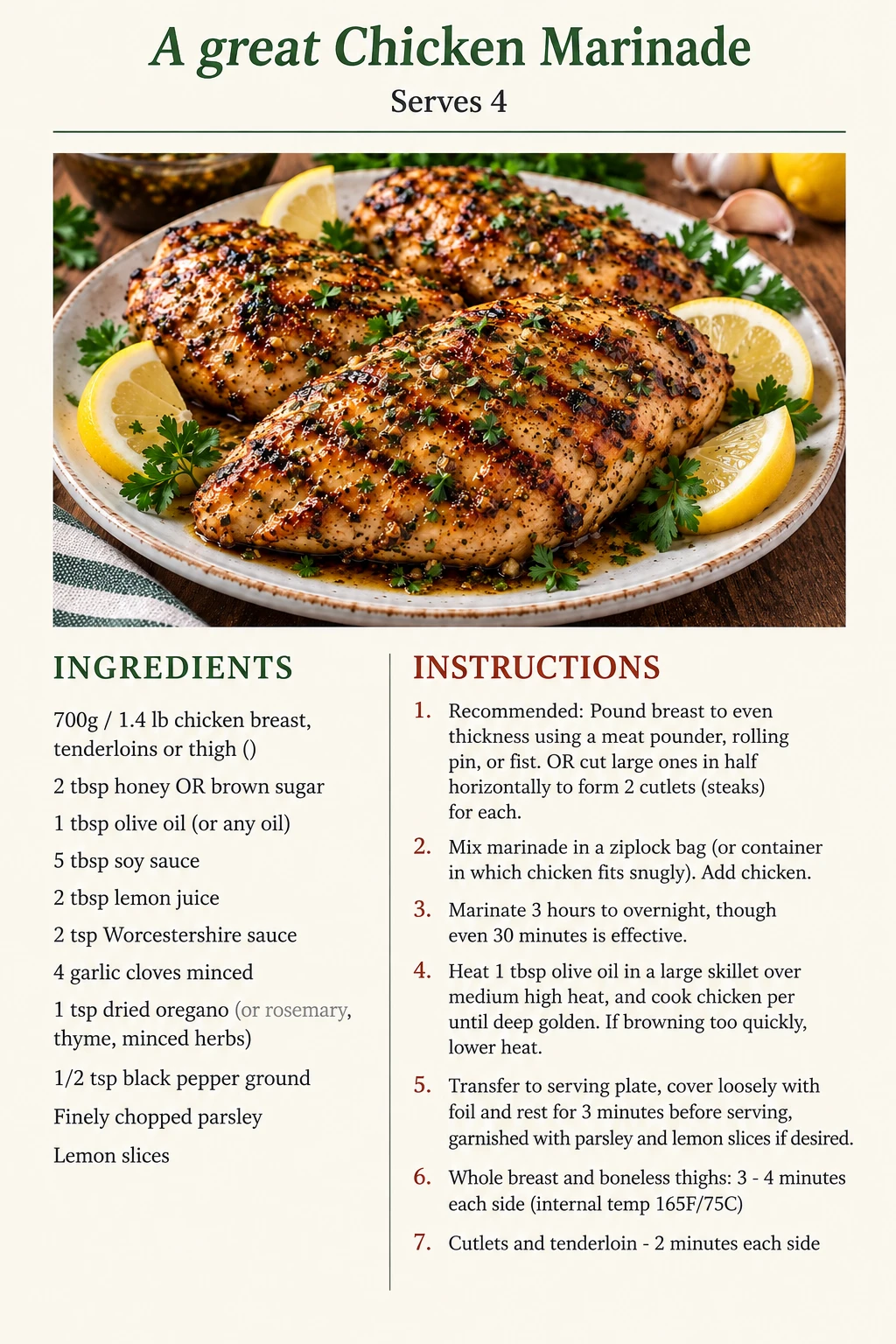
A great Chicken Marinade
A great Chicken Marinade brings together chicken breast, honey, and soy sauce. Look at the marinating step before you get the rest of dinner going. The quick notes will help you get the small jobs lined up before you start.
- Prep
- 5 min
- Cook
- 10 min
- Total
- 15 min
- Original yield
- Serves 4
- Ingredients
- 11 listed
Make it part of your week
Recipe categories & planning details
- Meal type
- Main course
- Primary protein
- Chicken
- Preparation & total time
- Quick dinners · Prep: 15 minutes or less · Total: 30 minutes or less
- Budget (estimated)
- Low cost
A few quick notes
1. Give the marinade its turn
Look at the marinating step before you get the rest of dinner going. Keep that preparation in the order the recipe gives, and check the full method for how it fits around the cooking.
2. Keep the resting step
Leave the resting or standing step in place when planning the finish. Use that moment to get the serving things ready, and follow the method before cutting, stirring or serving.
3. Keep the lid step in mind
Have the lid or covering ready before you need it. Follow the covered and uncovered parts of the method in their own order, especially when the finish changes partway through.
Get to know the ingredients
Chicken breast
Look at how this ingredient comes into the method: Recommended: Pound breast to even thickness using a meat pounder, rolling pin, or fist.
Honey
Look at how this ingredient comes into the method: Recommended: Pound breast to even thickness using a meat pounder, rolling pin, or fist.
Soy sauce
Look at how this ingredient comes into the method: Recommended: Pound breast to even thickness using a meat pounder, rolling pin, or fist.
Let’s make it
Choose your servings, then check things off as you go.
Original recipe: Serves 4. Original quantities shown.
Check ingredients as you prepare them. These checks stay on this page.
How to make it
0 of 7 steps completeMake room for A great Chicken Marinade
Review ingredients in your pantry before anything is added. Meal plans use your household size; grocery-only additions use the servings selected above.
The last little job
Keep the last little job in mind
The recipe finishes with this step: Cutlets and tenderloin - 2 minutes each side Set out what you need for that finish before the cooking gets busy.
A little more help as you go
Match the preparation in the method
Take a look at the chopping, slicing or shaving step before bringing the parts together. Use the preparation described there so the food goes into the next stage in the form the recipe expects.
Have the pan ready for its first job
Read the pan-heating step before beginning. Have the ingredients for that stage ready, then follow the heat and additions in the recipe’s order.
A few questions you might have
What should I get ready before starting?
Set out the skillet. Read the first preparation step before you get going: Recommended: Pound breast to even thickness using a meat pounder, rolling pin, or fist.
Which little step is worth remembering?
Look at the marinating step before you get the rest of dinner going. Keep that preparation in the order the recipe gives, and check the full method for how it fits around the cooking.
What check should I look for as it cooks?
Keep this part of the method in view: Heat 1 tbsp olive oil in a large skillet over medium high heat, and cook chicken per times below until deep golden (see video).
Is there another preparation step to plan for?
Take a look at the chopping, slicing or shaving step before bringing the parts together. Use the preparation described there so the food goes into the next stage in the form the recipe expects.
Storage & reheating safety
For cooked, perishable leftovers, refrigerate within 2 hours (1 hour above 90°F), using shallow containers for prompt cooling. Keep the refrigerator at 40°F or below, use refrigerated leftovers within 3–4 days, and reheat hot leftovers to 165°F, checked with a food thermometer. Follow any shorter package limit.
These are general safety limits, not a tested storage or freezing recommendation for this particular dish. USDA leftovers guidance · Safe cooking temperatures
Recipe source: RecipeTin Eats. Ingredient names and quantities may be adapted for the pantry.
Preparation notes follow the recipe shown here.
View saved recipe card
Fixed portions in this saved image. Use the recipe above for current ingredients and serving amounts.
Open full-size card ↗