Kitchen notes · a little help before you start
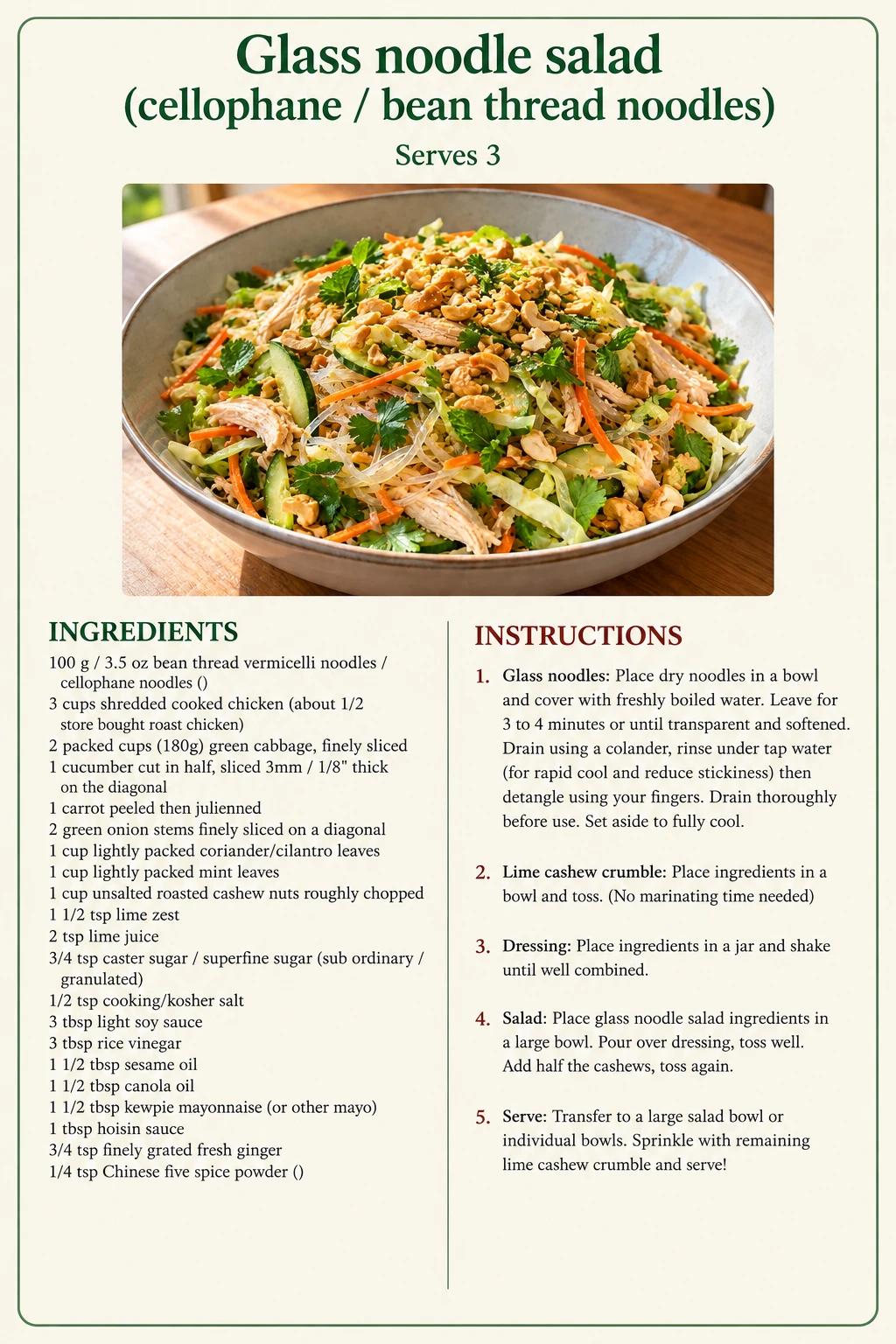
Glass noodle salad (cellophane / bean thread noodles)
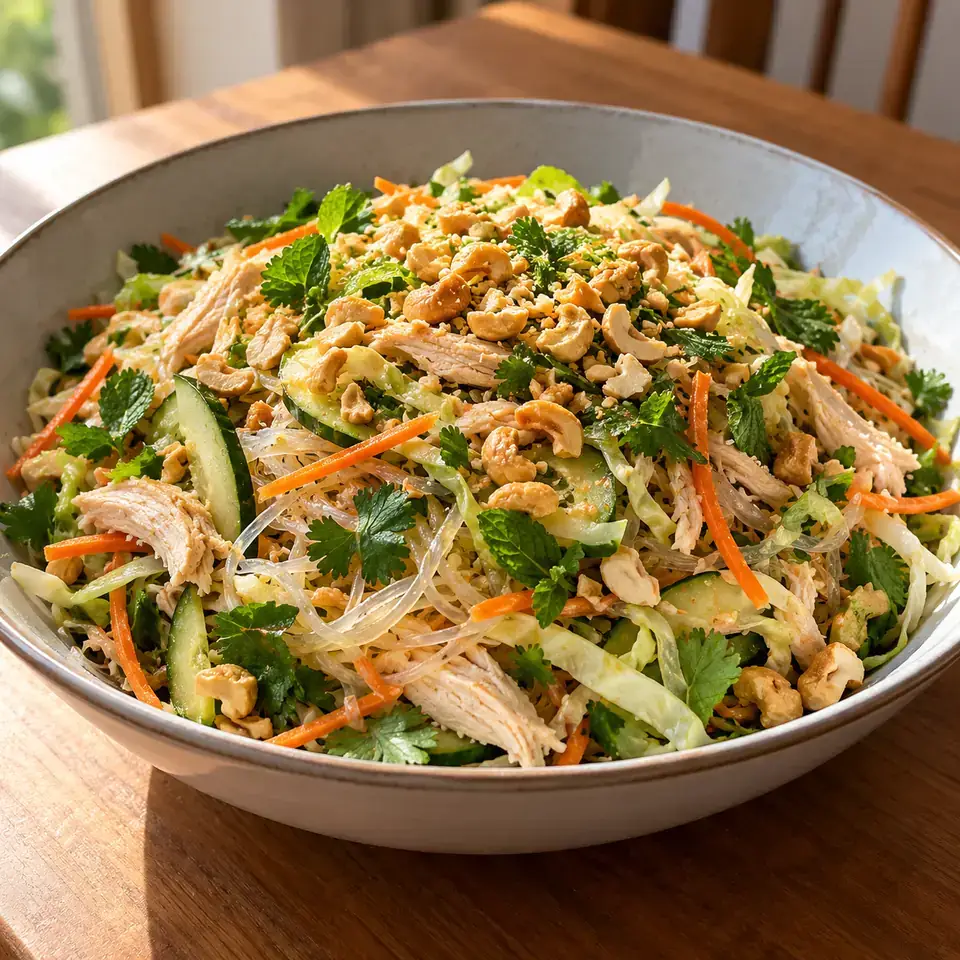
Glass noodle salad (cellophane / bean thread noodles) brings together glass noodles, cooked chicken, and cabbage. Look at the marinating step before you get the rest of dinner going. The quick notes will help you get the small jobs lined up before you start.
- Prep
- 20 min
- Original yield
- Serves 4
- Ingredients
- 21 listed
Make it part of your week
Recipe categories & planning details
- Meal type
- Sides
- Primary protein
- Chicken
- Cuisine
- Asian
- Preparation & total time
- Prep: 16–30 minutes
- Dish type
- Noodles · Salads
A few quick notes
1. Give the marinade its turn
Look at the marinating step before you get the rest of dinner going. Keep that preparation in the order the recipe gives, and check the full method for how it fits around the cooking.
2. Keep the lid step in mind
Have the lid or covering ready before you need it. Follow the covered and uncovered parts of the method in their own order, especially when the finish changes partway through.
3. Leave room for the cooling step
The cooling step comes before another part of the finish. Set the food aside as the method directs and keep that pause in mind before cutting, coating or putting the final parts together.
Get to know the ingredients
Glass noodles
Look at how this ingredient comes into the method: Glass noodles: Place dry noodles in a bowl and cover with freshly boiled water.
Cooked chicken
Look at how this ingredient comes into the method: Glass noodles: Place dry noodles in a bowl and cover with freshly boiled water.
Cabbage
Look at how this ingredient comes into the method: Glass noodles: Place dry noodles in a bowl and cover with freshly boiled water.
Let’s make it
Choose your servings, then check things off as you go.
Original recipe: Serves 4. Original quantities shown.
Check ingredients as you prepare them. These checks stay on this page.
How to make it
0 of 5 steps completeMake room for Glass noodle salad (cellophane / bean thread noodles)
Review ingredients in your pantry before anything is added. Meal plans use your household size; grocery-only additions use the servings selected above.
The last little job
Keep the last little job in mind
The recipe finishes with this step: Sprinkle with remaining lime cashew crumble and serve! Set out what you need for that finish before the cooking gets busy.
A little more help as you go
Set out the finishing ingredient
Keep the finishing ingredient within reach while the main preparation is going on. Add it at the step in the method so the last job is easy to complete.
Have the jar ready for mixing
Use the jar-shaking step to bring the ingredients together before serving. Check the mixture as the recipe directs, then add or use it at the stated step.
Have the cooked chicken ready
This recipe lists chicken that is already cooked. Have that ready before putting the mixture together, and keep it as cooked chicken when checking the shopping list.
A few questions you might have
What should I get ready before starting?
Read the first preparation step before you get going: Glass noodles: Place dry noodles in a bowl and cover with freshly boiled water.
Which little step is worth remembering?
Look at the marinating step before you get the rest of dinner going. Keep that preparation in the order the recipe gives, and check the full method for how it fits around the cooking.
What happens at the end?
Keep this part of the method in view: Sprinkle with remaining lime cashew crumble and serve!
Is there another preparation step to plan for?
Keep the finishing ingredient within reach while the main preparation is going on. Add it at the step in the method so the last job is easy to complete.
Storage & reheating safety
For cooked, perishable leftovers, refrigerate within 2 hours (1 hour above 90°F), using shallow containers for prompt cooling. Keep the refrigerator at 40°F or below, use refrigerated leftovers within 3–4 days, and reheat hot leftovers to 165°F, checked with a food thermometer. Follow any shorter package limit.
These are general safety limits, not a tested storage or freezing recommendation for this particular dish. USDA leftovers guidance · Safe cooking temperatures
Recipe source: RecipeTin Eats. Ingredient names and quantities may be adapted for the pantry.
Preparation notes follow the recipe shown here.
View saved recipe card
Fixed portions in this saved image. Use the recipe above for current ingredients and serving amounts.
Open full-size card ↗