Kitchen notes · a little help before you start
Simmered Kabocha (Kabocha no Nimono)
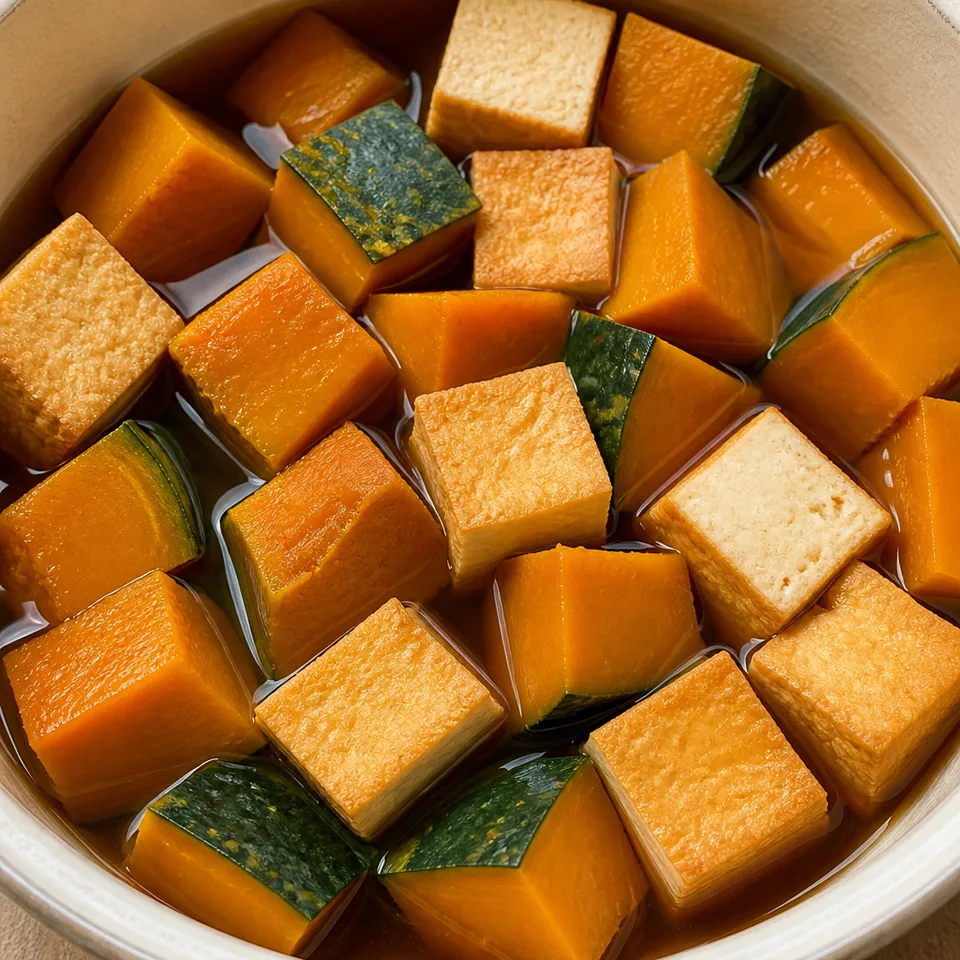
Simmered Kabocha (Kabocha no Nimono) is made with kabocha squash, atsuage, and dashi stock.
- Prep
- 15 min
- Cook
- 15 min
- Total
- 30 min
- Original yield
- Serves 4
- Ingredients
- 7 listed
Make it part of your week
Recipe categories & planning details
- Meal type
- Sides
- Cuisine
- Japanese · Asian
- Preparation & total time
- Prep: 15 minutes or less · Total: 30 minutes or less
A few quick notes
1. Keep the specified layer
Arrange the food as directed and check that the pan or basket has enough space.
2. Check when to cover
Follow the covered and uncovered stages in their stated order.
3. Allow for cooling
Include the cooling stage before the next step.
Get to know the ingredients
kabocha squash (cut into 1-1/2-inch cubes)
In the method: Add the 2 cups dashi stock, 1/4 cup sake, 2 tablespoons usukuchi soy sauce, 1 teaspoon evaporated cane sugar, and 1/2 teaspoon salt to a pot that will fit the kabocha and tofu in…
atsuage (cut into 1-1/2-inch cubes)
In the method: Add the cubed 500 grams kabocha squash and 300 grams atsuage and cover the ingredients with a drop lid to keep the ingredients submerged.
dashi stock
In the method: Add the 2 cups dashi stock, 1/4 cup sake, 2 tablespoons usukuchi soy sauce, 1 teaspoon evaporated cane sugar, and 1/2 teaspoon salt to a pot that will fit the kabocha and tofu in…
Let’s make it
Choose your servings, then check things off as you go.
Original recipe: Serves 4. Original quantities shown.
Check ingredients as you prepare them. These checks stay on this page.
Ingredient note
Source: 500 grams kabocha squash (cut into 1-1/2-inch cubes)Ingredient note
Source: 300 grams atsuage (cut into 1-1/2-inch cubes)Ingredient note
Source: 2 cups dashi stockIngredient note
Source: 1/4 cup sakeIngredient note
Source: 2 tablespoons usukuchi soy sauceIngredient note
Source: 1 teaspoon evaporated cane sugarIngredient note
Source: 1/2 teaspoon salt
How to make it
0 of 3 steps completeMake room for Simmered Kabocha (Kabocha no Nimono)
Review ingredients in your pantry before anything is added. Meal plans use your household size; grocery-only additions use the servings selected above.
The last little job
Finish as directed
I recommend letting the kabocha and tofu soak in the liquid overnight in the fridge, but you can also reheat it and serve it the same day if you're in a rush.
A little more help as you go
Keep the simmering stage
Follow the simmering heat, timing and finish checks that are given.
Prepare for the next step
Have the next addition ready when the mixture reaches the boil described.
A few questions you might have
What should I prepare first?
Set out the pot. Start with this step: Add the 2 cups dashi stock, 1/4 cup sake, 2 tablespoons usukuchi soy sauce, 1 teaspoon evaporated cane sugar, and 1/2 teaspoon salt to a pot that will fit the kabocha and tofu in a…
Which preparation step should I plan for?
Arrange the food as directed and check that the pan or basket has enough space.
What check should I look for as it cooks?
Lower the heat as needed to maintain a bare simmer and cook for 10-15 minutes or until the kabocha is tender enough for a toothpick to pass through.
Is there another preparation step to plan for?
Follow the simmering heat, timing and finish checks that are given.
Storage & reheating safety
For cooked, perishable leftovers, refrigerate within 2 hours (1 hour above 90°F), using shallow containers for prompt cooling. Keep the refrigerator at 40°F or below, use refrigerated leftovers within 3–4 days, and reheat hot leftovers to 165°F, checked with a food thermometer. Follow any shorter package limit.
These are general safety limits, not a tested storage or freezing recommendation for this particular dish. USDA leftovers guidance · Safe cooking temperatures
Recipe source: norecipes.com. Ingredient names and quantities may be adapted for the pantry.
Preparation notes follow the recipe shown here.
