Kitchen notes · a little help before you start
Chicken and Stuffing Casserole
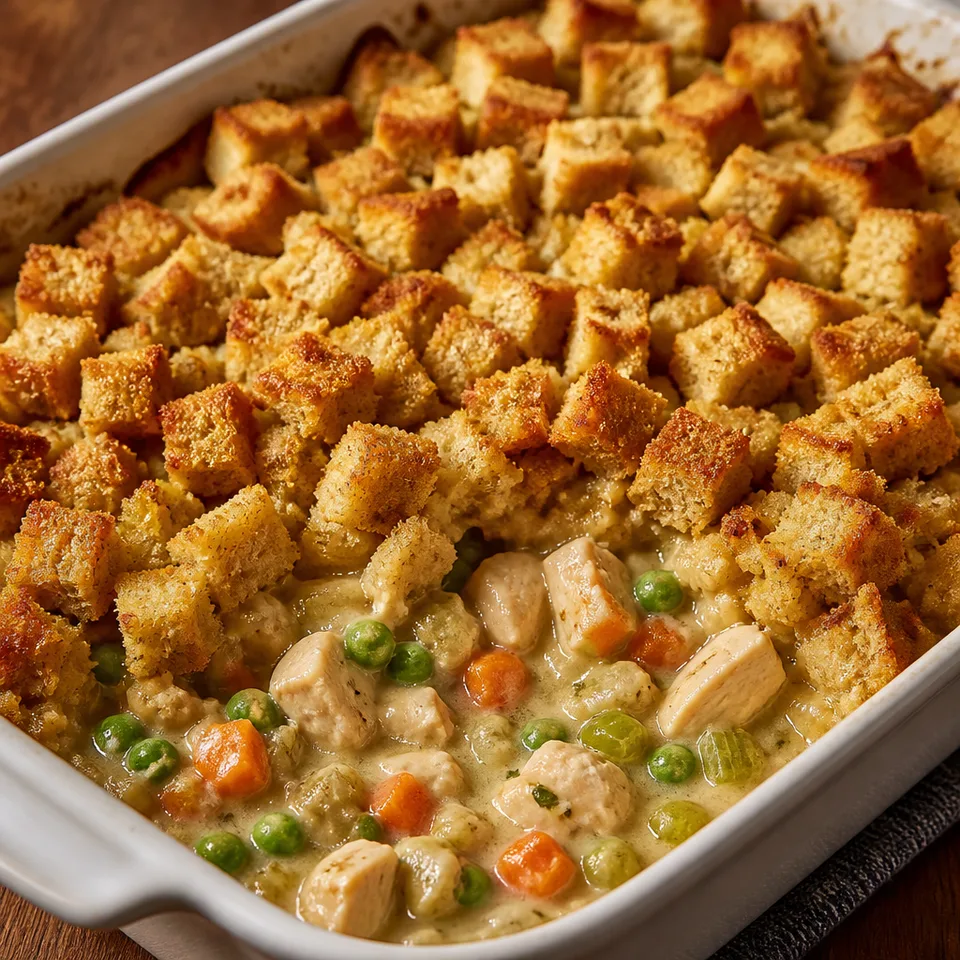
Garlic toast gives this chicken casserole a particularly inviting stuffing top. Underneath, chicken and vegetables sit in a creamy herbed sauce, with golden bread edges to catch as you scoop. It's a generous dish for anyone who enjoys the stuffing part of dinner as much as the filling.
- Prep
- 15 min
- Cook
- 45 min
- Total
- 60 min
- Original yield
- Serves 6
- Ingredients
- 16 listed
Make it part of your week
Recipe categories & planning details
- Meal type
- Main course
- Primary protein
- Chicken
- Cuisine
- American
- Cooking method
- Baking · Baked & roasted
- Preparation & total time
- Prep: 15 minutes or less · Total: 31–60 minutes
- Dish type
- Casseroles
A few quick notes
1. Soften the first vegetables
Cook the onion and celery until slightly softened before stirring in garlic and the dried seasonings.
2. Whisk flour into cream
Mix the cream and flour before adding them to the simmering filling so they combine before thickening.
3. Toast before cubing
Toast the garlic Texas toast until golden before cutting it into small cubes for the stuffing mixture.
Get to know the ingredients
Cooked chicken
The main directions use cooked chopped chicken, added to the skillet with frozen vegetables and broth.
Garlic Texas toast
The toasted garlic bread cubes combine with whisked broth and egg to make the casserole topping.
Frozen vegetables
The frozen vegetables simmer in the chicken filling until tender while the creamy sauce thickens under the lid.
Let’s make it
Choose your servings, then check things off as you go.
Original recipe: Serves 6. Original quantities shown.
Check ingredients as you prepare them. These checks stay on this page.
How to make it
0 of 9 steps completeMake room for Chicken and Stuffing Casserole
Review ingredients in your pantry before anything is added. Meal plans use your household size; grocery-only additions use the servings selected above.
The last little job
Bubbly and golden
Spread stuffing over the chicken filling and bake until the casserole is bubbling with a golden top.
A little more help as you go
Salted broth adjustment
Try reducing added salt if using salted broth, then seasoning to your taste at serving.
Raw chicken option
You can use raw chicken added with onion and celery, cooked through to the specified temperature before chopping or shredding.
A few questions you might have
Does the bread go into the filling?
No, mix the toasted cubes with broth and egg separately, then spread them over the chicken filling.
When do I add the flour?
Whisk it into the cream first, then stir that mixture into the pan after the filling simmers.
Can I skip sauteing the onion and celery?
You can add them directly to simmering broth, though sautéing helps their flavor and cooking.
How is the stuffing moistened?
Whisk broth with the egg and stir it into the bowl of toasted garlic bread cubes before topping.
What indicates the casserole is ready?
The directions call for a bubbling filling and golden top after the assembled casserole has baked.
Any more cooking tips?
Ingredients and Substitutions: Vegetables : to save time, you can skip the sautéing and add the onion and celery right to the simmering broth. However, sautéing them builds delicious flavor and ensures they are cooked correctly. Broth : I always start with low sodium broth and the season to my tastes. If you are starting with salted broth, you may want to reduce the amount of added salt and season as serving. Cooked chicken or raw chicken : if you don’t have any leftover Slow Cooker Chicken Breast or Shredded Chicken, you can add raw, uncooked chicken to this recipe. Simply cube it or leave it whole, and add to the pan with the onion and celery and continue cooking the chicken through to step 5. When the internal temperature is 165 degrees F, remove the chicken and shred if it is not chopped.
Storage & reheating safety
For cooked, perishable leftovers, refrigerate within 2 hours (1 hour above 90°F), using shallow containers for prompt cooling. Keep the refrigerator at 40°F or below, use refrigerated leftovers within 3–4 days, and reheat hot leftovers to 165°F, checked with a food thermometer. Follow any shorter package limit.
These are general safety limits, not a tested storage or freezing recommendation for this particular dish. USDA leftovers guidance · Safe cooking temperatures
Recipe source: thereciperebel.com. Ingredient names and quantities may be adapted for the pantry.
Preparation notes follow the recipe shown here.