Kitchen notes · a little help before you start
Pad Kee Mao (ผัดขี้เมา)
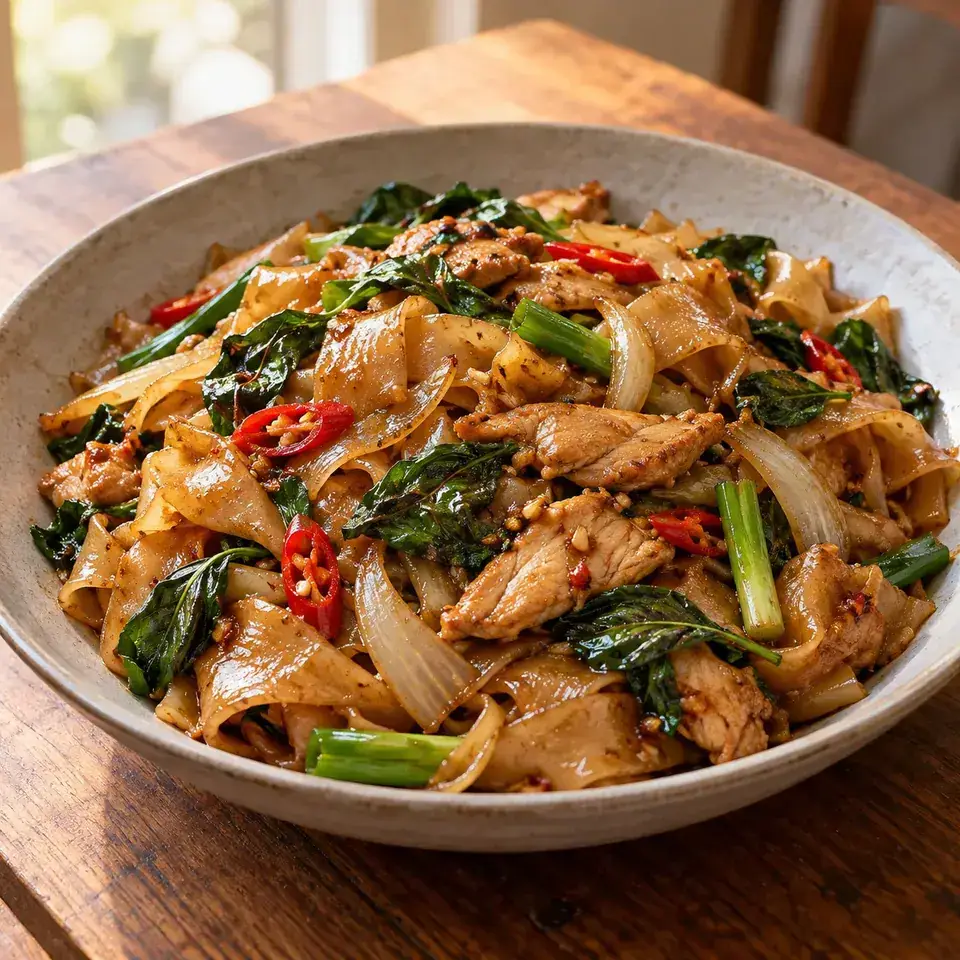
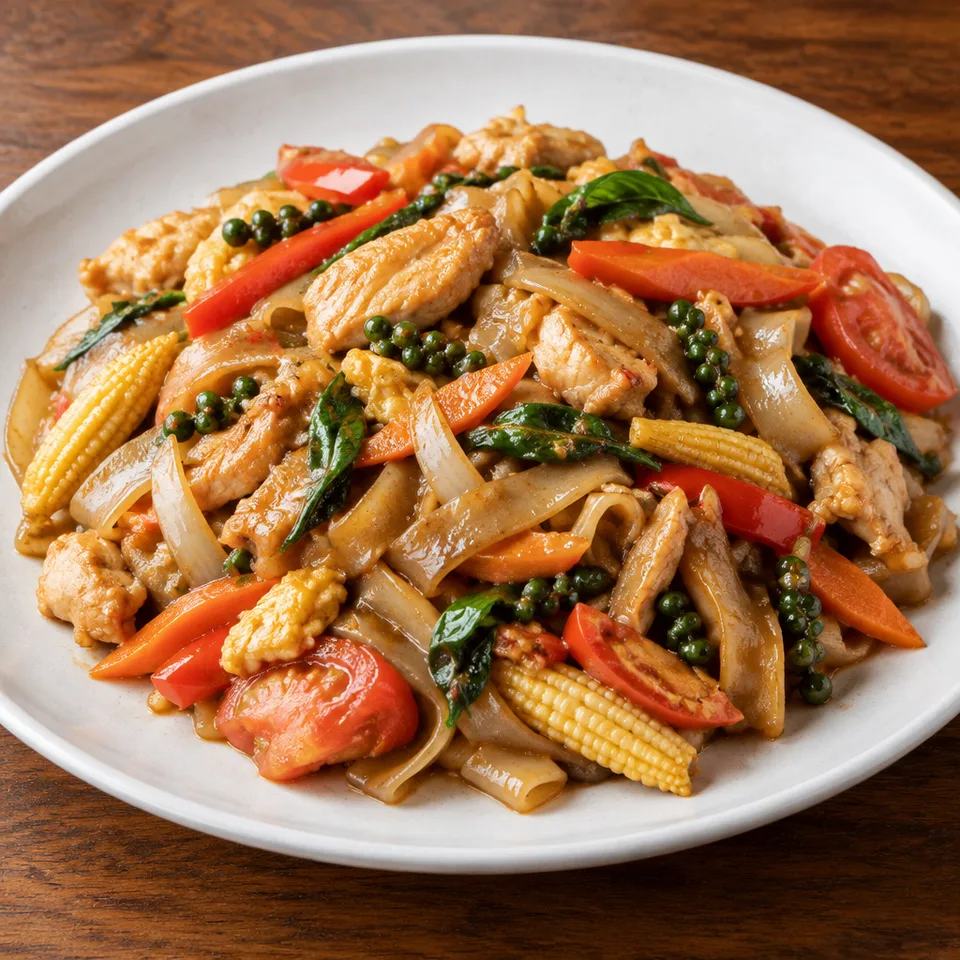
Pad Kee Mao is a lively plate of noodles, with basil smelling good as soon as it reaches the table. There is chicken tucked among the vegetables and enough savory sauce to keep the noodles interesting.
- Prep
- 10 min
- Cook
- 5 min
- Total
- 15 min
- Original yield
- Serves 2
- Ingredients
- 19 listed
Make it part of your week
Recipe categories & planning details
- Meal type
- Main course
- Primary protein
- Chicken
- Cuisine
- Thai · Asian
- Cooking method
- Stir fry
- Preparation & total time
- Prep: 15 minutes or less · Total: 30 minutes or less
A few quick notes
1. Rehydrate before stir-frying
Soak the dry noodles by one of the stated methods before they go into the pan to take on color.
2. Brown chicken in one layer
Spread it out in the hot pan, cook through and transfer to a clean bowl, keeping as much oil behind as possible.
3. Let sauce absorb into noodles
Stir-fry the rehydrated noodles with sauce until evenly coated and the liquid is absorbed before returning chicken.
Get to know the ingredients
Chicken marinade
Coat the thin chicken slices in soy sauce first, then mix in potato starch while you prepare the remaining ingredients.
Sliced baby corn
Cut the baby corn in half at an angle before adding it with onion, pepper, carrot and peppercorns.
Basil leaves
Use the basil leaves for the very last stir-fry, just long enough to wilt alongside the reheating chicken and tomatoes.
Let’s make it
Choose your servings, then check things off as you go.
Original recipe: Serves 2. Original quantities shown.
Check ingredients as you prepare them. These checks stay on this page.
How to make it
0 of 11 steps completeMake room for Pad Kee Mao (ผัดขี้เมา)
Review ingredients in your pantry before anything is added. Meal plans use your household size; grocery-only additions use the servings selected above.
The last little job
Wilt the basil and serve
Return chicken with tomatoes and basil, stir-fry briefly to warm and wilt, then serve immediately while the noodles are hot.
A little more help as you go
Keep some onion crispness
Cook the vegetables until the onion is translucent but still crisp before introducing the rehydrated noodles for their own fry.
Eggs scramble before vegetables
Fry garlic until fragrant, scramble the eggs, then add the next oil portion and vegetables when the eggs are almost cooked.
A few questions you might have
Can I rehydrate with boiling water?
Yes. That faster method is included, with gentle stirring to prevent sticking; room-temperature soaking is the other option.
What goes into the separate sauce?
Stir fish sauce, oyster sauce, sugar and rice vinegar together before the cooking stages so it is ready for the noodles.
Does the tomato cook with the first vegetables?
It goes in later, with the cooked chicken and basil, after the noodles have absorbed the sauce.
What kind of basil does this recipe use?
Thai basil is used here. It is different from holy basil, which is associated with the traditional dish.
Should the chicken stay in while scrambling eggs?
Remove the cooked chicken first. Garlic, eggs, vegetables and noodles have their turns before it returns near the end.
Any more cooking tips?
It's worth noting that Pad Kee Mao is traditionally made with Holy Basil, which has a different fragrance from the purple Thai Basil I use, but Thai Basil is easier to find and I personally like the way it tastes better.
Storage & reheating safety
For cooked, perishable leftovers, refrigerate within 2 hours (1 hour above 90°F), using shallow containers for prompt cooling. Keep the refrigerator at 40°F or below, use refrigerated leftovers within 3–4 days, and reheat hot leftovers to 165°F, checked with a food thermometer. Follow any shorter package limit.
These are general safety limits, not a tested storage or freezing recommendation for this particular dish. USDA leftovers guidance · Safe cooking temperatures
Recipe source: norecipes.com. Ingredient names and quantities may be adapted for the pantry.
Preparation notes follow the recipe shown here.