Kitchen notes · a little help before you start
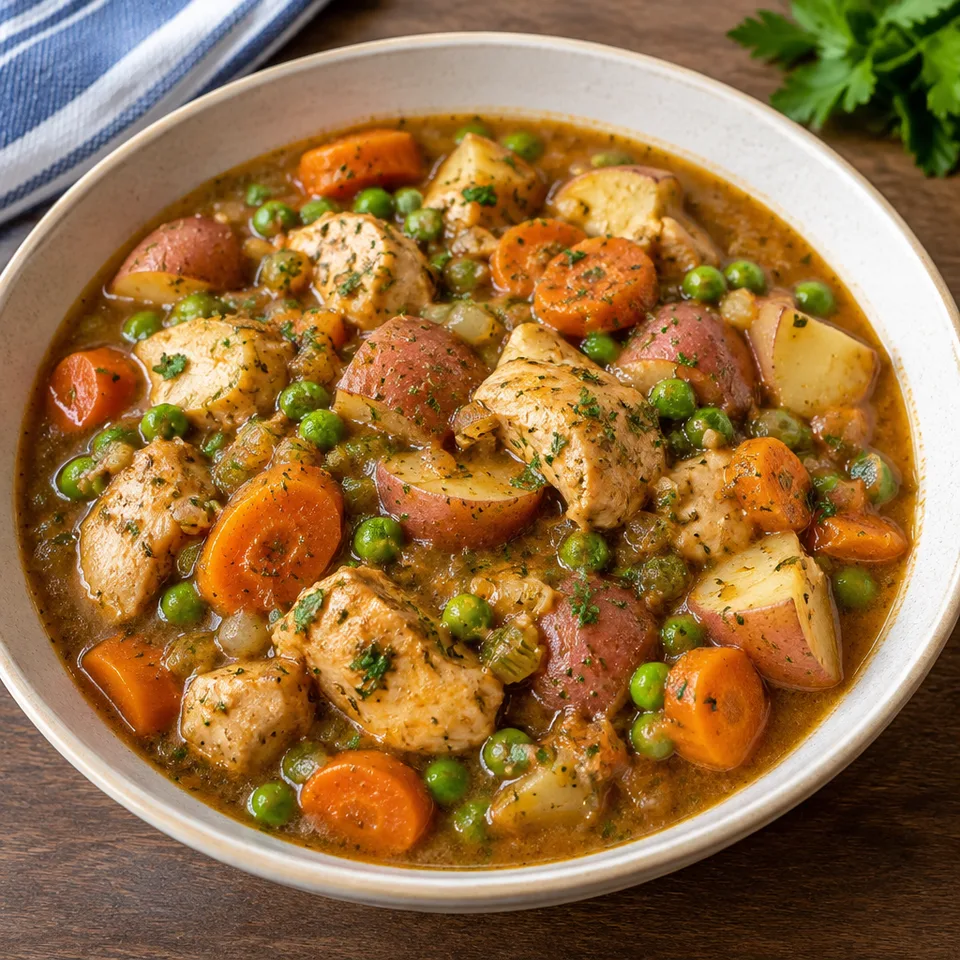
Slow Cooker Chicken Stew
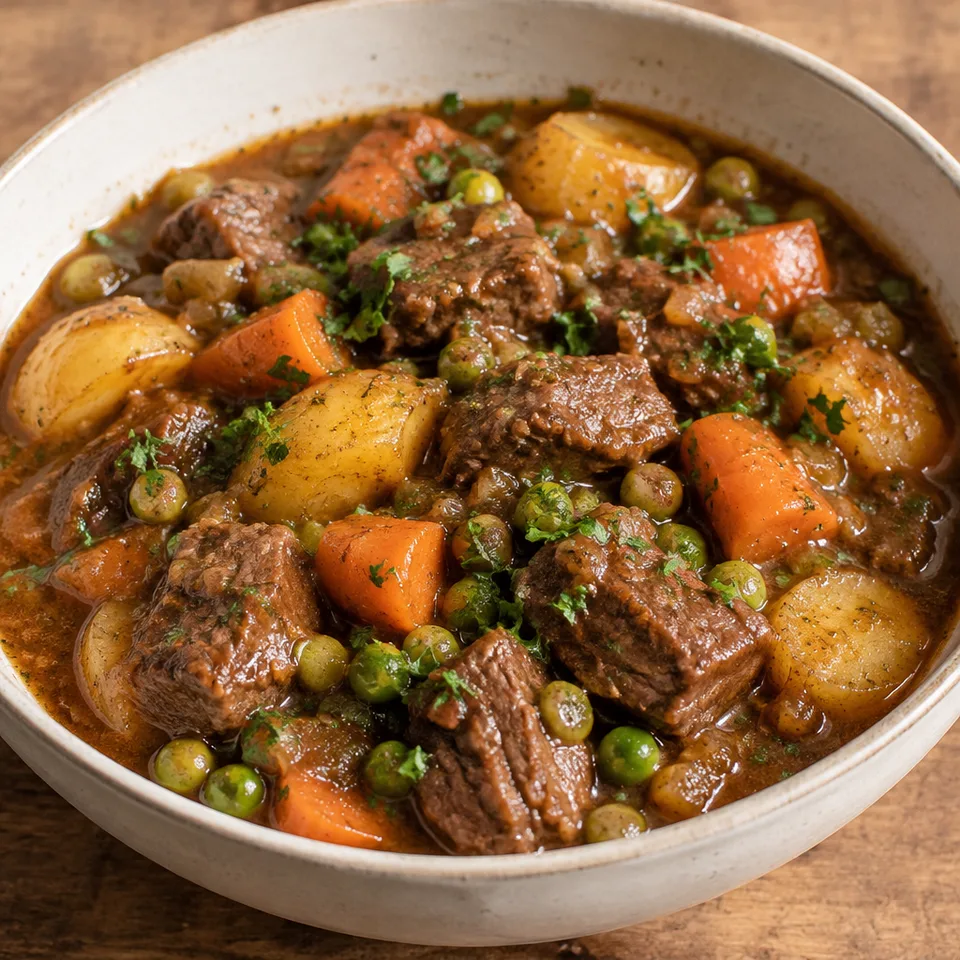
Chunks of chicken and tender vegetables make this stew a welcome bowl to settle into. The herb seasoned broth has a gentle richness, and the peas at the end bring little bursts of sweetness among the potatoes and carrots.
- Prep
- 15 min
- Cook
- 265 min
- Total
- 280 min
- Original yield
- Serves 6
- Ingredients
- 22 listed
Make it part of your week
Recipe categories & planning details
- Meal type
- Main course
- Primary protein
- Chicken
- Cuisine
- American
- Cooking method
- Slow cooker
- Preparation & total time
- Prep: 15 minutes or less · Total: over 60 minutes
- Dish type
- Stews · Soups & stews
A few quick notes
1. Brown the chicken in batches
Give the chicken room in the pan so it can turn golden instead of steaming. The seasoning goes on during browning, with some saved for the vegetables and broth later.
2. Scrape up the good bits
After the onion, celery, garlic, and tomato paste go in, the wine helps loosen the browned bits from the bottom of the pan. Pour all of that into the stew for more flavor.
3. Don't worry if it looks dry at first
In the slow cooker, the potatoes and carrots sit on top at first and you don't stir. The liquid rises as everything cooks, so the vegetables will end up immersed.
Get to know the ingredients
Chicken thighs work well here
Boneless skinless thighs are cut into bite-size pieces before browning. They suit the longer cook time and stay in satisfying pieces once the stew is tender.
Use a dry white wine
Go with a dry white wine such as pinot gris or sauvignon blanc. It goes into the hot pan and boils briefly while you scrape up the browned bits.
Frozen peas go in at the end
The peas don't need thawing. Add them with the parsley after the cornstarch slurry, so they warm through while the stew thickens instead of cooking for hours.
Let’s make it
Choose your servings, then check things off as you go.
Original recipe: Serves 6. Original quantities shown.
Check ingredients as you prepare them. These checks stay on this page.
How to make it
0 of 9 steps completeMake room for Slow Cooker Chicken Stew
Review ingredients in your pantry before anything is added. Meal plans use your household size; grocery-only additions use the servings selected above.
The last little job
The last little job
Whisk the cornstarch with water before it goes into the stew, then cook until the broth thickens slightly. Pull out the bay leaves before serving, since they're there for flavor, not eating.
A little more help as you go
Slow cooker or Dutch oven
The prep starts the same way: season, brown, soften the aromatics, and build the base. After that, use the slow cooker for a longer gentle cook or the Dutch oven for the stovetop path.
Layering matters in the slow cooker
For the slow cooker, add the broth, then layer the potatoes and carrots over the chicken and sprinkle the remaining seasoning on top. Leave it unstirred before cooking on LOW.
A few questions you might have
Why do I save some of the seasoning mix?
Some seasons the chicken as it browns, and the rest goes over the potatoes and carrots before cooking. That spreads the herb and spice flavor through the stew instead of using it all in the skillet.
Can I stir the slow cooker after adding the potatoes and carrots?
Leave it layered without stirring. The liquid level rises during cooking and everything eventually cooks in the broth.
When do the bay leaves come out?
Tuck them into the liquid before the main cook, then remove and discard them at the end, after the stew has thickened and before serving.
What should the cornstarch mixture look like before I add it?
Whisk the cornstarch with the water in a small bowl first. Once it's smooth enough to stir in, add it to the stew and cook until the broth is slightly thickened.
Do I need to thaw the peas first?
No. The peas go in frozen near the end, along with the parsley, and heat through while the stew finishes thickening.
Storage & reheating safety
For cooked, perishable leftovers, refrigerate within 2 hours (1 hour above 90°F), using shallow containers for prompt cooling. Keep the refrigerator at 40°F or below, use refrigerated leftovers within 3–4 days, and reheat hot leftovers to 165°F, checked with a food thermometer. Follow any shorter package limit.
These are general safety limits, not a tested storage or freezing recommendation for this particular dish. USDA leftovers guidance · Safe cooking temperatures
Recipe source: fromvalerieskitchen.com. Ingredient names and quantities may be adapted for the pantry.
Preparation notes follow the recipe shown here.