Kitchen notes · a little help before you start
Pickled Carrots & Daikon Radish (Do Chua)
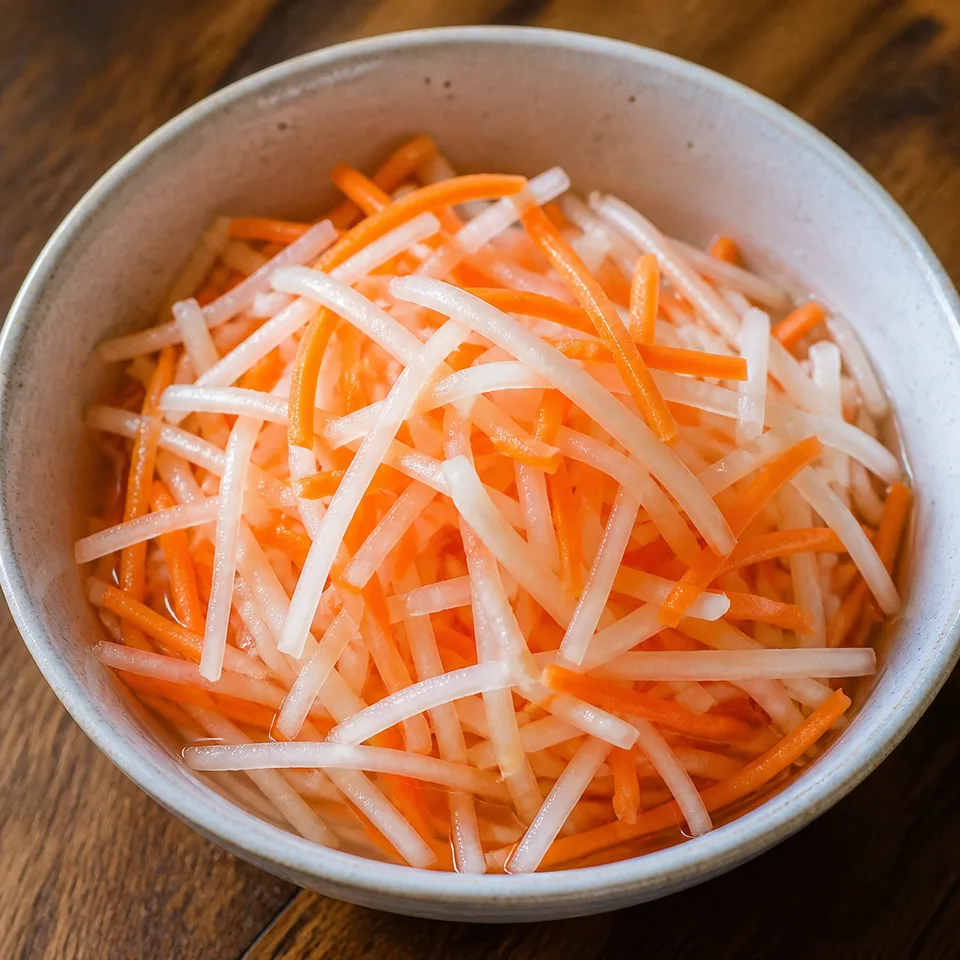
Pickled Carrots & Daikon Radish (Do Chua) is made with one-pound daikon radish, carrots, and rice vinegar.
- Prep
- 30 min
- Total
- 90 min
- Original yield
- Serves 6
- Ingredients
- 5 listed
Make it part of your week
Recipe categories & planning details
- Meal type
- Dinner · Lunch
- Cuisine
- Asian · Vietnamese
- Preparation & total time
- Prep: 16–30 minutes · Total: over 60 minutes
A few quick notes
1. Allow for chilling
Include the chilling step when deciding when to start.
2. Allow for marinating
Check the marinating step before planning the cooking.
3. Drain as directed
Complete the draining step before the next addition.
Get to know the ingredients
one-pound daikon radish
In the method: Peel and rinse the daikon and carrots, and julienne them into fine strips. (You can use a mandoline for this, or you can take the opportunity to practice your knife skills.) Put the daikon…
large carrots
In the method: Peel and rinse the daikon and carrots, and julienne them into fine strips. (You can use a mandoline for this, or you can take the opportunity to practice your knife skills.) Put the daikon…
kosher salt
In the method: Peel and rinse the daikon and carrots, and julienne them into fine strips. (You can use a mandoline for this, or you can take the opportunity to practice your knife skills.) Put the daikon…
Let’s make it
Choose your servings, then check things off as you go.
Original recipe: Serves 6. Original quantities shown.
Check ingredients as you prepare them. These checks stay on this page.
Ingredient note
Source: 1 one-pound daikon radishIngredient note
Source: 2 large carrotsIngredient note
Source: ½ tablespoon kosher saltIngredient note
Source: 1 cup rice vinegarIngredient note
Source: 5 tablespoons sugar
How to make it
0 of 4 steps completeMake room for Pickled Carrots & Daikon Radish (Do Chua)
Review ingredients in your pantry before anything is added. Meal plans use your household size; grocery-only additions use the servings selected above.
The last little job
Finish as directed
It won't taste bad or anything, but you can open up the container, leave the room, and come back in a little bit if the smell's not doing it for you.)
A little more help as you go
Check when to cover
Follow the covered and uncovered stages in their stated order.
Allow for cooling
Include the cooling stage before the next step.
Prepare for the next step
Have the next addition ready when the mixture reaches the boil described.
A few questions you might have
What should I prepare first?
Set out the saucepan. Start with this step: Peel and rinse the daikon and carrots, and julienne them into fine strips. (You can use a mandoline for this, or you can take the opportunity to practice your knife skills.) Put the daikon and…
Which preparation step should I plan for?
Include the chilling step when deciding when to start.
What happens at the end?
It won't taste bad or anything, but you can open up the container, leave the room, and come back in a little bit if the smell's not doing it for you.)
Is there another preparation step to plan for?
Follow the covered and uncovered stages in their stated order.
Additional recipe notes
Let the flavors meld . The pickles’ flavor improves over time, so the longer you allow the flavors to meld together, the better! Play with the amount of vinegar and sugar to your liking. Add more vinegar if you want a tangier Do Chua, or add more sugar if you prefer it sweeter. Also, you can also add a few chili pepper slices or a sprinkling of chili flakes if you want it on the spicy side. Alternatively, you can also add red shallots and garlic for a more savory punch. Opt for rice vinegar . Having made this with both rice vinegar and white vinegar, I can say that it’s worth getting the rice vinegar if you don’t already have some in your pantry. There’s something off and a little aggressive about these pickles when made with white vinegar, which probably has to do with rice vinegar ‘s lower acidity level. Make your prep time easier. Use a mandoline if you have one. You can also shred the vegetables with a grater or the grating disk on a food processor . Don’t be bothered by the smell. When you open up the container, the daikon will have a distinct smell. Do not throw it away as this does not mean it has gone bad.
Storage & reheating safety
For cooked, perishable leftovers, refrigerate within 2 hours (1 hour above 90°F), using shallow containers for prompt cooling. Keep the refrigerator at 40°F or below, use refrigerated leftovers within 3–4 days, and reheat hot leftovers to 165°F, checked with a food thermometer. Follow any shorter package limit.
These are general safety limits, not a tested storage or freezing recommendation for this particular dish. USDA leftovers guidance · Safe cooking temperatures
Recipe source: plantbasedonabudget.com. Ingredient names and quantities may be adapted for the pantry.
Preparation notes follow the recipe shown here.