Kitchen notes · a little help before you start
Cajun Jambalaya Pasta
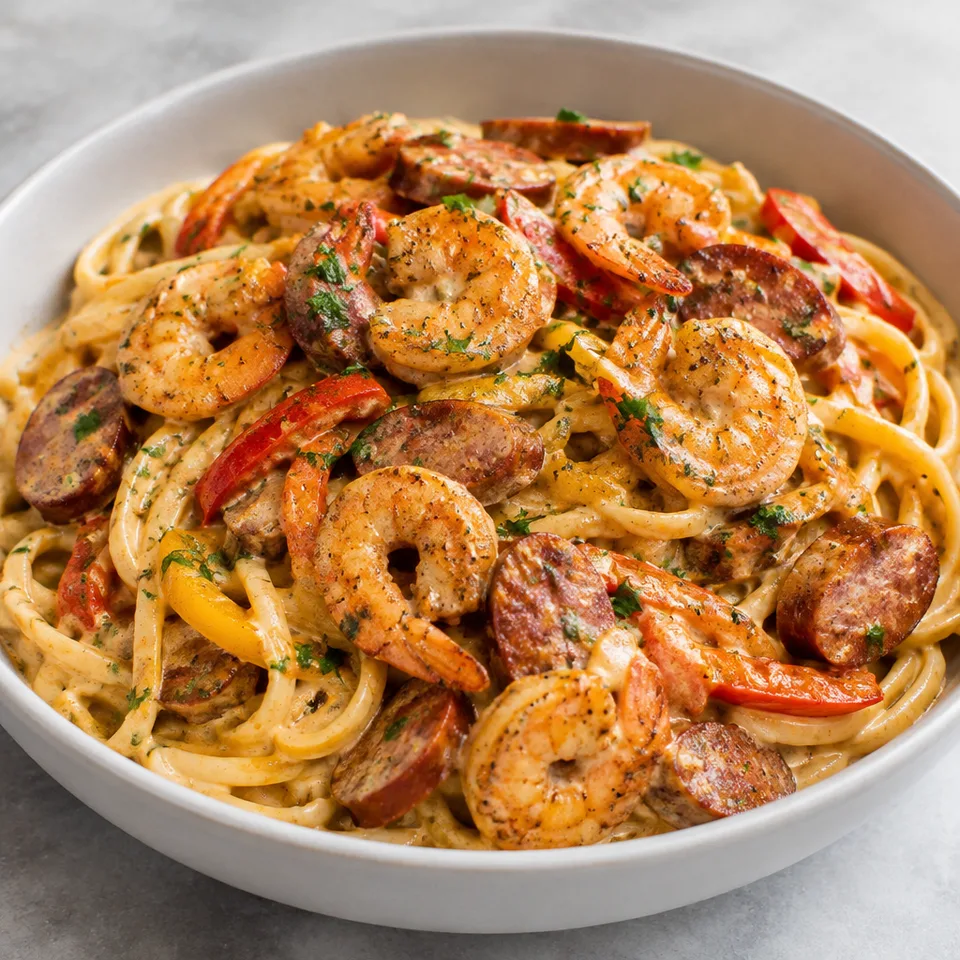
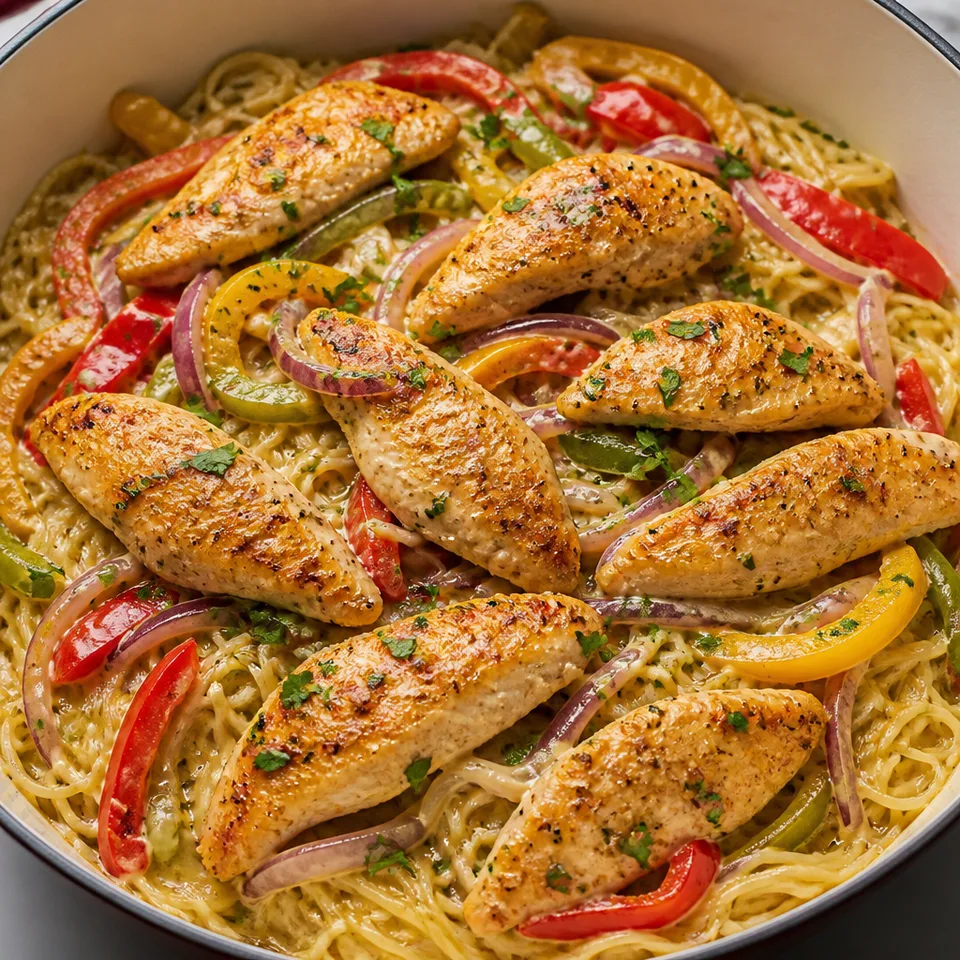
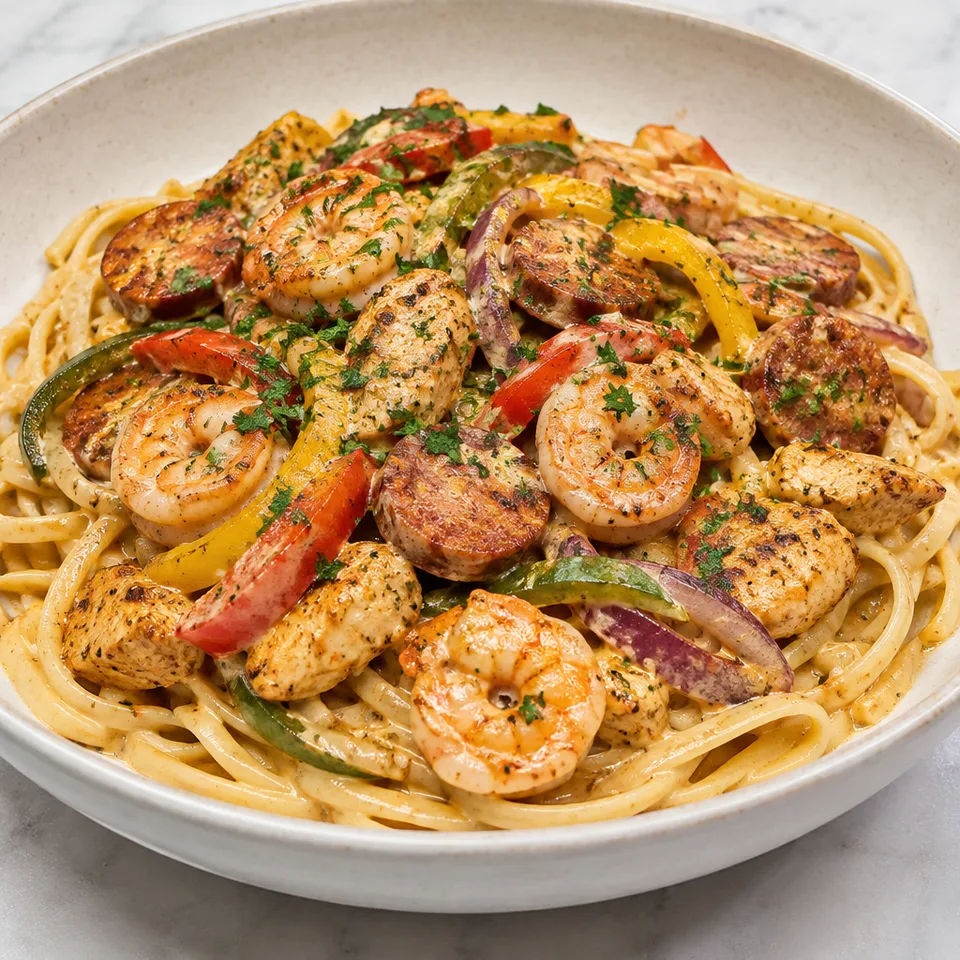
Cajun pasta makes a generous dinner with smoky sausage and shrimp among the chicken and peppers. Creamy linguine gives everything a soft place to land, and parsley adds freshness on top. There's a different bite waiting each time you wind some pasta around your fork.
- Prep
- 10 min
- Cook
- 30 min
- Total
- 40 min
- Original yield
- Serves 4
- Ingredients
- 12 listed
Make it part of your week
Recipe categories & planning details
- Meal type
- Main course
- Primary protein
- Chicken · Seafood
- Cuisine
- Cajun · American
- Preparation & total time
- Prep: 15 minutes or less · Total: 31–60 minutes
- Dish type
- Pasta · Rice dishes
A few quick notes
1. Cook the pasta while the pan works
Start the linguine first, then use that cooking time for the vegetables and meats. The pasta comes back to its pot with the cream, so you’re not trying to build the sauce in the crowded pan.
2. Keep the vegetables warm
The onions and peppers cook first, then rest under foil while the chicken, sausage, and shrimp take their turns. That little pause keeps the vegetables soft without letting them overcook.
3. Add the shrimp last
Shrimp only needs a short cook. Add it after the chicken is cooked through and the sausage has had a few minutes, then stop once the shrimp is pink and opaque.
Get to know the ingredients
Shrimp tails are your call
Use peeled and deveined large shrimp. The tails can stay on for presentation or come off before cooking, whichever makes more sense for how you like to eat pasta.
Cut the chicken evenly
The chicken breast is cut into 1 inch pieces so it can cook through in the pan before the sausage and shrimp join in. Try to keep the pieces close in size.
Long pasta works here
Linguine is the pasta named here, but other long pasta varieties will also work. Whatever you use, cook it according to the package directions before it gets tossed with the cream.
Let’s make it
Choose your servings, then check things off as you go.
Original recipe: Serves 4. Original quantities shown.
Check ingredients as you prepare them. These checks stay on this page.
How to make it
0 of 11 steps completeMake room for Cajun Jambalaya Pasta
Review ingredients in your pantry before anything is added. Meal plans use your household size; grocery-only additions use the servings selected above.
The last little job
Finish with parsley and serve right away
Once the cream has thickened around the pasta, spoon the meat and vegetable mixture over the top and sprinkle with chopped parsley. This dish is meant to go to the table immediately.
A little more help as you go
Season in two stages
The Cajun seasoning is split between the vegetables and the chicken, with salt and pepper added to taste along the way. That gives both parts of the dish their own seasoning before they come together.
Use the oil as written
The olive oil is divided: some for softening the onions and peppers, and the rest after the pan is wiped out for the chicken. That fresh start helps the second round cook cleanly.
A few questions you might have
Do I mix everything into the pasta at the end?
The pasta and cream thicken together in the pot first. After that, the meat and vegetable mixture goes on top, followed by parsley, rather than being cooked down in the sauce.
Why wipe out the pan after the peppers and onions?
The pan gets a quick wipe before the remaining oil and chicken go in. It clears out the first round of cooking so the chicken can cook in a cleaner, hotter pan.
Can I add more Cajun seasoning?
Yes. Use Cajun seasoning or more to taste. Start with the divided amount in the vegetables and chicken, then adjust only if you want a stronger seasoning.
How do I know the shrimp is done?
Watch the color and texture. The shrimp is done when it turns pink and opaque, which happens quickly after it goes into the pan.
What happens if the cream looks thin at first?
Keep the pasta and cream over medium high heat for the short thickening step. It should start to tighten into a sauce before you add the topping.
Storage & reheating safety
For cooked, perishable leftovers, refrigerate within 2 hours (1 hour above 90°F), using shallow containers for prompt cooling. Keep the refrigerator at 40°F or below, use refrigerated leftovers within 3–4 days, and reheat hot leftovers to 165°F, checked with a food thermometer. Follow any shorter package limit.
These are general safety limits, not a tested storage or freezing recommendation for this particular dish. USDA leftovers guidance · Safe cooking temperatures
Recipe source: dinneratthezoo.com. Ingredient names and quantities may be adapted for the pantry.
Preparation notes follow the recipe shown here.