Kitchen notes · a little help before you start
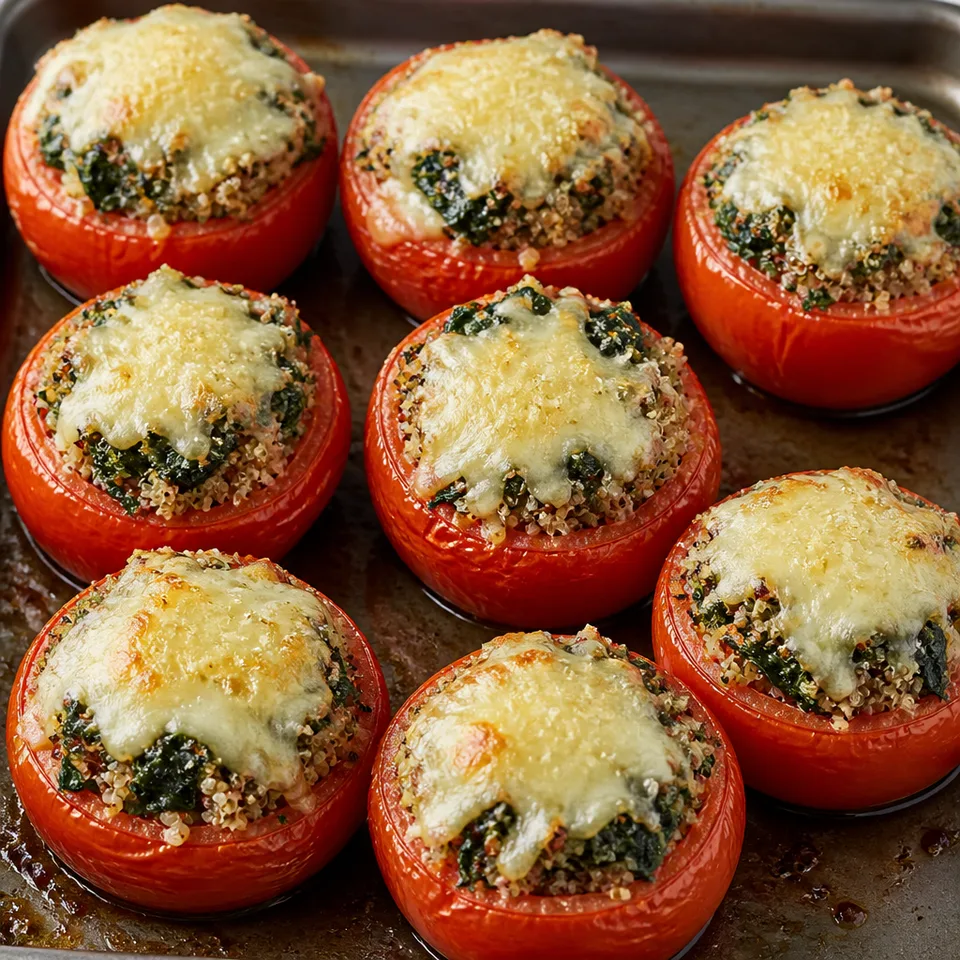
Quinoa Stuffed Tomatoes
A tender tomato filled with quinoa and spinach gives you a colorful parcel to open with your fork. Melted cheese across the top adds a savory finish to the gentle filling. Put a tomato on your plate and enjoy the soft shell together with what's tucked inside.
- Prep
- 15 min
- Cook
- 30 min
- Total
- 45 min
- Original yield
- Serves 8
- Ingredients
- 11 listed
Make it part of your week
Recipe categories & planning details
- Meal type
- Lunch
- Cuisine
- American
- Cooking method
- Baking · Baked & roasted
- Preparation & total time
- Prep: 15 minutes or less · Total: 31–60 minutes
A few quick notes
1. Make stable tomato shells
Hollow the tomatoes, then trim a small section from each bottom so they sit flat on the sheet.
2. Mix cooked quinoa into spinach
Finish cooking the quinoa before adding it to the wilted spinach and aromatic mixture, then combine well.
3. Taste filling before stuffing
Check the quinoa-spinach mixture for salt and pepper before dividing it evenly among the prepared tomatoes.
Get to know the ingredients
Hollowed tomatoes
Cut off the stem ends and hollow the tomatoes, salting their insides before setting them hollow-side up.
Fresh baby spinach
Cook baby spinach in olive oil until just wilted before adding garlic and parsley for their brief turn.
Two cheese topping
Keep shredded mozzarella and grated Parmesan for the tomato tops after the covered baking stage finishes.
Let’s make it
Choose your servings, then check things off as you go.
Original recipe: Serves 8. Original quantities shown.
Check ingredients as you prepare them. These checks stay on this page.
How to make it
0 of 14 steps completeMake room for Quinoa Stuffed Tomatoes
Review ingredients in your pantry before anything is added. Meal plans use your household size; grocery-only additions use the servings selected above.
The last little job
Uncover for melting cheese
Remove the foil, sprinkle on both cheeses and bake uncovered until melted before serving the stuffed tomatoes.
A little more help as you go
An ahead-of-time option
You can fill the tomatoes one to two days ahead and refrigerate them in an airtight container before baking.
Grain alternatives are listed
Rice, bulgur, lentils or couscous can replace quinoa; follow their own preparation needs.
A few questions you might have
Does the quinoa start in boiling water?
Put water and quinoa in the saucepan together, bring to a boil, then lower to a covered simmer.
Can I use another cheese?
Try feta, Monterey Jack or shredded cheddar instead of the mozzarella and Parmesan topping.
How should leftovers be kept?
Keep leftovers in the fridge for three to four days, then enjoy cold or reheat in the oven.
When do the garlic and parsley go in?
Stir them into the just-wilted spinach, cook for another minute and remove from the burner before adding quinoa.
Do the tomatoes bake uncovered from the start?
Cover them with foil for the first bake, then uncover before adding cheese and finishing in the oven.
Any more cooking tips?
Tomatoes: The best tomatoes for stuffing are large, round, plump tomatoes. Good choices are Beefsteak tomatoes, Roma tomatoes, and Campari tomatoes. Make Ahead: You can prepare the filling and stuff the tomatoes up to 1-2 days ahead. Instead of baking, cover the stuffed tomatoes airtight and refrigerate them until you’re ready to bake. Storage: Store leftover stuffed tomatoes in the fridge for 3 to 4 days. Enjoy leftovers cold or reheat them in the oven at 350ºF until warm. Serving: I’ll often budget 1-2 tomatoes per person when serving this as a main, and ½ to 1 tomato per person as a side dish. Substitute Quinoa: The quinoa in this recipe can be replaced with rice, bulgur wheat, lentils, or even couscous. Keep in mind that some grain varieties are not gluten-free. Cheese: Instead of mozzarella and parmesan, you can also top the quinoa stuffed tomatoes with crumbly feta, Monterey Jack, or shredded cheddar cheese.
Storage & reheating safety
For cooked, perishable leftovers, refrigerate within 2 hours (1 hour above 90°F), using shallow containers for prompt cooling. Keep the refrigerator at 40°F or below, use refrigerated leftovers within 3–4 days, and reheat hot leftovers to 165°F, checked with a food thermometer. Follow any shorter package limit.
These are general safety limits, not a tested storage or freezing recommendation for this particular dish. USDA leftovers guidance · Safe cooking temperatures
Recipe source: diethood.com. Ingredient names and quantities may be adapted for the pantry.
Preparation notes follow the recipe shown here.