Kitchen notes · a little help before you start
Chicken Adobo
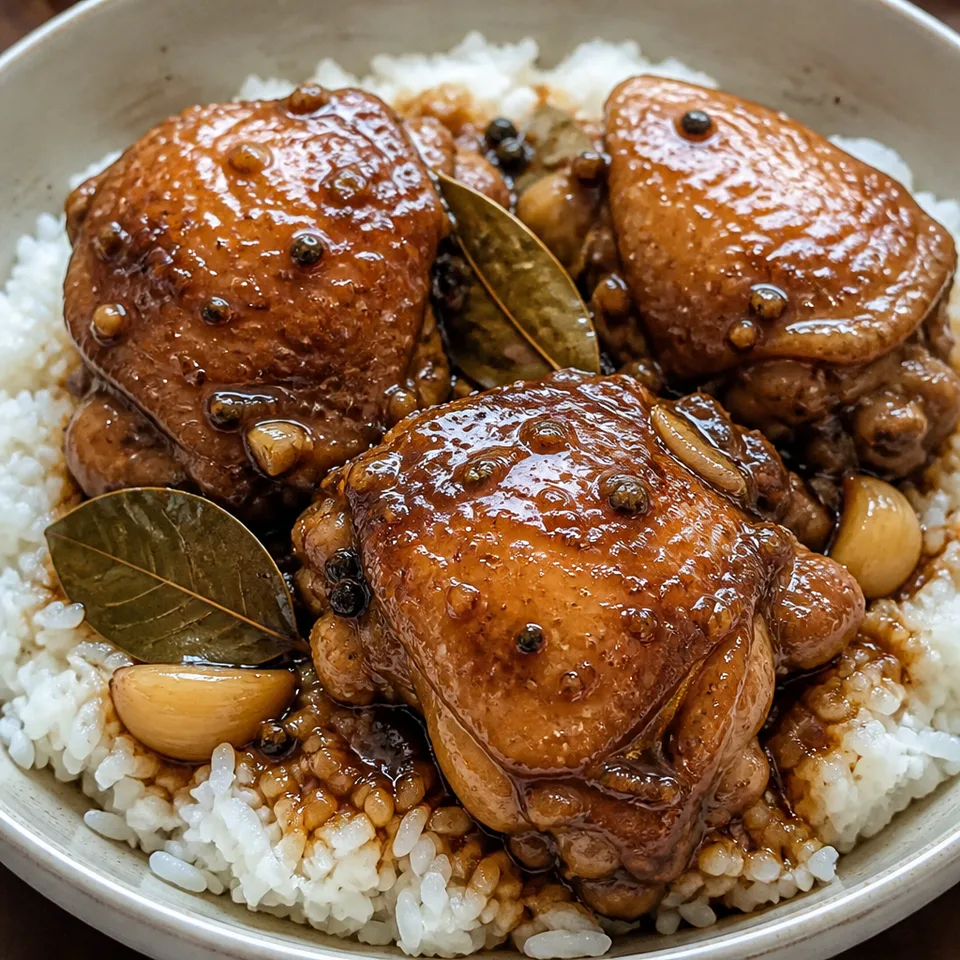
Tangy soy vinegar sauce settles around tender chicken thighs in this rich adobo. Garlic softens into the braise, with peppercorns giving the sauce a warm bite. A spoonful of the savory juices over the browned chicken is especially satisfying.
- Prep
- 15 min
- Cook
- 50 min
- Total
- 65 min
- Original yield
- Serves 6
- Ingredients
- 8 listed
Make it part of your week
Recipe categories & planning details
- Meal type
- Main course
- Primary protein
- Chicken
- Cuisine
- Filipino · Asian
- Preparation & total time
- Prep: 15 minutes or less · Total: over 60 minutes
A few quick notes
1. Dry before searing
Pat the chicken skin dry before adding the thighs skin side down to the hot oil.
2. Brown in batches
Sear three thighs at a time, briefly cooking garlic with the second batch before adding the sauce.
3. Uncover after turning
Simmer covered for the first stage, then flip the thighs and continue uncovered until the chicken is cooked through.
Get to know the ingredients
Chicken thighs
Use trimmed bone in, skin on thighs and start them skin side down for the initial sear.
Garlic
Slightly crush and peel the cloves before briefly sauteing them with the second chicken batch.
Vinegar
Cane vinegar or rice vinegar is listed and whisked with soy, sugar and peppercorns before cooking.
Let’s make it
Choose your servings, then check things off as you go.
Original recipe: Serves 6. Original quantities shown.
Check ingredients as you prepare them. These checks stay on this page.
How to make it
0 of 6 steps completeMake room for Chicken Adobo
Review ingredients in your pantry before anything is added. Meal plans use your household size; grocery-only additions use the servings selected above.
The last little job
Remove bay leaves
Discard the bay leaves and serve the warm chicken with some of its sauce spooned over it.
A little more help as you go
Pour sauce off heat
Remove the pan from heat before carefully adding the vinegar mixture, then return it to the heat to simmer.
Thicken with starch if wanted
Try a cornstarch slurry for thicker sauce instead of extra reduction, which can make it too salty.
A few questions you might have
Do I keep the chicken covered throughout?
Cover for the first twenty minute simmer, then turn the thighs and cook uncovered until done.
Can I use rice vinegar?
Yes. Cane vinegar or rice vinegar is listed for whisking with soy sauce, sugar and peppercorns.
How can I thicken the sauce?
Use a cornstarch slurry stirred in briefly instead of reducing longer and concentrating the salt.
When does the garlic cook?
Add it during the final thirty seconds of searing the second batch of chicken so it cooks briefly.
When should I remove the bay leaves?
Remove them once the chicken is cooked through, before serving the warm thighs with their sauce.
Any more cooking tips?
I've found I like the blend of 1/4 cup regular soy sauce and 1/4 cup low-sodium soy sauce. If you like things salty you can use 1/2 cup regular soy sauce, if you like things less salty use 1/2 cup low-sodium soy sauce. **To thicken the sauce I don't recommend simmering longer after chicken has been removed to reduce further - sauce will be too salty. Instead if you'd prefer it thicker I recommend whisking together 2 tsp cornstarch with 1 Tbsp water then adding to the pot with the sauce and simmering about 30 - 60 seconds, stirring constantly, just until thickened slightly. Other variations on this recipe include adding 1 small yellow onion (sliced), 1/2 cup coconut milk, or adding 1 sliced Thai chili for heat. You can also make it sweeter if desired by adding more palm or brown sugar. Nutrition estimate based on using low-sodium soy sauce.
Storage & reheating safety
For cooked, perishable leftovers, refrigerate within 2 hours (1 hour above 90°F), using shallow containers for prompt cooling. Keep the refrigerator at 40°F or below, use refrigerated leftovers within 3–4 days, and reheat hot leftovers to 165°F, checked with a food thermometer. Follow any shorter package limit.
These are general safety limits, not a tested storage or freezing recommendation for this particular dish. USDA leftovers guidance · Safe cooking temperatures
Recipe source: cookingclassy.com. Ingredient names and quantities may be adapted for the pantry.
Preparation notes follow the recipe shown here.