Kitchen notes · a little help before you start
Homemade Chicken Lo Mein
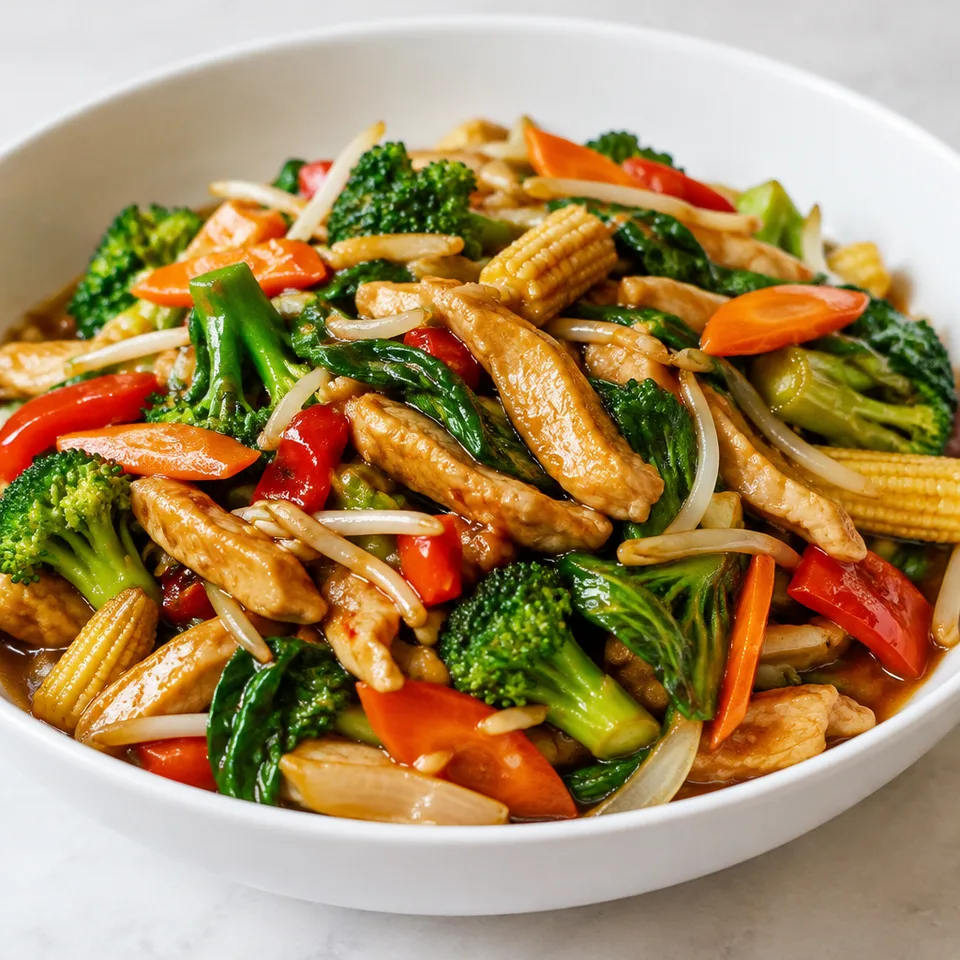
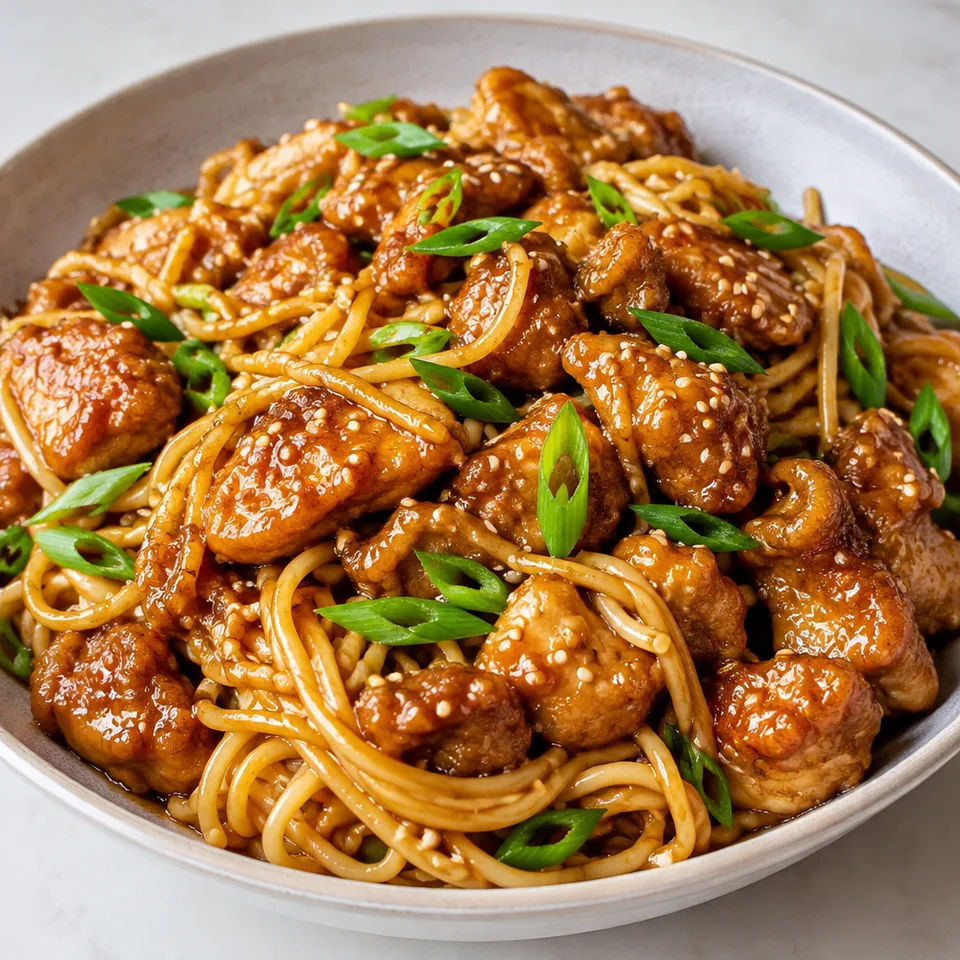
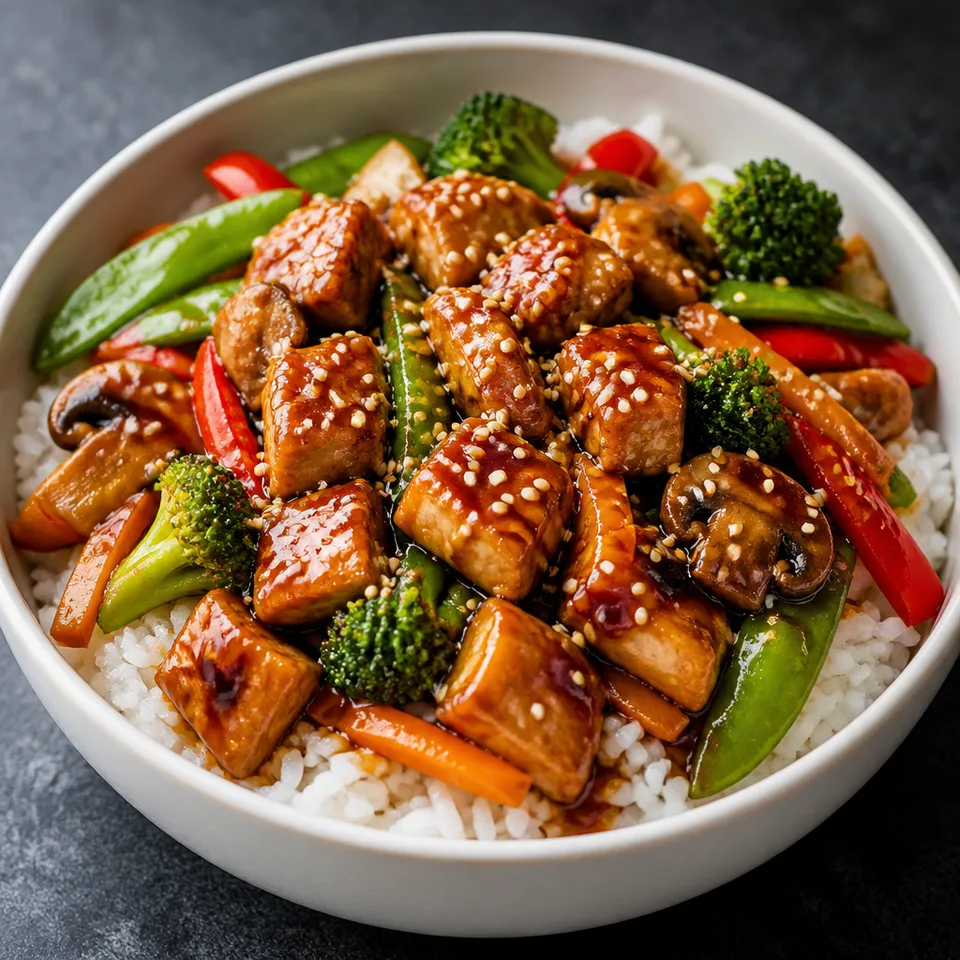
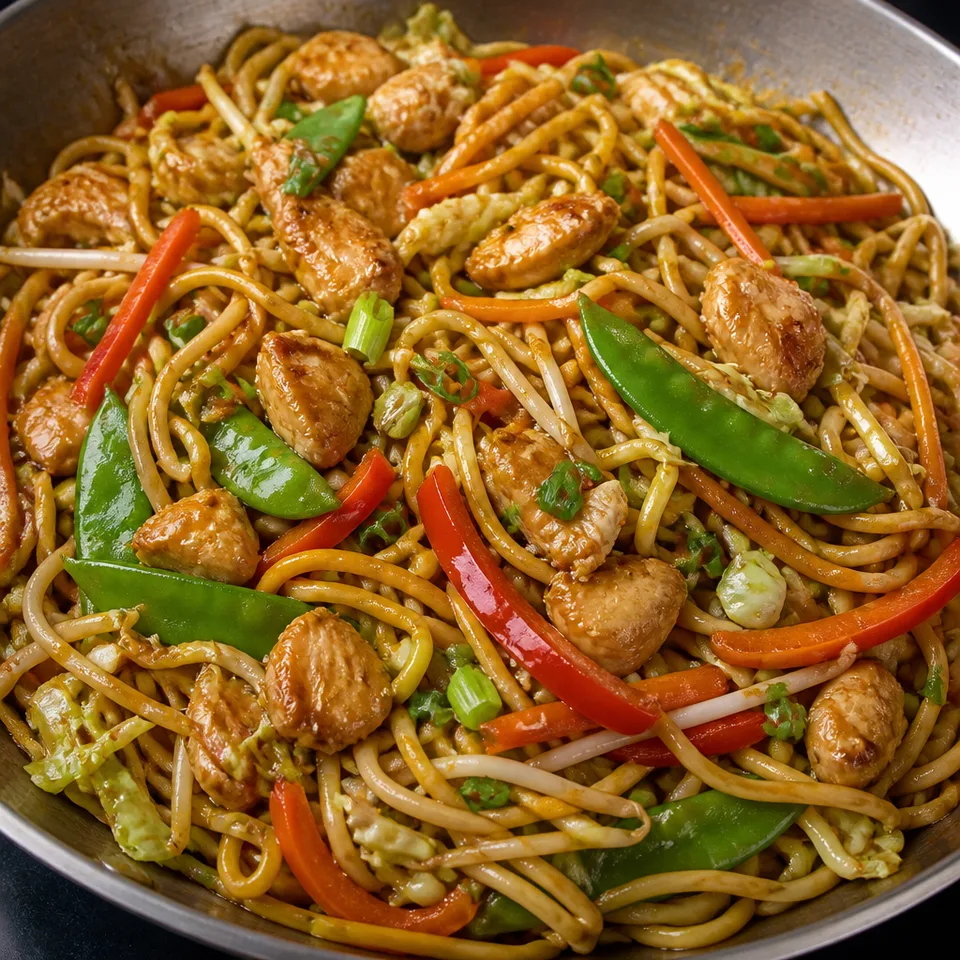
Springy noodles catch a rich, savory sauce around golden chicken and crisp vegetables in this lo mein. Ginger and garlic make each forkful fragrant, while bean sprouts and snow peas add a fresh bite among the soft noodles.
- Prep
- 25 min
- Cook
- 10 min
- Total
- 35 min
- Original yield
- Serves 4
- Ingredients
- 25 listed
Make it part of your week
Recipe categories & planning details
- Meal type
- Main course
- Primary protein
- Chicken
- Cuisine
- Asian · Chinese
- Cooking method
- Stir fry
- Preparation & total time
- Prep: 16–30 minutes · Total: 31–60 minutes
- Dish type
- Noodles
A few quick notes
1. Prepare sauce ahead
Mix the lo mein sauce before stir frying so it is ready when the noodles join the vegetables.
2. Sear then remove chicken
Brown the chicken on each side and stir fry until cooked through before setting it aside for the vegetables.
3. Add crisp ingredients late
Return the chicken with bean sprouts, snow peas and green onion tops after the noodles have been tossed with sauce.
Get to know the ingredients
Noodles
Separate precooked noodles under hot water, or boil uncooked noodles to al dente, then drain well before using.
Green onions
Keep the white and green portions separate; cook whites with aromatics and add green tops near the end.
Rice wine
Rice wine and rice vinegar are different. You can try pale dry sherry as a substitute for the rice wine.
Let’s make it
Choose your servings, then check things off as you go.
Original recipe: Serves 4. Original quantities shown.
Check ingredients as you prepare them. These checks stay on this page.
How to make it
0 of 9 steps completeMake room for Homemade Chicken Lo Mein
Review ingredients in your pantry before anything is added. Meal plans use your household size; grocery-only additions use the servings selected above.
The last little job
Taste the finished noodles
Toss everything together, then adjust with soy, chili sauce or brown sugar to suit your preferred balance.
A little more help as you go
Use tongs for noodles
Toss the noodles and sauce with tongs during their brief stir fry so the strands get evenly coated.
Prep vegetables ahead
You can chop vegetables and aromatics ahead and refrigerate them separately in airtight containers for up to two days.
A few questions you might have
Can I use dried noodles?
Yes. Boil them to al dente, rinse with cold water, drain thoroughly and toss with a little toasted sesame oil.
Can I substitute rice vinegar for rice wine?
Don't substitute rice vinegar; it adds acidity rather than rice wine's sweetness.
When do the bean sprouts go in?
Add them with the chicken, snow peas and green onion tops after tossing the noodles with sauce.
Can I make the sauce ahead?
You can whisk the sauce ahead and store it in an airtight container in the refrigerator for up to five days.
Which green onion parts cook first?
Saute the white portions before garlic and ginger, then add the green tops with the final ingredients.
Any more cooking tips?
Lo Mein Noodles You have two options when purchasing lo mein noodles: FRESH: This is the best option, with a slippery, chewy texture that readily absorbs the sauce. These are pre-cooked and are added directly to the pan. They are located in the refrigerated section (sometimes the freezer, thaw first) of many grocery stores, usually near tofu, wonton wrappers, etc. Look for labels like “fresh lo mein noodles,” “stir-fry noodles,” or “Chinese egg noodles.” Bands like Twin Marquis or Ka-Me in the refrigerated section are reliable options DRIED: If your store doesn’t carry fresh noodles, look in the Asian foods aisle for dried lo mein noodles, or there are many options on Amazon. These need to be boiled, rinsed, and then tossed in a drizzle of toasted sesame seed oil before stir-frying. Lo Mein Substitute: If you can’t find something labeled “lo mein,” the next best thing is fresh yakisoba noodles, chow mein noodles, or Chinese-style egg noodles—they’re often interchangeable for home cooking. Alternatively, use any noodle! Since the noodles are cooked before being added to the pan, any thickness or type of noodle will work—even spaghetti is a great option! Green onions: One green onion is considered the entire bunch, including all the shoots. The bottom white part and top green part will be added to the lo mein at different times. Rice wine : This adds a complex sweetness and depth of flavor. I use “Kikkoman Aji-Mirin: Sweet Cooking Rice Seasoning” which is commonly found in the Asian section of most grocery stores or you can Amazon it. The best substitute for rice wine is pale dry sherry. Do NOT substitute rice wine with rice vinegar, they are NOT the same. Rice vinegar will add an acidic bite without the sweetness. Prep Ahead Noodles: If using dried noodles, they can be boiled, rinsed, and drained, and tossed with a drizzle of toasted sesame oil. Store in an airtight container or plastic bag in the refrigerator for up to three days. Sauce: Whisk the sauce ingredients together and store in an airtight container in the refrigerator for up to 5 days. Veggies and aromatics: Chop and store in separate airtight containers in the refrigerator for up to 2 days
Storage & reheating safety
For cooked, perishable leftovers, refrigerate within 2 hours (1 hour above 90°F), using shallow containers for prompt cooling. Keep the refrigerator at 40°F or below, use refrigerated leftovers within 3–4 days, and reheat hot leftovers to 165°F, checked with a food thermometer. Follow any shorter package limit.
These are general safety limits, not a tested storage or freezing recommendation for this particular dish. USDA leftovers guidance · Safe cooking temperatures
Recipe source: carlsbadcravings.com. Ingredient names and quantities may be adapted for the pantry.
Preparation notes follow the recipe shown here.