Kitchen notes · a little help before you start
Lemon Garlic Roast Chicken
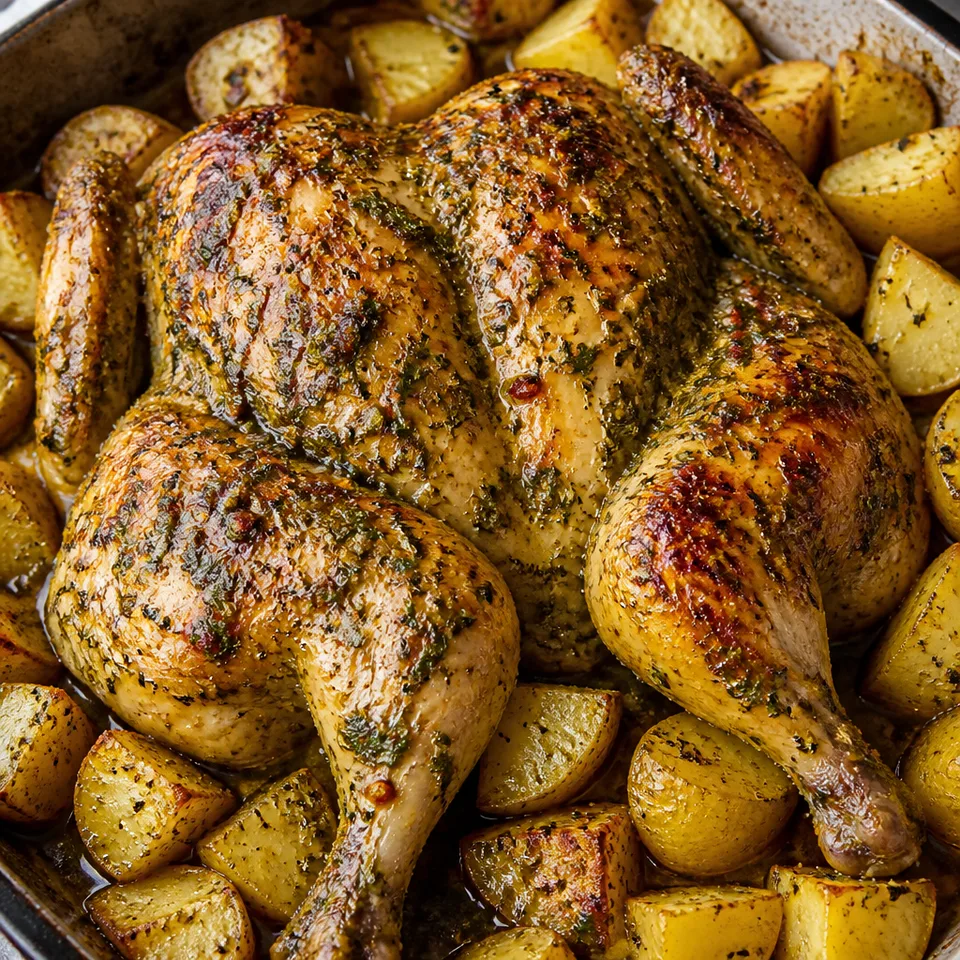
Lemon and garlic make a roast chicken smell like a very good dinner is on its way. The onions underneath catch the pan juices, ready to spoon alongside the carved pieces. Let the bird rest, gather everyone around and enjoy a plate while it is warm.
- Prep
- 10 min
- Cook
- 55 min
- Total
- 65 min
- Original yield
- Serves 8
- Ingredients
- 13 listed
Make it part of your week
Recipe categories & planning details
- Meal type
- Dinner
- Primary protein
- Chicken
- Cuisine
- American
- Cooking method
- Roasting · Baked & roasted
- Preparation & total time
- Prep: 15 minutes or less · Total: over 60 minutes
A few quick notes
1. Dry the chicken thoroughly
Pat the chicken dry all over before adding oil. A dry surface helps the roasted skin get crisp.
2. Season under the skin too
Rub the oil-herb mixture over both sides and beneath the skin while turning the chicken in the prepared pan.
3. Check with a thermometer
Check the thickest thigh, away from the bone, for an internal temperature of 165°F.
Get to know the ingredients
Butterflied chicken
The whole chicken is listed with its backbone removed and flattened, ready to lie over the sliced aromatics.
Sliced lemon
Arrange the thick lemon slices in the pan with onion and sliced garlic before setting the chicken on top.
Two garlic forms
Minced garlic goes into the oil-herb mixture; the separately sliced cloves form part of the layer beneath the bird.
Let’s make it
Choose your servings, then check things off as you go.
Original recipe: Serves 8. Original quantities shown.
Check ingredients as you prepare them. These checks stay on this page.
How to make it
0 of 6 steps completeMake room for Lemon Garlic Roast Chicken
Review ingredients in your pantry before anything is added. Meal plans use your household size; grocery-only additions use the servings selected above.
The last little job
Rest under foil before carving
After the final browning, cover the skillet tightly with foil and let the chicken stand before carving and serving with pan juices.
A little more help as you go
A broth alternative is included
You can use low-sodium chicken broth with an extra tablespoon of lemon juice in place of the white wine.
A tart sauce can be softened
If the pan sauce is too acidic, try whisking in cold unsalted butter just before serving.
A few questions you might have
Does all the salt go into the herb oil?
Most goes into the oil mixture, while the remaining portion seasons the chicken skin after the wine and lemon juice are added.
When do I baste the chicken?
Baste halfway through roasting, then again before the final broiler stage that brings the skin to a golden finish.
Can I use a pan other than cast iron?
The directions allow an ovenproof pan alongside the specified cast-iron skillet for holding the chicken and its aromatic base.
How is the cooked chicken served?
Cut it into quarters or eighths after resting, then drizzle with pan juices and serve with the cooked onion and garlic.
Does the lemon juice go into the herb mixture?
The measured juice is poured into the pan base with wine; lemon slices are already underneath the chicken.
Any more cooking tips?
Tips: Spatchcocking Success: Don’t be intimidated by butterflying the chicken! You need a pair of sharp kitchen shears. Cut along both sides of the backbone to remove it, then flip the bird over and press down hard on the breastbone until you hear a crack. This flattens the chicken, ensuring the legs and breasts cook evenly at the same time. The Secret to Crispy Skin: Moisture is the enemy of crispiness. Use paper towels to pat the chicken bone-dry (inside and out) before adding the oil. If the skin is wet, it will steam instead of roast. Wine Selection: Use a dry white wine that you would enjoy drinking, such as a Sauvignon Blanc or Pinot Grigio. Avoid “cooking wines” as they are overly salty. Alcohol-Free Sub: Use low-sodium chicken broth mixed with an extra tablespoon of lemon juice. Doneness Check: Ovens vary greatly. The most accurate way to check is with a meat thermometer inserted into the thickest part of the thigh (avoiding the bone). You are looking for an internal temperature of 165°F (74°C). The juices should run clear, not pink. Don’t Skip the Rest: Letting the chicken rest for 10 minutes under foil is crucial. If you cut into it immediately, all those delicious lemon-garlic juices will run out onto the board, leaving you with dry meat. Sauce Troubleshooting: If your lemons were particularly tart and the pan sauce tastes too acidic, whisk in 1 tablespoon of cold, unsalted butter right before serving. This balances the acidity and makes the sauce glossy. Make sure to marinate both on and under the chicken’s skin for optimum flavour. Adapted from Ina Garten’s Skillet Roasted Chicken
Storage & reheating safety
For cooked, perishable leftovers, refrigerate within 2 hours (1 hour above 90°F), using shallow containers for prompt cooling. Keep the refrigerator at 40°F or below, use refrigerated leftovers within 3–4 days, and reheat hot leftovers to 165°F, checked with a food thermometer. Follow any shorter package limit.
These are general safety limits, not a tested storage or freezing recommendation for this particular dish. USDA leftovers guidance · Safe cooking temperatures
Recipe source: cafedelites.com. Ingredient names and quantities may be adapted for the pantry.
Preparation notes follow the recipe shown here.