Kitchen notes · a little help before you start
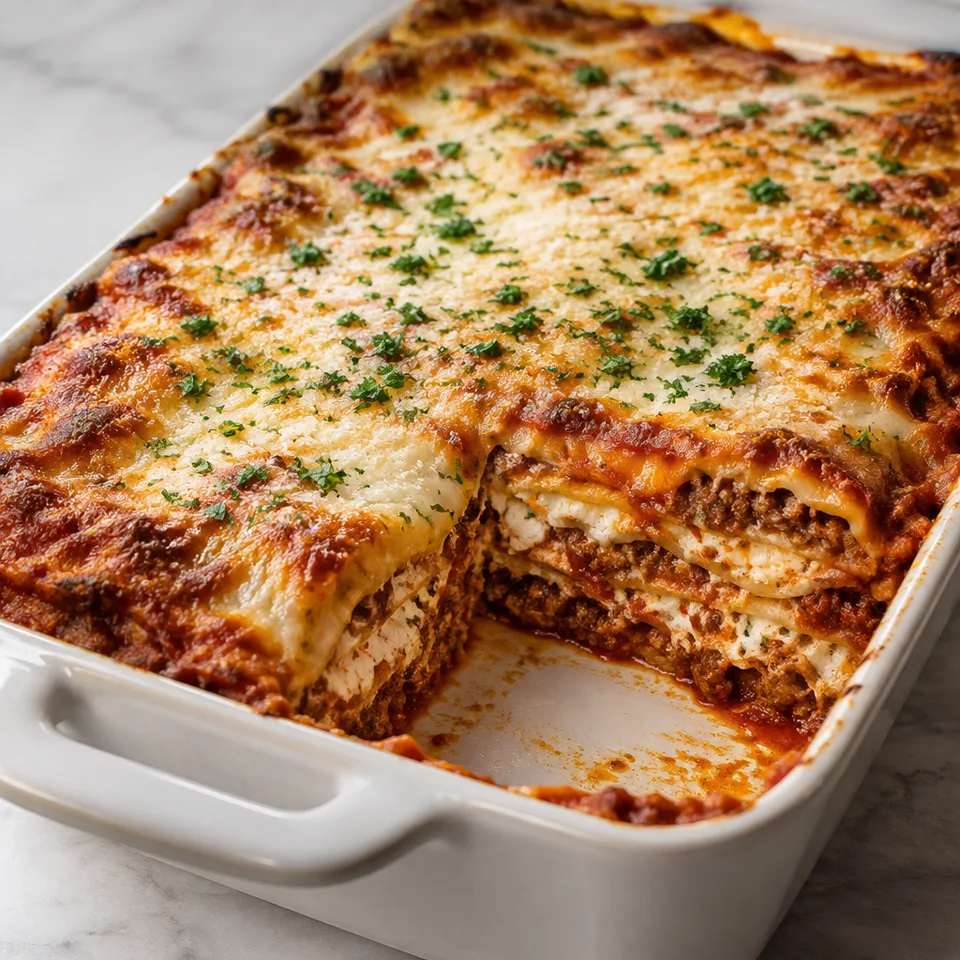
Ultimate Meat Lasagna Recipe
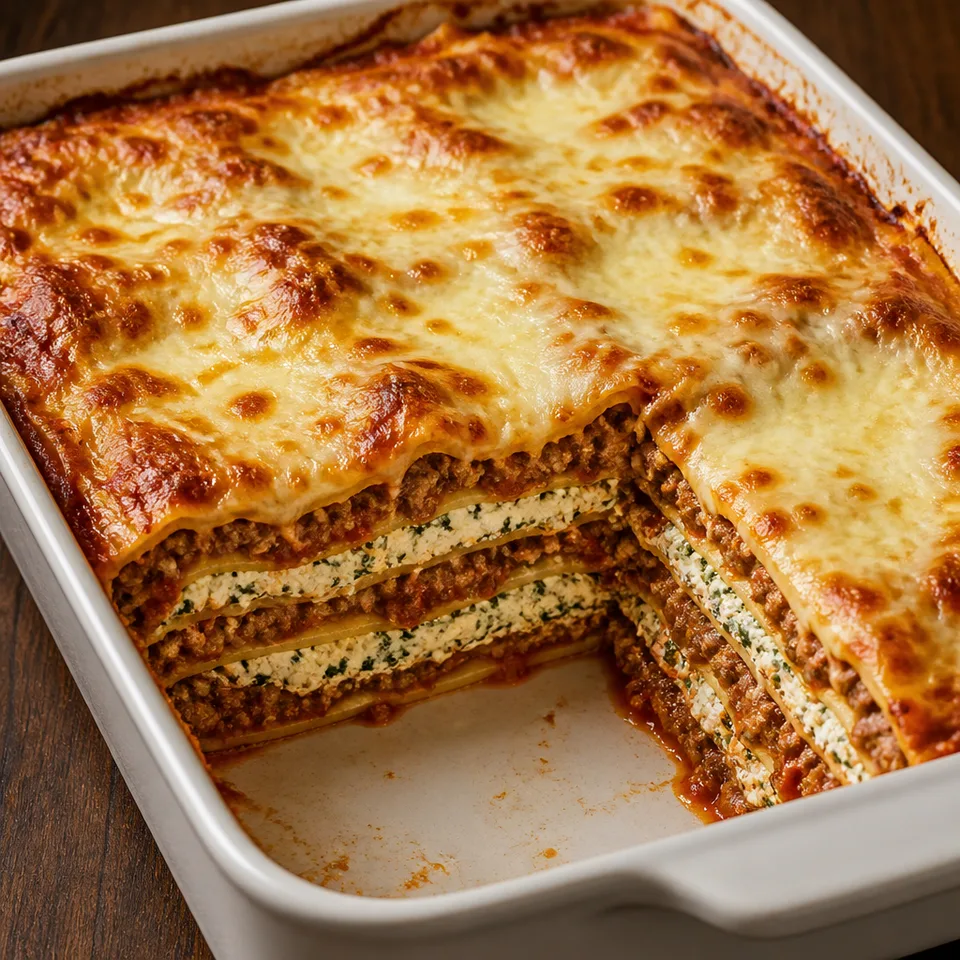
A tall piece of meat lasagna promises plenty of sauce between those cheesy layers. This one has larger bites of beef and a little fennel warmth running through the tomato sauce.
- Prep
- 20 min
- Cook
- 50 min
- Total
- 90 min
- Original yield
- Serves 12
- Ingredients
- 14 listed
Make it part of your week
Recipe categories & planning details
- Meal type
- Dinner
- Primary protein
- Beef
- Cuisine
- Italian
- Cooking method
- Baking · Baked & roasted
- Preparation & total time
- Prep: 16–30 minutes · Total: over 60 minutes
- Dish type
- Pasta
A few quick notes
1. Keep the beef a little chunky
Start the beef in one large piece and break it into slightly larger chunks as it browns. Those bigger bits make the meat sauce feel hearty instead of disappearing into the marinara.
2. Let the fennel wake up
After the herbs and spices go in, stir until you can smell the fennel seeds. That short toast in the hot beef gives the sauce more of that sausage-shop flavor before the marinara goes in.
3. Sauce the noodles first
The no-boil noodles aren't cooked ahead, but they do get coated in meat sauce before layering. That little step helps keep them from drying out while the lasagna bakes.
Get to know the ingredients
No-boil noodles mean no pre-cooking
Use the flat no-boil noodles called for here. They go into the pan dry, after a quick coating in meat sauce, so don't boil them first or they'll be too soft for the layered bake.
Ricotta gets mixed simply
The ricotta is stirred with egg and a little Kosher salt before layering. If the ricotta tub has room, mix it right there and save a bowl.
Three cheeses, three jobs
Provolone slices go into the filling layers, mozzarella and Parmesan are sprinkled through the lasagna, then the remaining mozzarella and Parmesan finish the top so it browns nicely once the foil comes off.
Let’s make it
Choose your servings, then check things off as you go.
Original recipe: Serves 12. Original quantities shown.
Check ingredients as you prepare them. These checks stay on this page.
How to make it
0 of 14 steps completeMake room for Ultimate Meat Lasagna Recipe
Review ingredients in your pantry before anything is added. Meal plans use your household size; grocery-only additions use the servings selected above.
The last little job
Let it settle before slicing
Give the lasagna 20 to 25 minutes after it comes out of the oven, then add the parsley. The rest helps the layers hold together instead of sliding apart when you serve it.
A little more help as you go
Choose the pan carefully
A 9x13 inch pan with straight sides makes assembly easier and gives the lasagna room to build height. A curved glass pan may not hold the full amount comfortably.
Build the layers evenly
Start with meat sauce on the bottom, then keep repeating the noodle, cheese, and sauce pattern until you have three filling layers. The final noodle layer gets the remaining mozzarella and Parmesan on top.
A few questions you might have
Do I really add the noodles to the sauce before layering?
Yes. You're just coating the no-boil noodles, not cooking them. It helps them bake up tender without drying out in the oven.
Why brown the beef in one large piece first?
Browning it before fully breaking it apart gives you larger, meatier chunks. Once the bottom has browned, break it up and continue cooking before adding the seasonings.
What if I can't fit five noodles across my pan?
Use the pan as your guide. The directions describe four noodles across and one broken lengthwise down the side for that pan, but the goal is an even noodle layer.
Should the lasagna be covered the whole time?
No. It bakes covered first, then the foil comes off for the last ten minutes so the cheese on top can brown.
Can I mix the ricotta in a separate bowl?
Yes. The directions suggest mixing it in the ricotta container if there's room, but a small bowl is fine if the tub is too full.
Storage & reheating safety
For cooked, perishable leftovers, refrigerate within 2 hours (1 hour above 90°F), using shallow containers for prompt cooling. Keep the refrigerator at 40°F or below, use refrigerated leftovers within 3–4 days, and reheat hot leftovers to 165°F, checked with a food thermometer. Follow any shorter package limit.
These are general safety limits, not a tested storage or freezing recommendation for this particular dish. USDA leftovers guidance · Safe cooking temperatures
Recipe source: dinnerthendessert.com. Ingredient names and quantities may be adapted for the pantry.
Preparation notes follow the recipe shown here.