Kitchen notes · a little help before you start
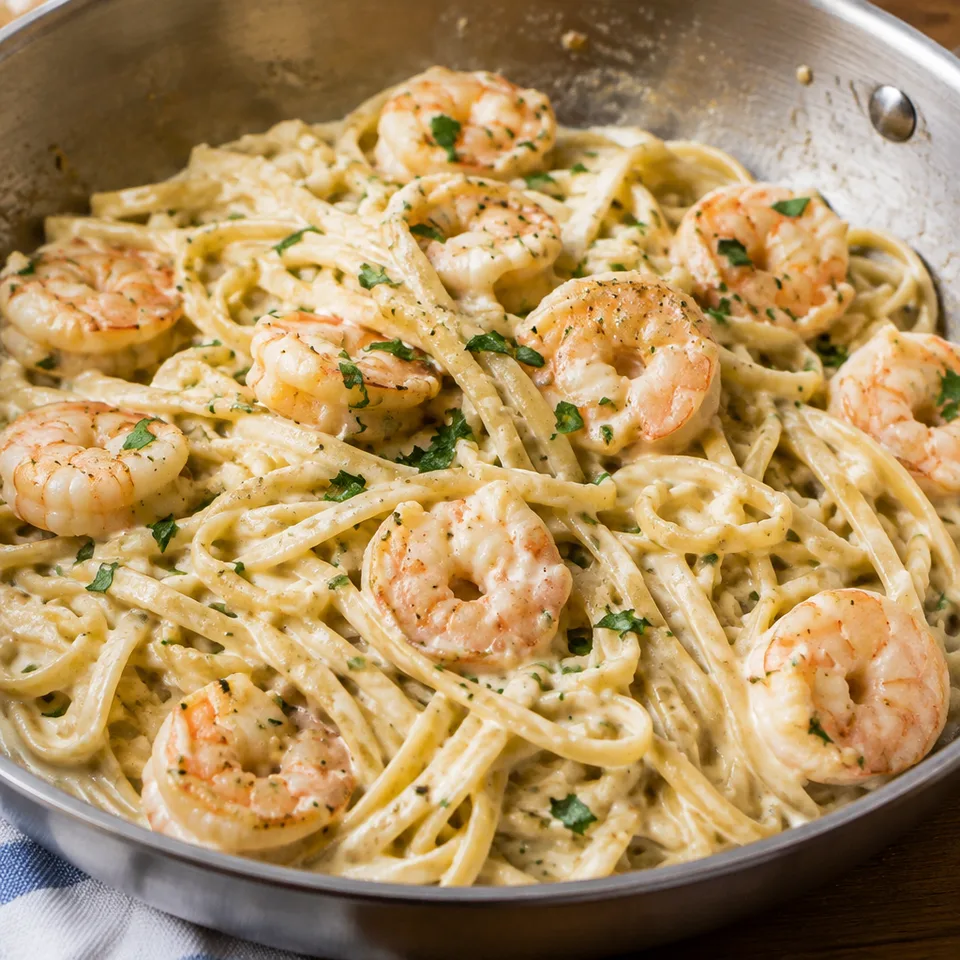
One Pan Creamy Parmesan Shrimp Linguine
Creamy shrimp linguine is an inviting dinner when your appetite settles on pasta. Parmesan gives the sauce a savory richness, with parsley freshening the top and garlic in the background. Wind some noodles around your fork and catch a tender shrimp alongside them.
- Prep
- 15 min
- Cook
- 15 min
- Total
- 30 min
- Original yield
- Serves 5
- Ingredients
- 10 listed
Make it part of your week
Recipe categories & planning details
- Meal type
- Main course
- Primary protein
- Seafood
- Cuisine
- Italian
- Cooking method
- One pan · One pot & sheet pan
- Preparation & total time
- Prep: 15 minutes or less · Total: 30 minutes or less
A few quick notes
1. Keep the shrimp moving gently
The shrimp cook first and only need to turn opaque and cooked through. Move them to foil while the pasta cooks so they stay warm without getting tough in the pan.
2. Don't drain the pasta liquid
After the linguine boils, there should still be some liquid left in the pan. That's meant to become the sauce once the parmesan goes in, so leave it right where it is.
3. Stir past the clumpy stage
The parmesan may look a little clumpy at first. Keep stirring off the heat and give it a moment to melt into the creamy pasta liquid.
Get to know the ingredients
Use peeled, deveined shrimp
The shrimp go straight into the butter and cook quickly, so starting with peeled and deveined shrimp keeps the pan moving and makes the finished pasta easy to eat.
Half and half does double duty
It cooks with the water and pasta, then a little more can loosen the sauce at the end if it thickens as it sits.
Finely shredded parmesan melts better here
Add finely shredded Parmesan after taking the pan off the heat, then stir to help it melt into the sauce.
Let’s make it
Choose your servings, then check things off as you go.
Original recipe: Serves 5. Original quantities shown.
Check ingredients as you prepare them. These checks stay on this page.
How to make it
0 of 7 steps completeMake room for One Pan Creamy Parmesan Shrimp Linguine
Review ingredients in your pantry before anything is added. Meal plans use your household size; grocery-only additions use the servings selected above.
The last little job
The last little job
Once the sauce is creamy and loose enough, toss the warm shrimp back through the pasta and finish with parsley over the top. Serve it warm, before the sauce has much time to thicken.
A little more help as you go
Watch the garlic closely
The garlic only gets a quick saute until slightly golden. It's a short step, so have the liquid and linguine ready to add before the garlic goes in.
Boil with frequent stirring
Because the linguine cooks in a shallow creamy mixture, stir often while it boils. That helps the noodles cook evenly and keeps the forming sauce moving around the pan.
A few questions you might have
Why do I wrap the shrimp in foil instead of leaving it in the pan?
The shrimp are already cooked through before the pasta starts. Wrapping them keeps them warm while the linguine boils, without giving them extra time over the heat.
Should all the liquid be gone before I add the parmesan?
No. The recipe expects some extra liquid after the noodles are done. That liquid becomes the sauce when you stir in the parmesan.
What if the sauce gets too thick at the end?
Stir in a little more half and half if needed. The sauce thickens as it sits, so loosen it before tossing in the shrimp and serving.
Can I use something besides half and half?
Yes. If you need a substitute, use equal parts milk and whipping cream or heavy cream.
Why add the parmesan off the heat?
The pan comes off the heat before the parmesan goes in, which gives you a gentler moment to stir it smooth. If it clumps at first, keep stirring until it melts.
Any more cooking tips?
You can substitute equal parts milk and whipping cream/heavy cream here if needed.
Storage & reheating safety
For cooked, perishable leftovers, refrigerate within 2 hours (1 hour above 90°F), using shallow containers for prompt cooling. Keep the refrigerator at 40°F or below, use refrigerated leftovers within 3–4 days, and reheat hot leftovers to 165°F, checked with a food thermometer. Follow any shorter package limit.
These are general safety limits, not a tested storage or freezing recommendation for this particular dish. USDA leftovers guidance · Safe cooking temperatures
Recipe source: cookingclassy.com. Ingredient names and quantities may be adapted for the pantry.
Preparation notes follow the recipe shown here.