Kitchen notes · a little help before you start
Spicy Korean Noodle Soup (quick & healthy)
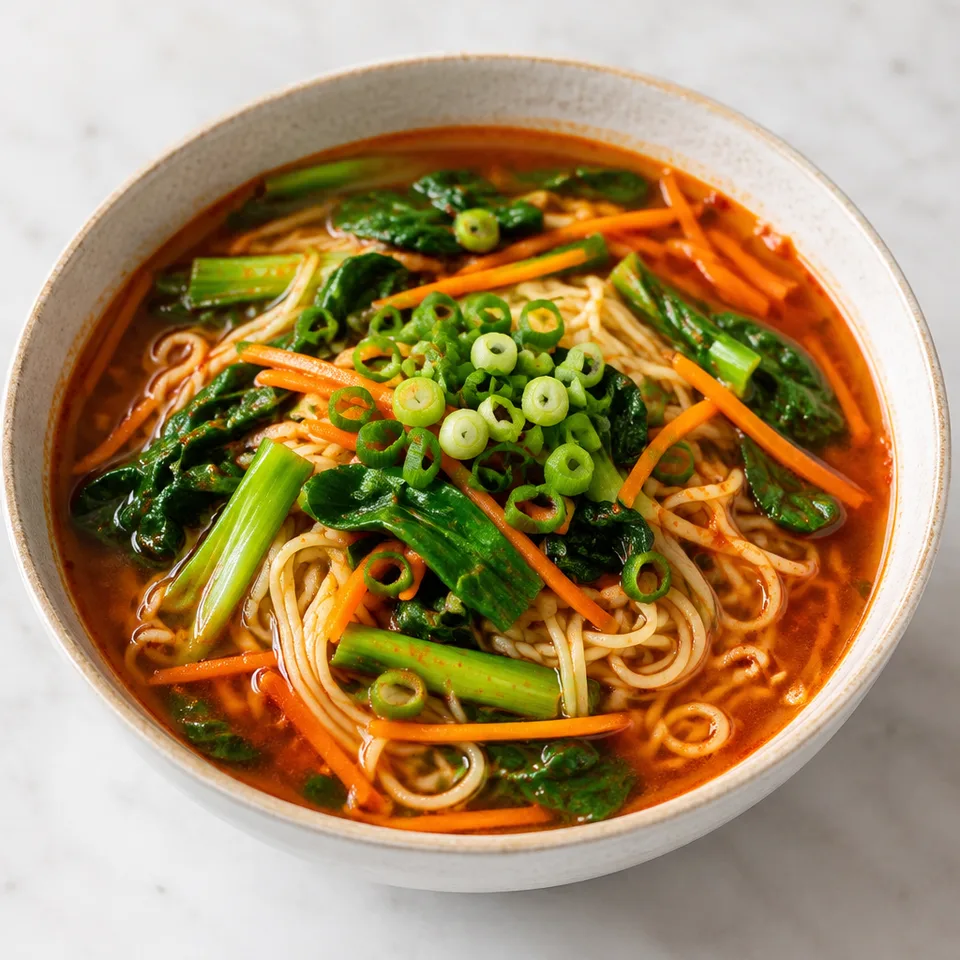
Kimchi and gochujang give this noodle broth a lively, warming flavor. The noodles sit beneath tender greens and carrot, ready to gather up the spicy broth. Finish with sesame oil and green onion, then enjoy a hot bowl with a little of everything in each mouthful.
- Prep
- 5 min
- Cook
- 15 min
- Original yield
- Serves 2
- Ingredients
- 14 listed
Make it part of your week
Recipe categories & planning details
- Meal type
- Main course
- Cuisine
- Asian · Korean
- Preparation & total time
- Prep: 15 minutes or less
- Dish type
- Noodles · Soups · Soups & stews
A few quick notes
1. Gently simmer the broth
Bring the mixed broth ingredients to a simmer, then reduce heat and leave uncovered for ten minutes before adding vegetables.
2. Stems before leaves
Give choi sum stems and carrot their first two minutes, then add the leaves for the shorter final vegetable cook.
3. Rinse noodles briefly
Cook noodles separately, drain and give a quick tap-water rinse, then shake off excess water before dividing among bowls.
Get to know the ingredients
Kimchi juice
Use juice from the kimchi tub alongside the cabbage. Try pressing a spoon against cabbage to release enough juice.
Light soy sauce
Use light or all-purpose soy sauce. Dark soy sauce isn't recommended because its flavor is too strong for this broth.
Toasted sesame oil
Use toasted sesame oil for its stronger flavor, stirring it into the broth just before serving rather than during the long first simmer.
Let’s make it
Choose your servings, then check things off as you go.
Original recipe: Serves 2. Original quantities shown.
Check ingredients as you prepare them. These checks stay on this page.
How to make it
0 of 4 steps completeMake room for Spicy Korean Noodle Soup (quick & healthy)
Review ingredients in your pantry before anything is added. Meal plans use your household size; grocery-only additions use the servings selected above.
The last little job
Remove the whole aromatics
Divide noodles into bowls, add vegetables, remove garlic and ginger from the broth and pour it over, finishing with green onions.
A little more help as you go
Keep leftovers separate
Refrigerate the broth and noodles separately for three days, then reheat each before bringing them together.
Smashed garlic stays whole enough
Smash the clove so it opens while mostly holding together, helping it flavor the broth and be lifted out before serving.
A few questions you might have
Can I replace the cooking wine?
You can use mirin or dry sherry, or another one-and-a-half teaspoons of fish sauce for a nonalcoholic substitution.
Can I use another noodle?
You can use other types such as vermicelli or lo mein. Cook separately according to the packet before assembling the bowls.
Can soy sauce replace fish sauce?
More soy sauce is listed as an alternative to fish sauce in the broth ingredients for this noodle soup.
Does the ginger need peeling?
Use the listed thick ginger slices with skin on, simmering them in the broth and removing them before pouring over noodles.
Can I swap the vegetables?
You can use vegetables of your choice. Give stems and carrots the longer first cooking stage, then cook the leaves briefly.
Any more cooking tips?
1. Kimchi is a traditional Korean pickle of fermented vegetables packed in tangy, spicy juice. Widely available in the fridge section of large grocery stores or Asian stores. Extract the juice by squeezing the spoon against the cabbage (there’s usually plenty in the jar, just need to extract it!). 2. Gochujang is a spicy Korean rice and bean paste loaded with savory flavour. You’ll need it for one of the signature recipes in my cookbook: Korean BBQ Beef Short Ribs ! Also for most Korean recipes I’ve shared. 3. Soy – Use light or all-purpose soy sauce but not dark soy sauce – too strong! More on different soy sauces here. 4. Chinese cooking wine – Substitute with mirin or dry sherry. For a non-alcoholic substitute, use another 1½ teaspoons fish sauce. 5. Smashed garlic – place the side of a knife on the garlic clove, then hit the palm of your hand on it to make the clove burst open but mostly hold together. 6. Noodles – Use any type you want! Try vermicelli or lo mein noodles. 7. Veg – Feel free to sub with anything of your choice. 8. Sesame oil – toasted sesame oil is brown and has more flavour than untoasted (which is yellow). Default sesame oil sold in Australia is toasted, untoasted is harder to find. Leftovers – Store broth and noodles separately for 3 days in the fridge. Reheat separately then put together! Nutrition per serving.
Storage & reheating safety
For cooked, perishable leftovers, refrigerate within 2 hours (1 hour above 90°F), using shallow containers for prompt cooling. Keep the refrigerator at 40°F or below, use refrigerated leftovers within 3–4 days, and reheat hot leftovers to 165°F, checked with a food thermometer. Follow any shorter package limit.
These are general safety limits, not a tested storage or freezing recommendation for this particular dish. USDA leftovers guidance · Safe cooking temperatures
Recipe source: recipetineats.com. Ingredient names and quantities may be adapted for the pantry.
Preparation notes follow the recipe shown here.