Kitchen notes · a little help before you start
Baked Salmon with Roasted Tomatoes
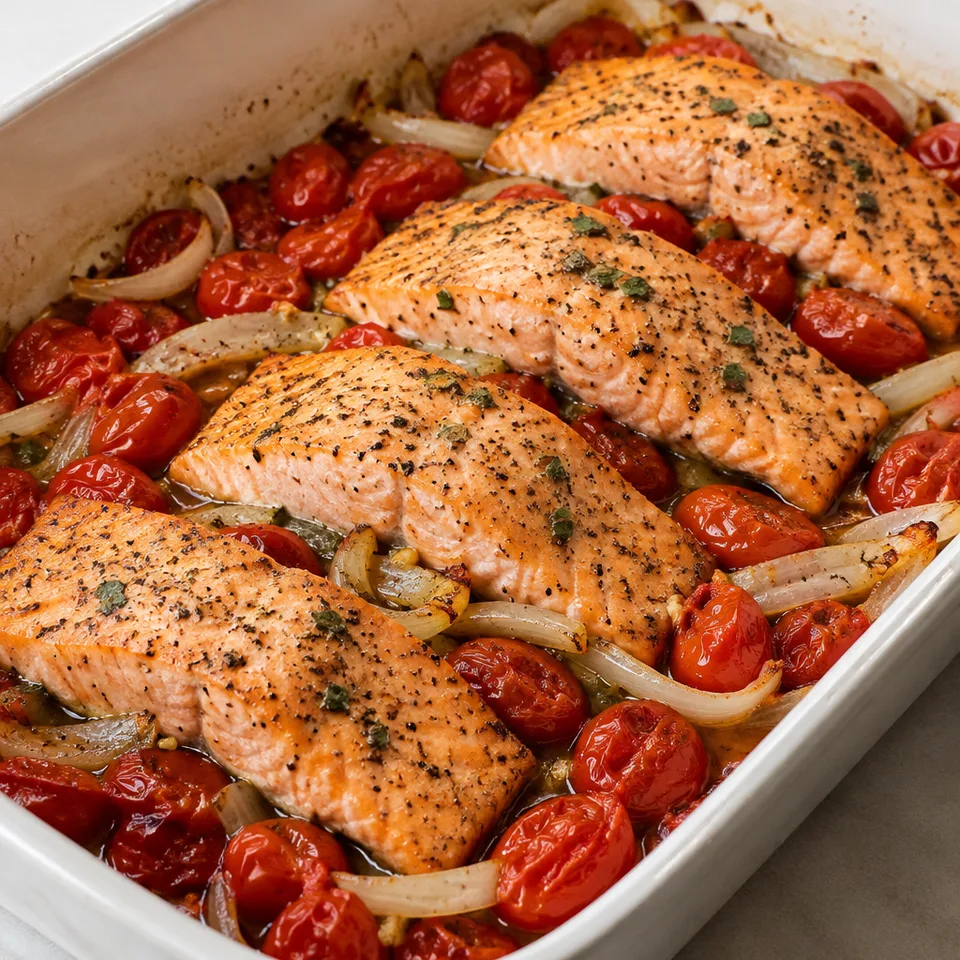
Soft roasted tomatoes are a juicy match for tender salmon, with onion and oregano seasoning the pan juices. The fish flakes into the tomatoes as you eat, so a simple forkful has plenty of fresh, savory flavor.
- Prep
- 10 min
- Cook
- 30 min
- Total
- 40 min
- Original yield
- Serves 4
- Ingredients
- 8 listed
Make it part of your week
Recipe categories & planning details
- Meal type
- Dinner · Lunch
- Primary protein
- Fish
- Cuisine
- American
- Cooking method
- Baking · Baked & roasted · Roasting
- Preparation & total time
- Prep: 15 minutes or less · Total: 31–60 minutes
A few quick notes
1. Give the tomatoes their time
The tomatoes and onions bake first, uncovered, before the fish goes in. That short head start helps them soften and keeps the salmon from overcooking while you wait for the vegetables to catch up.
2. Start with dry fish
After thawing if needed, rinse the salmon and pat it dry. A dry surface takes the seasoning better and keeps extra water from diluting the roasted tomato mixture in the baking dish.
3. Use the doneness cues together
The recipe gives you two good checks: the salmon should be opaque and flake easily, and the internal temperature should reach 145°F. Check the thickest part so you’re not judging by a thinner edge.
Get to know the ingredients
Fresh or frozen salmon both work
Thaw frozen salmon before baking, then place it skin-side down on the roasted tomatoes.
Cherry or grape tomatoes
Use small tomatoes, either cherry or grape. They’re tossed whole with the onion, garlic, oregano, oil, salt, and pepper, then roasted before the salmon is added.
Oregano options
Fresh or dried oregano is allowed. Combine it with the tomatoes and onions before their first roast.
Let’s make it
Choose your servings, then check things off as you go.
Original recipe: Serves 4. Original quantities shown.
Check ingredients as you prepare them. These checks stay on this page.
How to make it
0 of 4 steps completeMake room for Baked Salmon with Roasted Tomatoes
Review ingredients in your pantry before anything is added. Meal plans use your household size; grocery-only additions use the servings selected above.
The last little job
The last little job
Lift the salmon out with a spatula, then spoon the roasted tomatoes and onions over the top. Don’t leave those pan juices behind in the dish, since that’s where a lot of the garlic, oregano, and tomato flavor ends up.
A little more help as you go
Seasoning is split on purpose
Half the salt and pepper seasons the tomato mixture first, and the rest goes directly on the salmon before the second bake. It’s a small detail, but it keeps both parts of the dish properly seasoned.
Use an uncovered bake
Both baking stages are uncovered. That helps the tomatoes roast instead of steaming under a cover, and then lets the salmon cook gently on top of that warm tomato and onion mixture.
A few questions you might have
Do I add the salmon at the same time as the tomatoes?
No. Bake the tomato and onion mixture first for 15 minutes, then place the salmon on top and bake again until the fish is done.
Which side of the salmon faces down in the baking dish?
Place the salmon skin side down on top of the tomatoes. That keeps the fillets sitting neatly over the vegetables and helps when you lift them out with a spatula.
How do I know the salmon is finished?
Look for salmon that’s opaque and flakes easily. For the temperature check, it should reach 145°F in the thickest part of the fillet.
Should the baking dish be covered?
Leave it uncovered for both bakes. The vegetables roast uncovered first, then the salmon bakes uncovered on top of them.
Can I use dried oregano instead of fresh?
Yes. The recipe gives dried oregano as an option in place of chopped fresh oregano, and it goes in with the tomato mixture before roasting.
Any more cooking tips?
Salmon is done cooking when it reaches an internal temperature of 145°F, measured in the thickest part of the salmon filets. Another way to tell if your salmon has finished cooking is to gently press down on the top of the fillet with a fork or your finger. If the flesh of the salmon is opaque and flakes, it’s all done! To maximize the shelf life of your leftover salmon, refrigerate in a shallow airtight container or wrap tightly with heavy-duty aluminum foil or plastic wrap. Baked salmon will last for 3 to 4 days in the fridge, if stored properly.
Storage & reheating safety
For cooked, perishable leftovers, refrigerate within 2 hours (1 hour above 90°F), using shallow containers for prompt cooling. Keep the refrigerator at 40°F or below, use refrigerated leftovers within 3–4 days, and reheat hot leftovers to 165°F, checked with a food thermometer. Follow any shorter package limit.
These are general safety limits, not a tested storage or freezing recommendation for this particular dish. USDA leftovers guidance · Safe cooking temperatures
Recipe source: jocooks.com. Ingredient names and quantities may be adapted for the pantry.
Preparation notes follow the recipe shown here.