Kitchen notes · a little help before you start
Maple Mustard Chicken
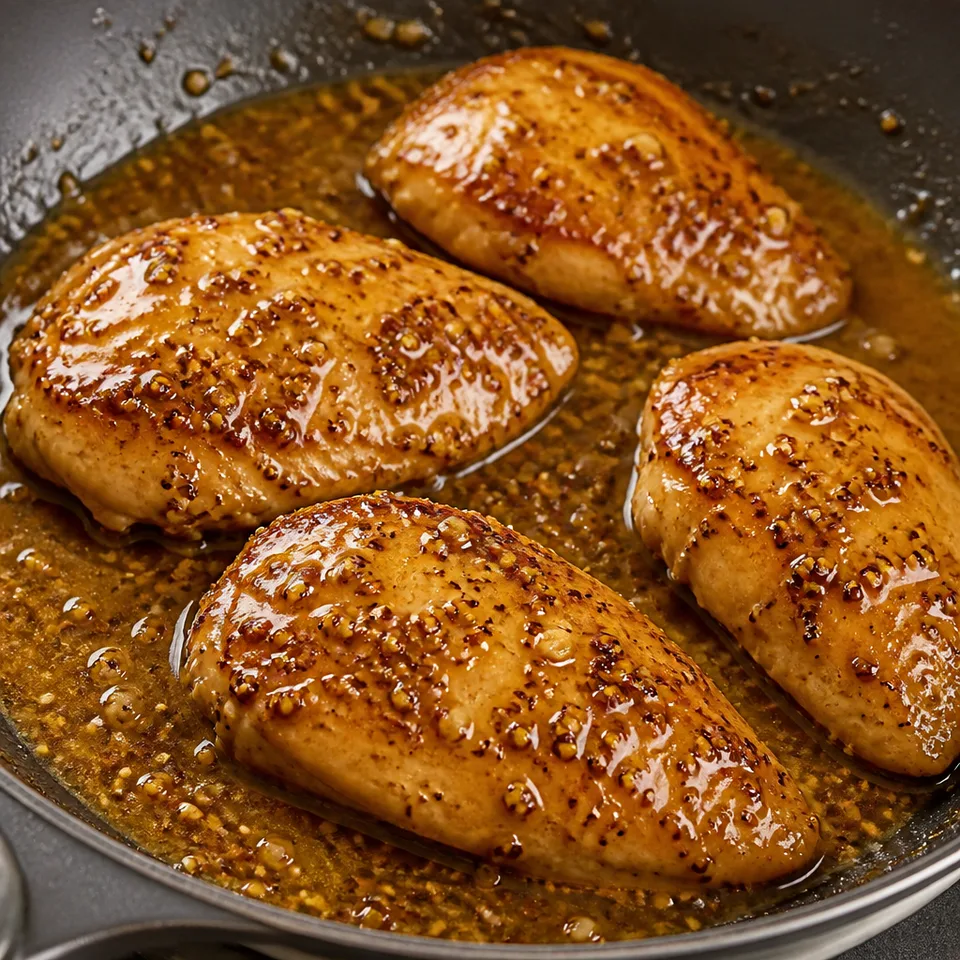
Sweet maple and sharp mustard make a sauce you'll want with every bite of chicken. It's a familiar combination with just enough tang to keep dinner interesting. Give yourself a generous spoonful of the pan sauce before passing the chicken around the table.
- Prep
- 15 min
- Cook
- 10 min
- Total
- 25 min
- Original yield
- Serves 4
- Ingredients
- 10 listed
Make it part of your week
Recipe categories & planning details
- Meal type
- Main course
- Primary protein
- Chicken
- Cuisine
- American
- Cooking method
- Baking · Baked & roasted
- Preparation & total time
- Prep: 15 minutes or less · Total: 30 minutes or less
A few quick notes
1. Use the browned bits
After the chicken comes out, scrape the bottom of the skillet as the broth and maple syrup bubble. Those browned bits are what give the sauce its deeper, savory flavor.
2. Keep the sauce moving
The sauce cooks quickly once the vinegar and mustard go in. Stir constantly for that last minute so the mustard blends in and the maple doesn't sit on the hot pan.
3. Check the thickest part
Thin-sliced chicken cooks fast, but the safest cue is still the internal temperature. Check the thickest part and pull it when it reaches 165°F.
Get to know the ingredients
Thin-sliced chicken
The timing here is built for chicken breasts about ½ inch thick. Thicker pieces won't cook the same way after the quick sear and short bake.
Pure maple syrup
Use pure maple syrup for the sauce. It boils with the broth, thyme, and garlic before the mustard goes in, so it becomes part of the pan sauce rather than just a sweet topping.
Sliced garlic
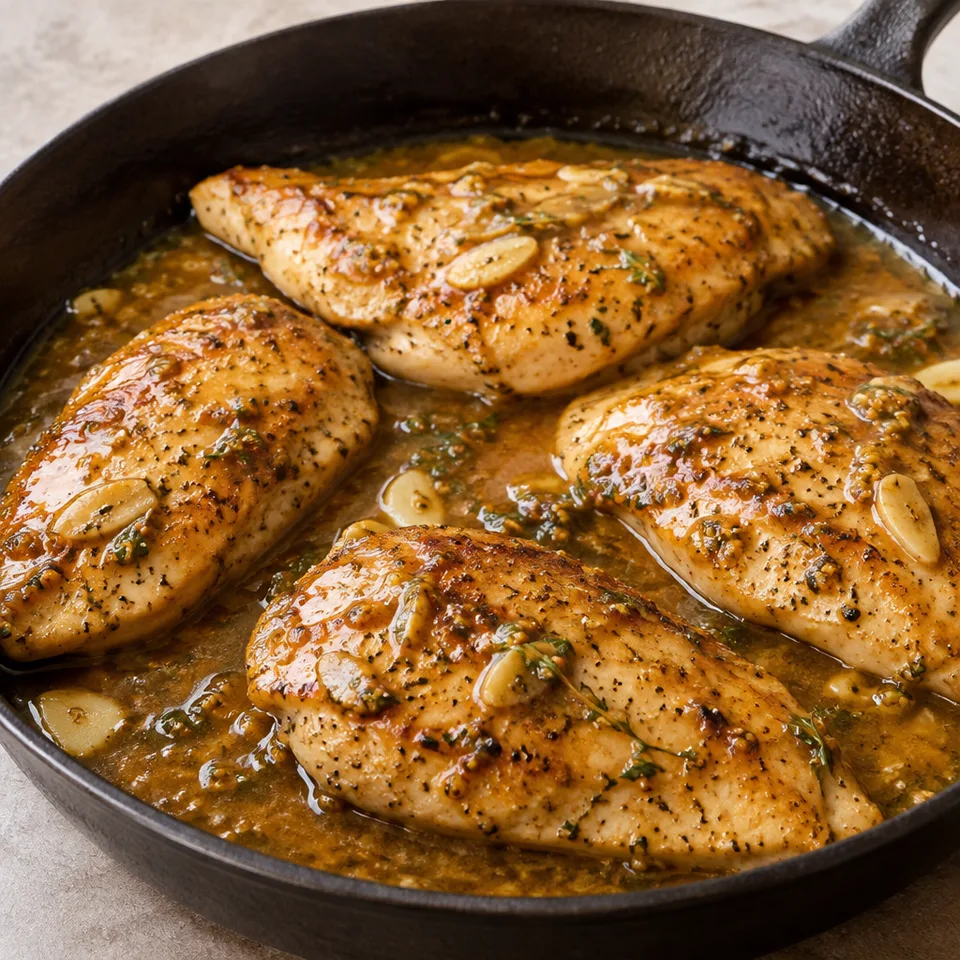
The garlic is thinly sliced, not minced. It simmers in the sauce and gets spooned over the chicken at the end, so the pieces are meant to stay visible.
Let’s make it
Choose your servings, then check things off as you go.
Original recipe: Serves 4. Original quantities shown.
Check ingredients as you prepare them. These checks stay on this page.
How to make it
0 of 4 steps completeMake room for Maple Mustard Chicken
Review ingredients in your pantry before anything is added. Meal plans use your household size; grocery-only additions use the servings selected above.
The last little job
Spoon on the sauce and garlic
Before serving, spoon the pan sauce and softened garlic back over the chicken. That's the last little job, and it brings the maple, mustard, thyme, and pan juices with it.
A little more help as you go
Storing leftovers
Keep leftover chicken and sauce together in an airtight container in the refrigerator for up to 4 days. Reheat gently, spooning the sauce over the chicken so it stays moist.
Use an oven-safe skillet
The skillet goes straight from the stovetop into a 400°F oven. Choose one that's oven-safe before you start, since the chicken returns to the sauce before baking.
A few questions you might have
Can I use regular chicken breasts instead of thin-sliced?
The recipe timing is for thin-sliced boneless skinless chicken breasts about ½ inch thick. Thicker breasts would need different cooking timing, so use the thin pieces called for here.
Why do I take the chicken out after searing it?
Taking it out gives you room to build the sauce in the same skillet. The broth helps lift the browned bits, then the chicken goes back in to finish in the oven.
When does the mustard go in?
Stir the mustard in after the broth, maple syrup, thyme, and garlic have boiled for 2 minutes. It cooks with the vinegar for 1 minute, with constant stirring.
How do I know the chicken is done?
Bake it until the thickest part of the chicken reaches 165°F. With thin-sliced breasts, that should be about 10 minutes in the oven.
Should the sauce be served separately?
No need. Spoon the sauce and garlic over the chicken right before serving so each piece gets coated.
Any more cooking tips?
Storage: Store leftover chicken and sauce together in an airtight container in the refrigerator for up to 4 days. Reheat gently in a covered skillet over low heat or in the microwave, spooning the sauce over the chicken to keep it moist.
Storage & reheating safety
For cooked, perishable leftovers, refrigerate within 2 hours (1 hour above 90°F), using shallow containers for prompt cooling. Keep the refrigerator at 40°F or below, use refrigerated leftovers within 3–4 days, and reheat hot leftovers to 165°F, checked with a food thermometer. Follow any shorter package limit.
These are general safety limits, not a tested storage or freezing recommendation for this particular dish. USDA leftovers guidance · Safe cooking temperatures
Recipe source: fromvalerieskitchen.com. Ingredient names and quantities may be adapted for the pantry.
Preparation notes follow the recipe shown here.