Kitchen notes · a little help before you start
Tomato Spinach Chicken Pasta
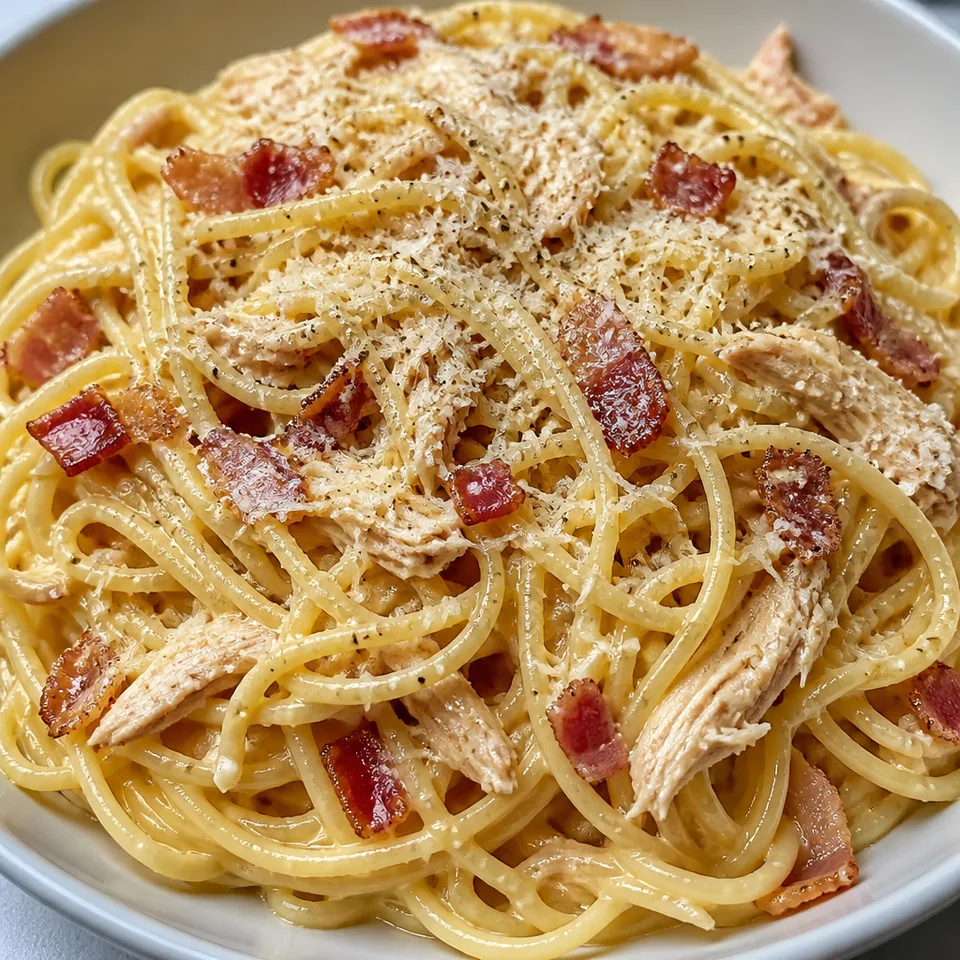
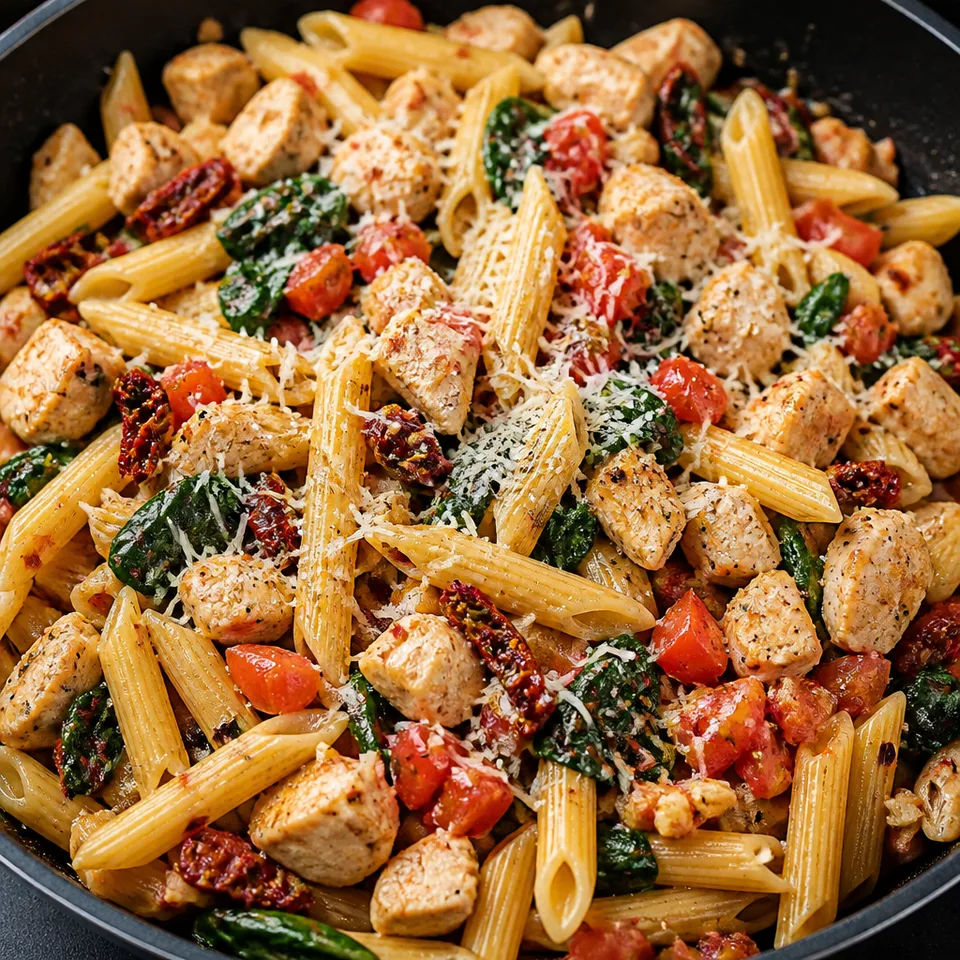
Tomatoes soften around the chicken and pasta, leaving a bowl that feels generous without a heavy sauce. The spinach and sharp Parmesan make each forkful especially inviting. Take it straight to the table while the pasta is warm and the cheese is fresh over the top.
- Prep
- 10 min
- Cook
- 20 min
- Total
- 30 min
- Original yield
- Serves 6
- Ingredients
- 11 listed
Make it part of your week
Recipe categories & planning details
- Meal type
- Dinner
- Primary protein
- Chicken
- Cuisine
- American
- Preparation & total time
- Prep: 15 minutes or less · Total: 30 minutes or less
- Dish type
- Pasta
A few quick notes
1. Cook the pasta al dente
Follow the pasta package and stop at al dente, then drain it before the final toss with chicken and tomatoes.
2. Cook the chicken first
Let the cubed chicken cook with the sun-dried tomatoes and seasoning until no longer pink before adding the fresh vegetables.
3. Watch the spinach wilt
The tomatoes, garlic and spinach have a brief cooking stage together. Look for the spinach to wilt a little before adding pasta.
Get to know the ingredients
Keep the tomato oil
Drain the sun-dried tomatoes but reserve their oil. The listed olive oil comes from that jar and cooks with the chicken.
Small chicken cubes
Cut the boneless, skinless chicken into small cubes as listed. Those pieces are used for the brief first skillet stage.
Divide the Parmesan
Toss half the Parmesan through the pasta in the skillet. Keep the other half for sprinkling over the finished dish.
Let’s make it
Choose your servings, then check things off as you go.
Original recipe: Serves 6. Original quantities shown.
Check ingredients as you prepare them. These checks stay on this page.
How to make it
0 of 5 steps completeMake room for Tomato Spinach Chicken Pasta
Review ingredients in your pantry before anything is added. Meal plans use your household size; grocery-only additions use the servings selected above.
The last little job
A last drizzle
Finish the tossed pasta with the olive oil drizzle and remaining Parmesan, then serve immediately while everything is warm.
A little more help as you go
Save a little pasta water
You can use a scoop of pasta water if the dish gets dry. Keep some available before draining the pasta.
Reheating a portion
Reheat leftovers in the microwave or a skillet with a couple tablespoons of water to loosen the pasta and sauce.
A few questions you might have
Can I use rotini instead of penne?
Yes. Rotini or another small pasta shape is listed alongside penne. Cook your choice according to its package directions.
Is brown-rice pasta an option?
You can use gluten-free brown-rice penne in place of the regular penne. Follow the cooking directions for that pasta.
Can I add more vegetables?
You can add asparagus, broccoli, peppers or mushrooms. The recipe already includes tomatoes and fresh spinach.
How long can I keep leftover pasta?
Store it in an airtight container in the refrigerator for up to three days.
Does this use fresh or frozen spinach?
Fresh spinach is specified. It cooks with the chopped fresh tomatoes and garlic until the leaves have wilted a little.
Any more cooking tips?
You can use a scoop of pasta water to help with the creaminess of your sauce, this is useful if your pasta gets too dry. Pack this dish with other veggies such as asparagus, broccoli, peppers or even mushrooms. Make this chicken pasta gluten-free by using gluten-free brown-rice penne pasta instead of regular penne. Store this pasta dish in the refrigerator in an airtight container for up to 3 days. Reheat the chicken pasta in the microwave or in a skillet, with a couple of tablespoons water to loosen the sauce and pasta.
Storage & reheating safety
For cooked, perishable leftovers, refrigerate within 2 hours (1 hour above 90°F), using shallow containers for prompt cooling. Keep the refrigerator at 40°F or below, use refrigerated leftovers within 3–4 days, and reheat hot leftovers to 165°F, checked with a food thermometer. Follow any shorter package limit.
These are general safety limits, not a tested storage or freezing recommendation for this particular dish. USDA leftovers guidance · Safe cooking temperatures
Recipe source: jocooks.com. Ingredient names and quantities may be adapted for the pantry.
Preparation notes follow the recipe shown here.