Kitchen notes · a little help before you start
Salmon Pasta with a Creamy Garlic Sauce
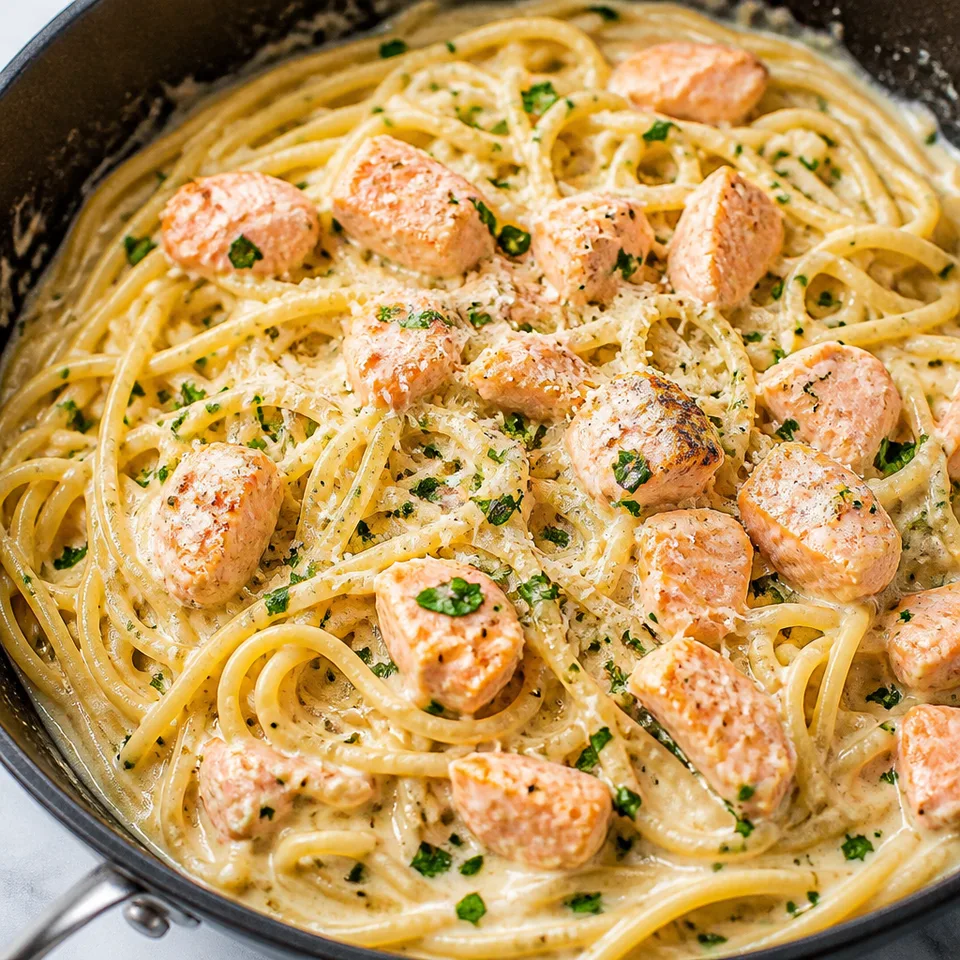
Salmon in a creamy garlic sauce makes a generous tangle of pasta, with lemon keeping the rich sauce lively. Tender flakes settle between the strands instead of sitting apart on the plate. Twirl a forkful and enjoy the fish with some Parmesan and parsley in the sauce.
- Prep
- 10 min
- Cook
- 20 min
- Total
- 30 min
- Original yield
- Serves 4
- Ingredients
- 14 listed
Make it part of your week
Recipe categories & planning details
- Meal type
- Main course
- Primary protein
- Fish
- Cuisine
- American
- Preparation & total time
- Prep: 15 minutes or less · Total: 30 minutes or less
- Dish type
- Pasta
A few quick notes
1. Set salmon aside after browning
Cook the seasoned salmon briefly on both sides, then remove it while building sauce in the same skillet.
2. Whisk the sauce smooth
Add garlic and wine to the cooked flour before cream and lemon, then whisk in Parmesan once smooth.
3. Break salmon into bite-sized pieces
Return it to the sauce and use your spoon to separate it gently before finishing the cooking.
Get to know the ingredients
Skin can be removed later
You can peel off the salmon skin just before returning the fish to the sauce, or leave it on if you prefer.
Wine or broth
Dry white wine or chicken broth are both listed for the sauce after the flour's short cooking stage.
Freshly grated Parmesan
Grate Parmesan for whisking into the smooth sauce before salmon returns, keeping extra if desired for serving.
Let’s make it
Choose your servings, then check things off as you go.
Original recipe: Serves 4. Original quantities shown.
Check ingredients as you prepare them. These checks stay on this page.
How to make it
0 of 8 steps completeMake room for Salmon Pasta with a Creamy Garlic Sauce
Review ingredients in your pantry before anything is added. Meal plans use your household size; grocery-only additions use the servings selected above.
The last little job
Toss gently and serve
Add drained pasta, the stated pasta water and parsley to the salmon sauce, toss gently and serve immediately with optional Parmesan.
A little more help as you go
Lemon can be gentler
For less tang, start with half the lemon amount, then taste and add more if you like.
Use pasta water to loosen
More pasta water is allowed if you want to thin the sauce when combining it with the drained pasta.
A few questions you might have
Does the salmon cook fully before the sauce is made?
The final cooking happens after it returns to the sauce, until salmon is cooked through and the sauce thickens.
When does the onion powder go in?
Season the salmon with onion powder, salt and pepper before its first skillet cooking stage.
Can I use another pasta shape?
Spaghetti or another pasta is listed, cooked separately to al dente before gently combining with the salmon sauce.
Should flour cook over the same heat as the salmon?
Reduce the skillet to medium after removing salmon, then cook flour briefly while stirring nearly constantly.
Is parsley added before the fish finishes cooking?
Add chopped parsley with the drained pasta at the end, after salmon has cooked through in the sauce.
Any more cooking tips?
If you can’t buy skinless salmon, you can easily peel off the salmon skin just before you add the salmon back into the pan. Or keep it on if you don’t mind it. The sauce is fairly lemony, so if you’re not into that, halve the amount of lemon, then add more in once you’ve tasted it if it’s not lemony enough for you. Serves 2-4. If you want a really decadent meal for two people, make less pasta (then each person gets more sauce and salmon). For 4 people, I recommend serving this with a side salad or some garlic bread and/or increase the salmon to 3/4 pounds or so. This recipe can also be found on page 31 of the Salt & Lavender: Everyday Essentials cookbook.
Storage & reheating safety
For cooked, perishable leftovers, refrigerate within 2 hours (1 hour above 90°F), using shallow containers for prompt cooling. Keep the refrigerator at 40°F or below, use refrigerated leftovers within 3–4 days, and reheat hot leftovers to 165°F, checked with a food thermometer. Follow any shorter package limit.
These are general safety limits, not a tested storage or freezing recommendation for this particular dish. USDA leftovers guidance · Safe cooking temperatures
Recipe source: saltandlavender.com. Ingredient names and quantities may be adapted for the pantry.
Preparation notes follow the recipe shown here.