Kitchen notes · a little help before you start
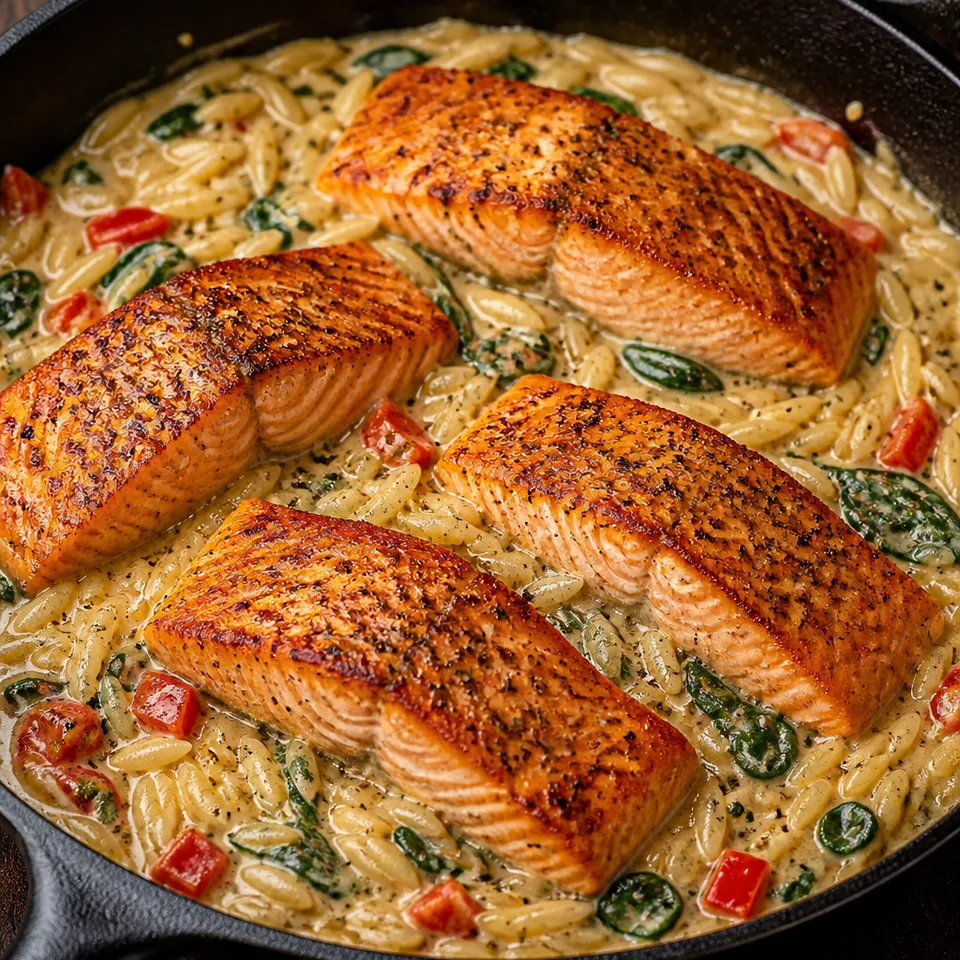
Salmon Orzo
Salmon Orzo is made with salmon, orzo, and chicken stock.
- Prep
- 5 min
- Cook
- 25 min
- Total
- 30 min
- Original yield
- Serves 4
- Ingredients
- 15 listed
Make it part of your week
Recipe categories & planning details
- Meal type
- Main course
- Primary protein
- Fish
- Cuisine
- American
- Preparation & total time
- Prep: 15 minutes or less · Total: 30 minutes or less
A few quick notes
1. Remember the turn or stir
Turn or stir the food at the point specified in the method.
2. Prepare the first additions
Set out the ingredients needed for the first cooking step.
3. Keep the simmering stage
Follow the simmering heat, timing and finish checks that are given.
Get to know the ingredients
salmon
In the method: Pat the salmon fillets dry using a paper towel.
smoked paprika
In the method: Season with smoked paprika, salt, and pepper.
freshly ground black pepper
In the method: Season with smoked paprika, salt, and pepper.
Let’s make it
Choose your servings, then check things off as you go.
Original recipe: Serves 4. Original quantities shown.
Check ingredients as you prepare them. These checks stay on this page.
Ingredient note
Source: 4 fillets salmonIngredient note
Source: ½ teaspoon smoked paprikaIngredient note
Source: ½ teaspoon saltIngredient note
Source: ¼ teaspoon freshly ground black pepperIngredient note
Source: 2 tablespoon olive oil; Source: 2 tablespoons olive oilIngredient note
Source: 1 medium yellow onion (chopped)Ingredient note
Source: 4 cloves garlic (minced)Ingredient note
Source: ½ teaspoon Italian seasoningIngredient note
Source: 1 cup orzo (uncooked)Ingredient note
Source: 2 cups chicken stockIngredient note
Source: ½ cup heavy creamIngredient note
Source: ½ cup roasted red bell peppers (chopped canned or jarred)Ingredient note
Source: ½ cup Parmesan cheese (freshly grated)Ingredient note
Source: 4 oz fresh spinachIngredient note
Source: 1 tablespoon freshly squeezed lemon juice
How to make it
0 of 7 steps completeMake room for Salmon Orzo
Review ingredients in your pantry before anything is added. Meal plans use your household size; grocery-only additions use the servings selected above.
The last little job
Finish as directed
Garnish with fresh basil and coarsely ground black pepper.
A little more help as you go
Prepare for the next step
Have the next addition ready when the mixture reaches the boil described.
Prepare the finishing addition
Have the final topping or garnish ready for its specified step.
Prepare the pan
Follow the pan-heating step before adding its ingredients.
A few questions you might have
What should I prepare first?
Set out the skillet. Start with this step: Pat the salmon fillets dry using a paper towel.
Which preparation step should I plan for?
Turn or stir the food at the point specified in the method.
What check should I look for as it cooks?
Let it simmer, stirring occasionally, for about 6-10 minutes or until the orzo is tender and cooked through.
Is there another preparation step to plan for?
Have the next addition ready when the mixture reaches the boil described.
Additional recipe notes
Use a high-sided, heavy skillet like cast iron or stainless steel to ensure even cooking and prevent burning or sticking. Pat the salmon fillets dry using a paper towel to remove excess moisture. It helps to sear the salmon properly and make a crispy, golden crust instead of steaming in the pan. Don't overcook salmon, as it can become dry. Sear until it's crispy outside and still moist inside. Make it spicy by adding red pepper flakes, chili powder, or cayenne pepper. Use fresh baby spinach. Add it at the end so it stays tender but doesn't overcook. Customize to Fit Your Diet (Gluten-Free, Dairy-Free Options) Make it dairy-free: Use dairy-free, plant-based Parmesan cheese and coconut milk, coconut cream, or cashew cream as a dairy-free alternative for heavy cream. Make it gluten-free: Substitute orzo with gluten-free orzo, gluten-free pasta or long-grain rice. Check labels on store-bought chicken stock to ensure it's gluten-free. Frequently Asked Questions (FAQ) When should I add the lemon juice (at the start or the end of the recipe)? Add it at the end to keep the flavor fresh and bright. Adding lemon juice at the beginning can make it lose its fresh flavor and make the creamy sauce too sour. Do you prefer salmon with the skin on or off? I prefer skin-on-it locks in moisture and keeps the salmon tender while cooking. How do you know when salmon is done? It should flake easily with a fork and be opaque throughout. For accuracy, check the internal temp: 125°F for medium-rare, 140°F for medium. When and how should I remove the skin? After cooking-just lift it off with a knife, fork, or your hands. It should peel away easily.
Storage & reheating safety
For cooked, perishable leftovers, refrigerate within 2 hours (1 hour above 90°F), using shallow containers for prompt cooling. Keep the refrigerator at 40°F or below, use refrigerated leftovers within 3–4 days, and reheat hot leftovers to 165°F, checked with a food thermometer. Follow any shorter package limit.
These are general safety limits, not a tested storage or freezing recommendation for this particular dish. USDA leftovers guidance · Safe cooking temperatures
Recipe source: juliasalbum.com. Ingredient names and quantities may be adapted for the pantry.
Preparation notes follow the recipe shown here.