Kitchen notes · a little help before you start
Best Roast Chicken Recipe
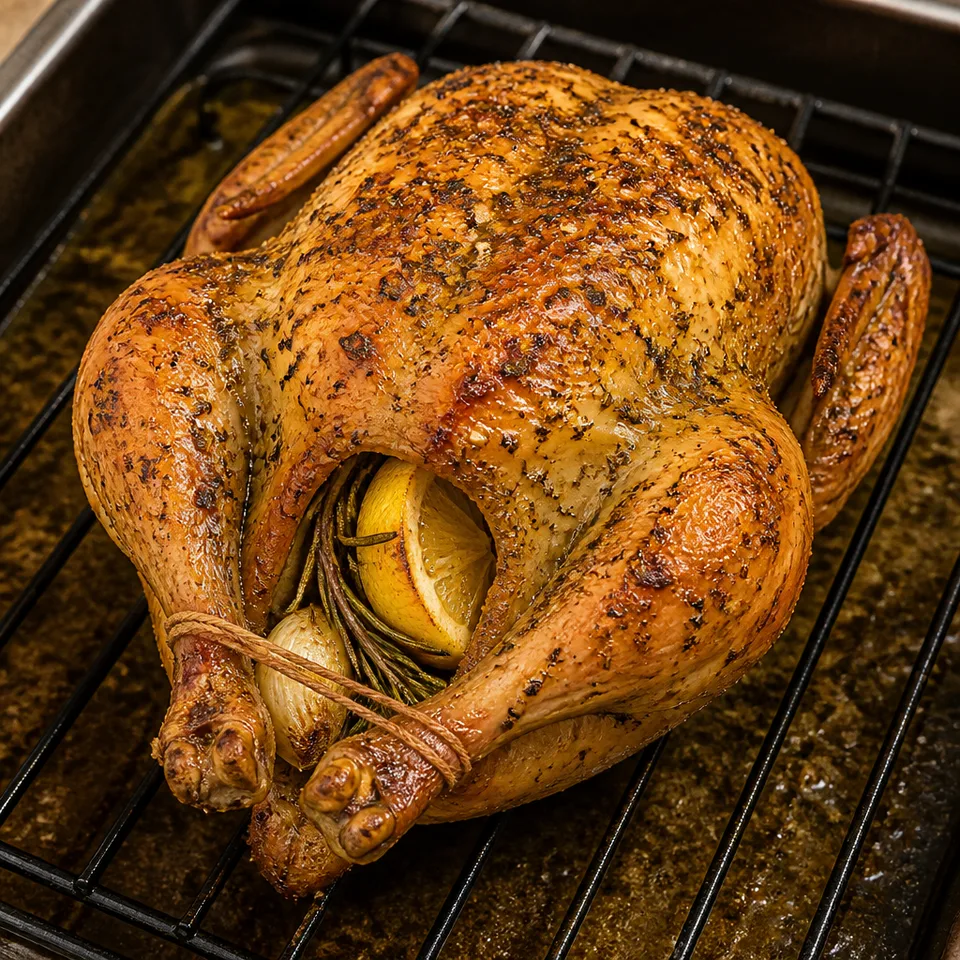
The smell of a garlic-butter chicken in the oven makes dinner feel close, even before it reaches the table. Crisp skin and the lemon tucked inside give this roast plenty of appeal. Let it have its rest, then gather around for warm slices with the juices spooned over.
- Prep
- 10 min
- Cook
- 75 min
- Total
- 100 min
- Original yield
- Serves 4
- Ingredients
- 10 listed
Make it part of your week
Recipe categories & planning details
- Meal type
- Dinner
- Primary protein
- Chicken
- Cuisine
- American
- Cooking method
- Roasting · Baked & roasted
- Preparation & total time
- Prep: 15 minutes or less · Total: over 60 minutes
A few quick notes
1. Dry the chicken thoroughly
Remove the giblets from the cavity, then use paper towels to dry the chicken before brushing with butter.
2. Watch the temperature change
The roast begins in a hot oven, then finishes at a lower temperature. Remember that change after the first ten minutes.
3. Tuck the wings
Tie the legs together and tuck the wings under the body before the uncovered roasting stage begins.
Get to know the ingredients
Two garlic preparations
Minced garlic goes over the buttered skin. Keep the peeled cloves separate for filling the cavity with lemon and rosemary.
Melted butter
Brush the melted butter over the dried chicken first. The minced garlic and dry herb seasoning follow on the outside.
Lemon quarters
The lemon goes inside the cavity alongside rosemary and garlic cloves, after the inside has been seasoned with salt.
Let’s make it
Choose your servings, then check things off as you go.
Original recipe: Serves 4. Original quantities shown.
Check ingredients as you prepare them. These checks stay on this page.
How to make it
0 of 8 steps completeMake room for Best Roast Chicken Recipe
Review ingredients in your pantry before anything is added. Meal plans use your household size; grocery-only additions use the servings selected above.
The last little job
Baste, then rest
Baste the finished chicken with its juices and rest it for ten to fifteen minutes before carving and serving.
A little more help as you go
Breast side up
Set the chicken breast side up on its rack, with the shallow roasting pan beneath to collect its juices.
Check the center
Use the internal temperature to judge the finish. The directions specify 165°F for the chicken before the resting stage.
A few questions you might have
Can I use black pepper instead of lemon pepper?
Freshly ground black pepper is listed as an alternative. Mix it with the salt, basil and thyme for the outside seasoning.
Does the chicken stay covered while roasting?
Roast it uncovered. The directions begin at 450°F for ten minutes, then reduce the oven to 350°F to finish.
Do I season inside the chicken?
Add salt inside the cavity before filling it with the lemon, rosemary and peeled garlic cloves for roasting.
Should the herbs be rubbed on before the butter?
Brush on the melted butter and add minced garlic first, then rub the mixed dry seasonings over the chicken.
Can I carve it as soon as it comes out?
Baste it first, then leave it to rest for ten to fifteen minutes. Carve and serve after that pause.
Any more cooking tips?
Cooking Temperature: You can roast a chicken at any temperature; however, in my opinion, it’s best to preheat the oven to 450˚F, roast the chicken for ten minutes at that temperature, and then reduce the oven temperature to 350˚F. In all my testing, I found this was the best method for crispy skin but tender and juicy meat. Instant Read Meat Thermometer: To avoid dry chicken, use this critical tool. Chicken is done cooking when the internal temperature registers at 165˚F.
Storage & reheating safety
For cooked, perishable leftovers, refrigerate within 2 hours (1 hour above 90°F), using shallow containers for prompt cooling. Keep the refrigerator at 40°F or below, use refrigerated leftovers within 3–4 days, and reheat hot leftovers to 165°F, checked with a food thermometer. Follow any shorter package limit.
These are general safety limits, not a tested storage or freezing recommendation for this particular dish. USDA leftovers guidance · Safe cooking temperatures
Recipe source: diethood.com. Ingredient names and quantities may be adapted for the pantry.
Preparation notes follow the recipe shown here.