Kitchen notes · a little help before you start
Italian Braised Chicken
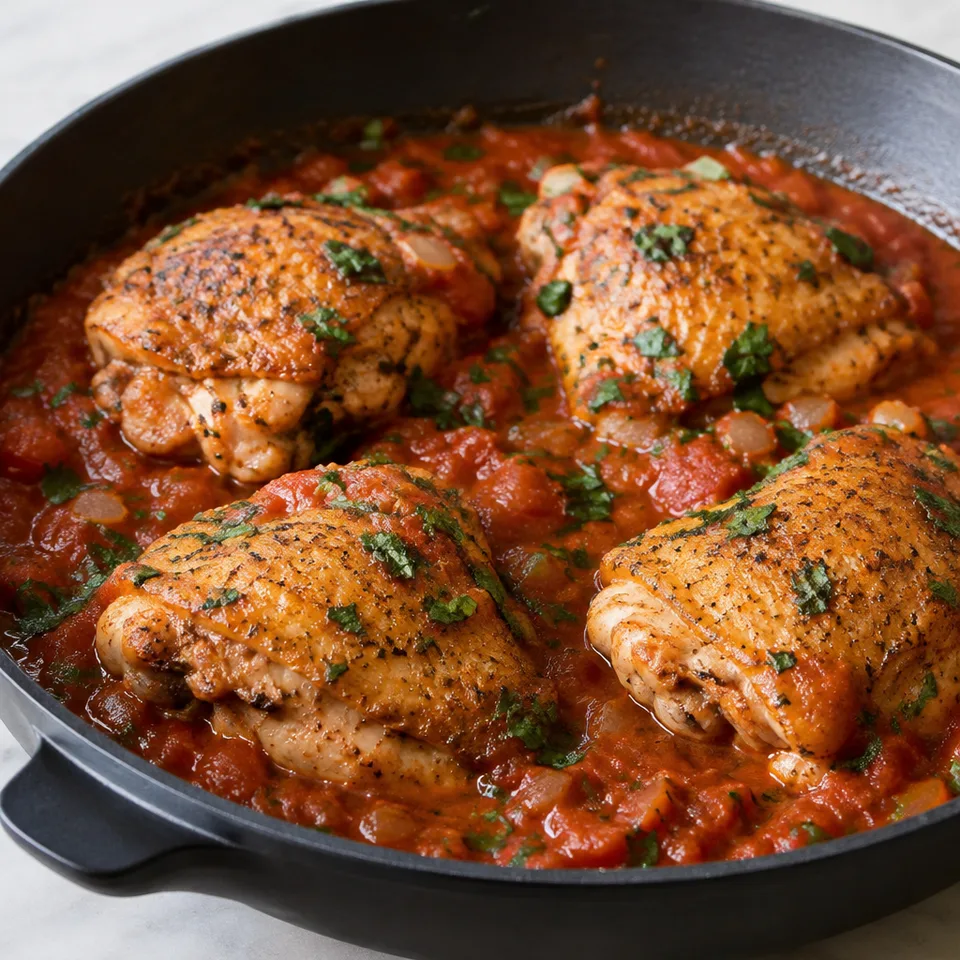
Chicken nestled in tomato-basil sauce makes a welcoming dinner, with savory juices mingling into every spoonful. The thighs have browned edges beneath the sauce, and chopped parsley gives the finished dish a fresh touch. This is a good meal for anyone who enjoys a generous helping of tomato sauce.
- Prep
- 10 min
- Cook
- 30 min
- Total
- 40 min
- Original yield
- Serves 4
- Ingredients
- 10 listed
Make it part of your week
Recipe categories & planning details
- Meal type
- Main course
- Primary protein
- Chicken
- Cooking method
- Braising
- Preparation & total time
- Prep: 15 minutes or less · Total: 31–60 minutes
A few quick notes
1. Save the chicken juices
After browning, keep the juices that come out of the chicken. They go back into the braiser with the meat and help the tomato sauce taste more rounded.
2. Lower the heat for the sauce
The onions and garlic cook after the chicken is browned, but the heat drops to medium first. That gives the onion time to soften before the tomato puree and basil go in.
3. Give the chicken a covered simmer
Once the chicken returns to the braiser, cover it and keep the heat low. Use about 15-20 minutes, just until the thighs are tender.
Get to know the ingredients
Chicken thighs
Season both sides before browning, then start them skin side down. That first contact with the hot braiser is where the browning begins.
Whole peeled tomatoes
Puree the tomatoes before they go into the pan. They become the base of the sauce, so this step keeps the braise smooth rather than chunky.
Brown sugar
The brown sugar goes in at the end with the final salt, not at the start. Stir it through after the chicken has simmered in the tomato sauce.
Let’s make it
Choose your servings, then check things off as you go.
Original recipe: Serves 4. Original quantities shown.
Check ingredients as you prepare them. These checks stay on this page.
How to make it
0 of 4 steps completeMake room for Italian Braised Chicken
Review ingredients in your pantry before anything is added. Meal plans use your household size; grocery-only additions use the servings selected above.
The last little job
The last little job
Stir in the salt and brown sugar, then finish with chopped parsley just before serving. It keeps the garnish fresh and lets you adjust the sauce after the chicken has cooked.
A little more help as you go
About the pan
The recipe uses an Xtreme braiser, but the important moves are the same: brown the chicken, soften the aromatics, then cover and simmer the chicken gently in the tomato sauce.
Pat the chicken dry
After rinsing, pat the thighs dry before seasoning. Dry chicken browns better when it hits the hot braiser, especially since the recipe starts with a high-heat sear.
A few questions you might have
Do I add the olive oil before browning the chicken?
No. The chicken is browned first in the fully heated braiser. The olive oil is added afterward, when the heat is turned down and the onion and garlic go in.
Should the tomatoes stay whole or chunky?
Puree them before cooking. The tomato puree is stirred in with the basil after the onion has softened, making the sauce for the braise.
When do the chicken juices go back in?
Add them when you return the browned chicken to the braiser. The recipe specifically keeps those juices from the browning step and simmers them with the chicken.
Is the parsley cooked in the sauce?
No. The chopped parsley is for garnishing at the very end, after the chicken has simmered and the salt and brown sugar have been stirred through.
How do I know when to stop simmering?
Keep it covered over low heat for about 15-20 minutes, until the chicken is tender. After that, stir in the final salt and brown sugar.
Storage & reheating safety
For cooked, perishable leftovers, refrigerate within 2 hours (1 hour above 90°F), using shallow containers for prompt cooling. Keep the refrigerator at 40°F or below, use refrigerated leftovers within 3–4 days, and reheat hot leftovers to 165°F, checked with a food thermometer. Follow any shorter package limit.
These are general safety limits, not a tested storage or freezing recommendation for this particular dish. USDA leftovers guidance · Safe cooking temperatures
Recipe source: rasamalaysia.com. Ingredient names and quantities may be adapted for the pantry.
Preparation notes follow the recipe shown here.