Kitchen notes · a little help before you start
Classic Tomato Soup
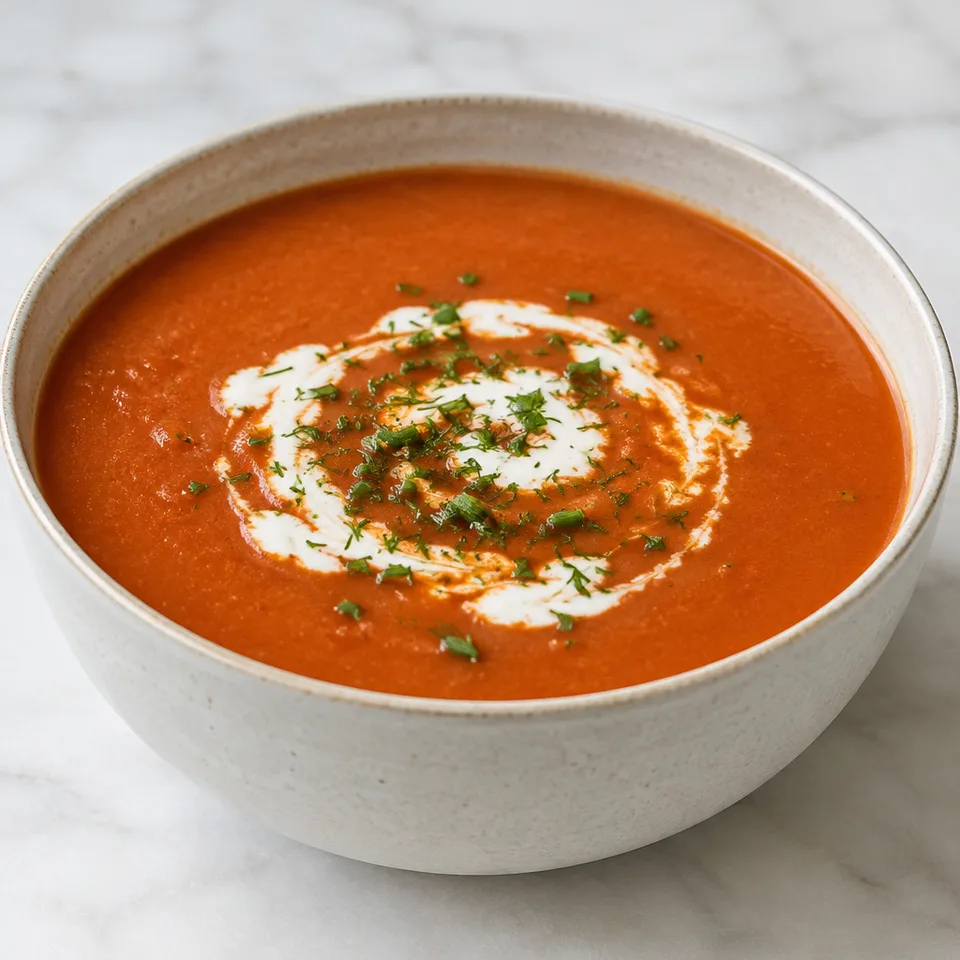
A smooth bowl of tomato soup is an easy thing to look forward to. Thyme gives this one a gentle herbal note, while a spoonful of crème fraîche flecked with dill and chives adds a cool, tangy finish.
- Prep
- 10 min
- Cook
- 20 min
- Total
- 30 min
- Original yield
- Serves 6
- Ingredients
- 13 listed
Make it part of your week
Recipe categories & planning details
- Meal type
- Main course
- Preparation & total time
- Prep: 15 minutes or less · Total: 30 minutes or less
- Dish type
- Soups · Soups & stews
A few quick notes
1. Keep stirring after the flour goes in
Once the flour is coating the onion and garlic, stir steadily as the broth and tomatoes go in. That’s what keeps the base smooth and stops the flour from catching on the bottom of the pot.
2. Let the thyme do its work
The covered simmer isn’t just for softening everything. It gives the thyme time to season the soup before you pull the sprig out and blend it smooth.
3. Season gently at first
Start with the quarter teaspoon each of salt and pepper in the soup directions, then adjust seasoning at the end.
Get to know the ingredients
Whole tomatoes get blended later
Add the canned whole tomatoes as written, then let the blender or food processor smooth them out after the simmer. There’s no need to chop them before they go into the pot.
Flour gives the soup body
The flour goes in before the liquid, coating the softened onion and garlic. Stir it in evenly so it can thicken the soup without leaving little dry patches behind.
Crème fraîche stays for serving
Don’t simmer the crème fraîche into the soup. It’s whisked with the chopped herbs and spooned onto each bowl at the end, which keeps the finish cool and creamy.
Let’s make it
Choose your servings, then check things off as you go.
Original recipe: Serves 6. Original quantities shown.
Check ingredients as you prepare them. These checks stay on this page.
How to make it
0 of 4 steps completeMake room for Classic Tomato Soup
Review ingredients in your pantry before anything is added. Meal plans use your household size; grocery-only additions use the servings selected above.
The last little job
The last little job
Whisk the crème fraîche with the chives and dill until it’s even, then add a small spoonful to each bowl. A few extra chives on top are optional, but they make the finish feel fresh.
A little more help as you go
Blend after removing the thyme
Pull out the thyme sprig before puréeing. It has already flavored the soup during the simmer, and removing it keeps the final texture creamy and smooth.
Use a roomy pot
A 5-quart Dutch oven or large pot gives you space to stir as the broth and tomatoes are added. That matters here because the flour needs movement to stay off the bottom.
A few questions you might have
Can I use water instead of the chicken broth?
Yes. You can use low-sodium chicken broth or water. With water, taste before serving and add salt as needed.
Why do I need to stir constantly when the soup comes to a simmer?
The flour is already in the pot, so stirring keeps it from settling and sticking as the liquid heats. It also helps the soup stay smooth.
Do I blend the thyme with the soup?
No. Simmer the soup with the thyme sprig, then discard it before puréeing.
Should the herb cream go into the whole pot?
No. Mix the crème fraîche with the chopped chives and dill, then spoon it onto each bowl when serving.
What texture should the finished soup have?
After simmering and removing the thyme, purée it until it’s creamy and smooth.
Any more cooking tips?
Keep stirring as you add ingredients to the Dutch oven so the flour doesn't stick to the bottom. Let the soup simmer for 20 minutes to draw out the herbs' flavor. Low-sodium chicken broth or water both work; taste before adding extra salt at serving time.
Storage & reheating safety
For cooked, perishable leftovers, refrigerate within 2 hours (1 hour above 90°F), using shallow containers for prompt cooling. Keep the refrigerator at 40°F or below, use refrigerated leftovers within 3–4 days, and reheat hot leftovers to 165°F, checked with a food thermometer. Follow any shorter package limit.
These are general safety limits, not a tested storage or freezing recommendation for this particular dish. USDA leftovers guidance · Safe cooking temperatures
Recipe source: rasamalaysia.com. Ingredient names and quantities may be adapted for the pantry.
Preparation notes follow the recipe shown here.