Kitchen notes · a little help before you start
Asian Glazed Salmon in Foil
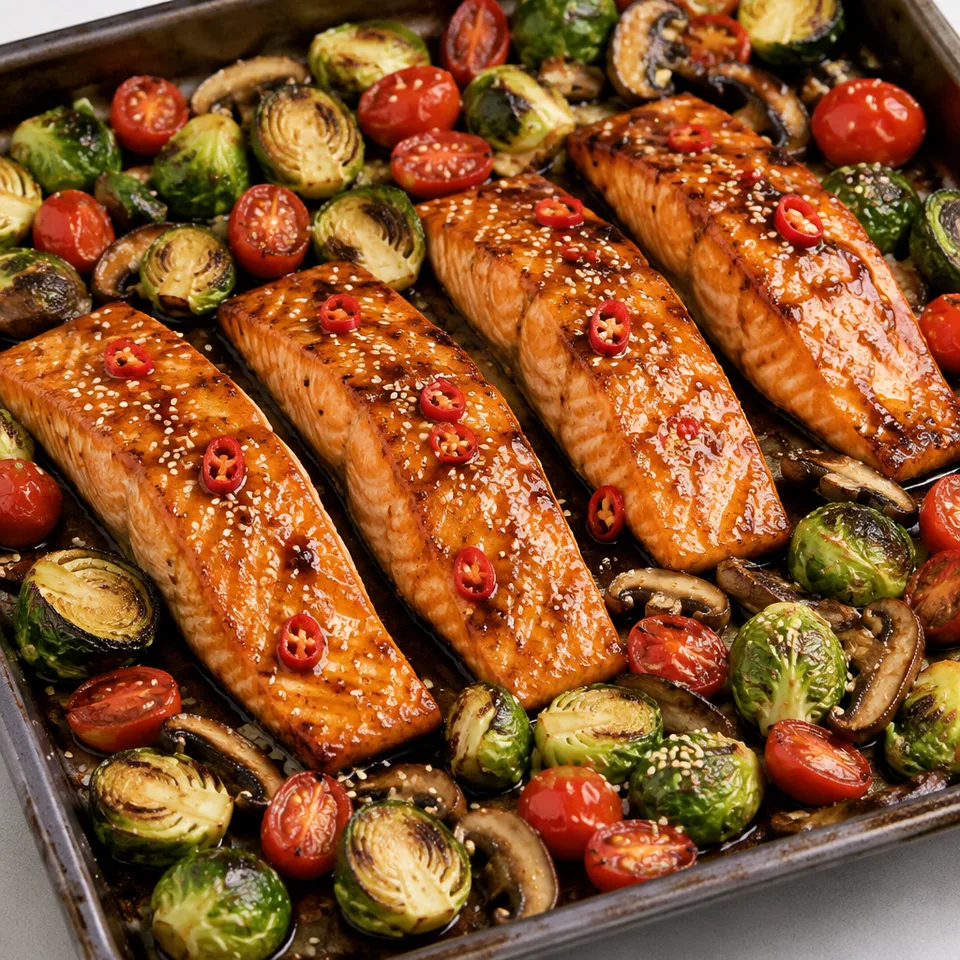
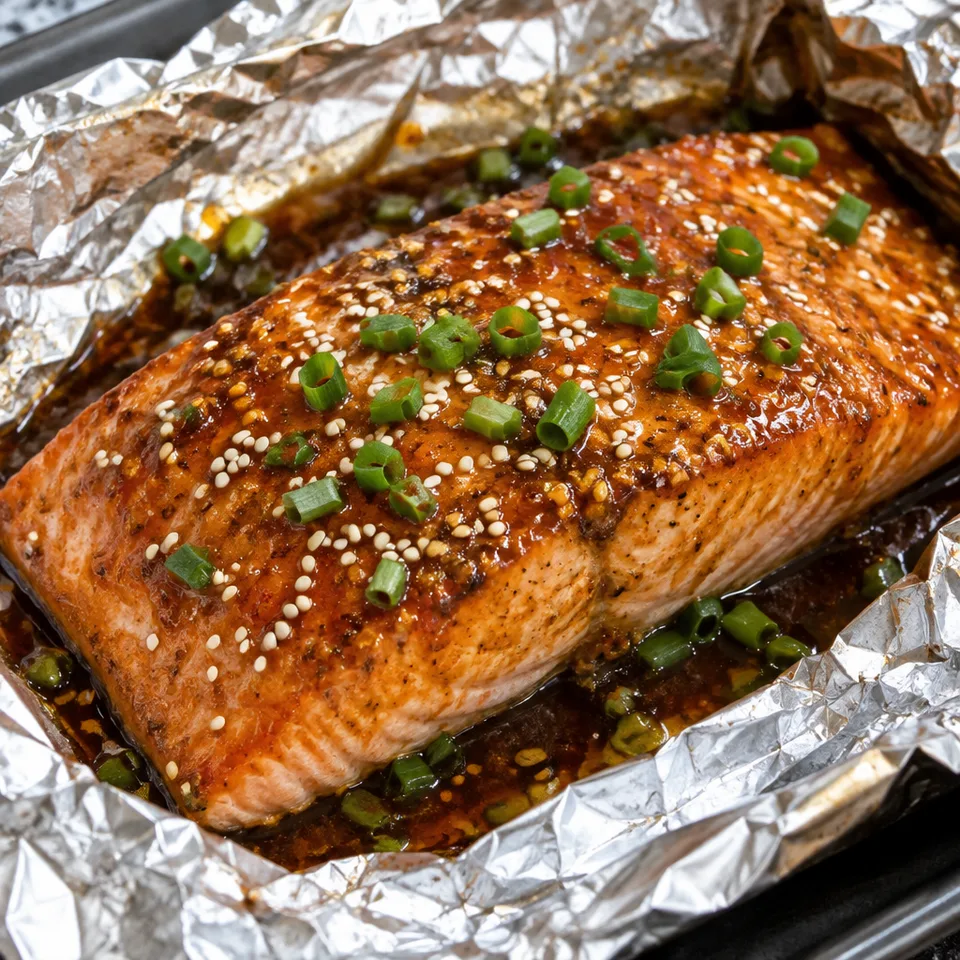
Sweet, tangy salmon makes an appealing centerpiece when you want dinner to feel generous. Ginger and garlic come through the glossy sauce, with green onion scattered over the fish. Open the packet at the end and enjoy the warm, savory smell before serving a piece.
- Prep
- 5 min
- Cook
- 25 min
- Total
- 30 min
- Original yield
- Serves 6
- Ingredients
- 12 listed
Make it part of your week
Recipe categories & planning details
- Meal type
- Dinner · Lunch · Main course
- Primary protein
- Fish
- Cuisine
- American · Asian
- Cooking method
- Baking · Baked & roasted
- Preparation & total time
- Prep: 15 minutes or less · Total: 30 minutes or less
A few quick notes
1. Allow enough foil to wrap
Lay the two sheets on the baking sheet before adding salmon so there is enough foil to enclose it fully.
2. Brush both sides
Pour half the marinade on one side, turn the salmon and add the rest, brushing to cover the fish fully.
3. Seal before baking
Fold the foil edges over the salmon so it is completely wrapped before the baking sheet goes into the oven.
Get to know the ingredients
Skinless salmon fillet
The salmon is skinless here, coated on both sides with the mixed sauce before being wrapped for baking.
Minced fresh ginger
Mince the fresh ginger before whisking it with soy sauce, maple syrup, chili sauce, lime and garlic.
Chopped green onion
Keep the chopped green onions for the end, scattered over the opened salmon with the sesame seeds.
Let’s make it
Choose your servings, then check things off as you go.
Original recipe: Serves 6. Original quantities shown.
Check ingredients as you prepare them. These checks stay on this page.
How to make it
0 of 5 steps completeMake room for Asian Glazed Salmon in Foil
Review ingredients in your pantry before anything is added. Meal plans use your household size; grocery-only additions use the servings selected above.
The last little job
Garnish after opening
Open the foil once the salmon is baked and add sesame seeds and chopped green onion over the fish.
A little more help as you go
Salt can be omitted
You can leave out the added salt because the soy sauce already contributes saltiness.
Parchment is an included option
You can use parchment paper in place of foil if you prefer that wrapping material for the salmon.
A few questions you might have
Does the sauce need cooking before it goes on?
Whisk its ingredients together in the small bowl, then pour and brush it directly over both sides of the salmon.
Can the fish have a broiler finish?
The directions include an optional brief broiler finish at the end if preferred, after the main baking stage.
Is the lime juice fresh?
Freshly squeezed lime juice is listed and gets whisked into the sauce before coating the salmon.
How should I refrigerate leftovers?
Cool the salmon fully, then keep it covered in an airtight container for up to three days.
What if I freeze the leftover salmon?
Freeze it airtight, then thaw overnight in the refrigerator before reheating in the oven.
Any more cooking tips?
Baking salmon in foil allows for easy cleanup and you always end up with a juicy fish because this technique traps the moisture inside the foil and prevents the salmon from drying out. If you’d rather not use foil, parchment paper will yield the same results. Feel free to omit adding salt to this recipe to reduce sodium. The soy sauce will have plenty of salt. Nutritional information based on 1.5 lb salmon fillet. Salmon will keep in the fridge covered in an airtight container for up to 3 days, just be sure it has fully cooled before popping in the fridge. You can also freeze this recipe! Pop in an airtight container and store frozen for 4 – 6 months, just allow to thaw in the fridge overnight and heat back up to temperature in the oven when ready to feast.
Storage & reheating safety
For cooked, perishable leftovers, refrigerate within 2 hours (1 hour above 90°F), using shallow containers for prompt cooling. Keep the refrigerator at 40°F or below, use refrigerated leftovers within 3–4 days, and reheat hot leftovers to 165°F, checked with a food thermometer. Follow any shorter package limit.
These are general safety limits, not a tested storage or freezing recommendation for this particular dish. USDA leftovers guidance · Safe cooking temperatures
Recipe source: jocooks.com. Ingredient names and quantities may be adapted for the pantry.
Preparation notes follow the recipe shown here.