Kitchen notes · a little help before you start
Creamy Dijon Chicken Thighs with Bacon and Spinach
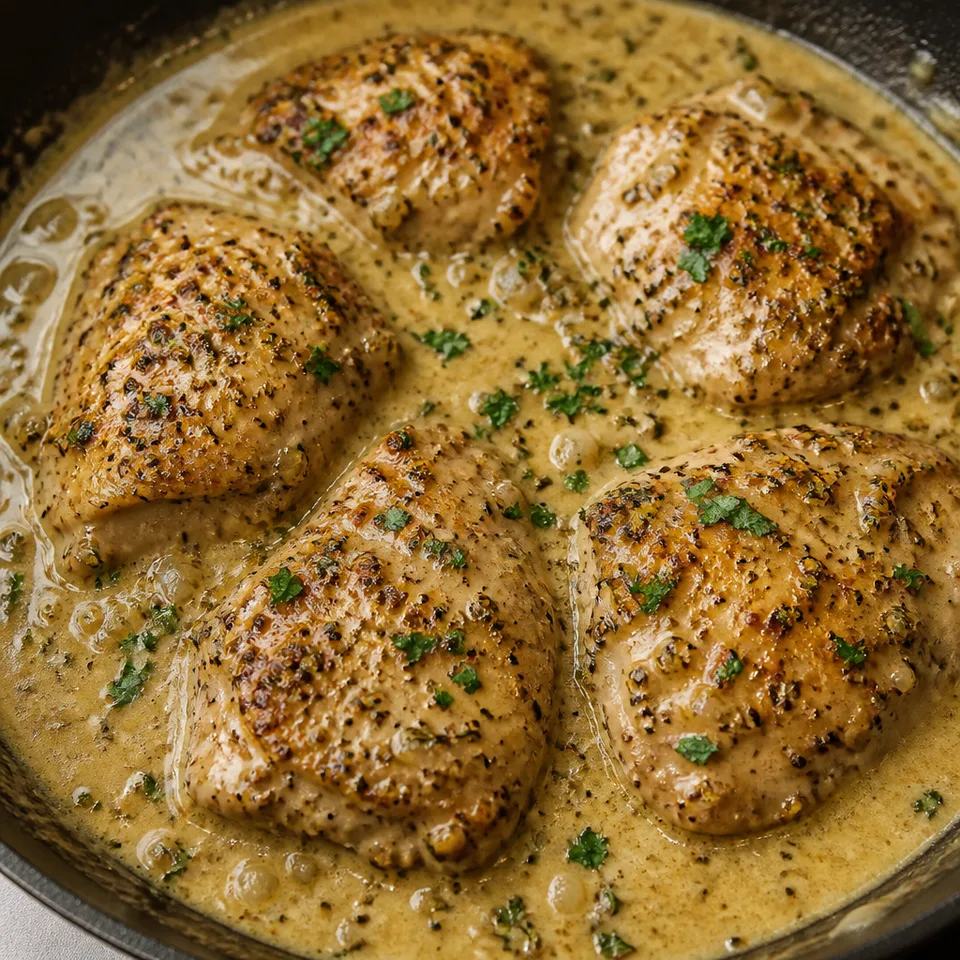
Dijon gives this creamy chicken sauce a welcome sharpness, with crisp bacon bringing a savory bite on top. Spinach curls around the tender thighs beneath the sauce. It's a plate to enjoy slowly, especially when you catch a little bacon with the chicken.
- Prep
- 10 min
- Cook
- 20 min
- Total
- 30 min
- Original yield
- Serves 6
- Ingredients
- 17 listed
Make it part of your week
Recipe categories & planning details
- Meal type
- Dinner
- Primary protein
- Chicken · Pork
- Cuisine
- American
- Preparation & total time
- Prep: 15 minutes or less · Total: 30 minutes or less
A few quick notes
1. Keep the pan bits
After the chicken and bacon cook, the browned bits in the skillet are part of the sauce. Scrape them up when the wine goes in so that flavour moves into the creamy Dijon base.
2. Let the wine reduce
Give the wine its simmer before adding the cream. It should reduce by half, which concentrates the pan juices and keeps the sauce from tasting thin.
3. Gentle heat for the cream
Once the half and half and Dijon are in, lower the heat and keep it at a gentle simmer. The sauce only needs a short cook to thicken before the cheese goes in.
Get to know the ingredients
Chicken thighs
Boneless, skinless thighs cook through in the skillet and stay tender under the sauce. They are recommended for the best flavor and results.
Bacon fat
Don't wash the pan after frying the bacon. Drain off some fat, but leave about 2 tablespoons behind for the onion, garlic and herbs.
Dijon mustard
Dijon goes into the cream, not onto the chicken. Stir it through before the sauce thickens so the sharp mustard flavour spreads evenly.
Let’s make it
Choose your servings, then check things off as you go.
Original recipe: Serves 6. Original quantities shown.
Check ingredients as you prepare them. These checks stay on this page.
How to make it
0 of 8 steps completeMake room for Creamy Dijon Chicken Thighs with Bacon and Spinach
Review ingredients in your pantry before anything is added. Meal plans use your household size; grocery-only additions use the servings selected above.
The last little job
The last little job
Wilt the spinach into the sauce, then return the chicken to the skillet and finish with the crispy bacon. Serve it straight away while the sauce is creamy and the bacon still has its crunch.
A little more help as you go
Wine or stock both work
The recipe uses dry white wine to deglaze, with low-sodium chicken stock or broth listed as the substitute. Either way, scrape the bottom of the pan well before reducing the liquid.
Season after the Parmesan
Parmesan and bouillon powder both add savoury saltiness, so the final seasoning happens after the cheese melts into the sauce. Taste, then adjust with bouillon powder and pepper.
A few questions you might have
Can I use chicken breasts instead of thighs?
Yes, breasts can be used if you wish. Skinless, boneless thighs are recommended for the best flavor and results.
Do I need to cook the chicken all the way through before making the sauce?
Yes. The chicken is cooked until crispy and cooked through, then set aside while the sauce is made. It goes back into the skillet at the end.
When does the spinach go in?
Add the baby spinach after the sauce has been thickened, seasoned, and finished with Parmesan. It only needs to wilt before the chicken returns to the pan.
What should I do if I'm not using wine?
Use the listed low-sodium chicken stock or broth substitute, then deglaze the same way: add it to the pan and scrape up the browned bits before reducing.
Is the bacon mixed into the sauce?
No. Fry it until crispy, set it aside, then sprinkle it over the chicken at the end. That keeps the finish crisp instead of softening it in the sauce.
Any more cooking tips?
Tip: Use skinless, boneless chicken thighs for the best flavour and results. You can also use breasts if you wish.
Storage & reheating safety
For cooked, perishable leftovers, refrigerate within 2 hours (1 hour above 90°F), using shallow containers for prompt cooling. Keep the refrigerator at 40°F or below, use refrigerated leftovers within 3–4 days, and reheat hot leftovers to 165°F, checked with a food thermometer. Follow any shorter package limit.
These are general safety limits, not a tested storage or freezing recommendation for this particular dish. USDA leftovers guidance · Safe cooking temperatures
Recipe source: cafedelites.com. Ingredient names and quantities may be adapted for the pantry.
Preparation notes follow the recipe shown here.