Kitchen notes · a little help before you start
Smoked Rump Roast
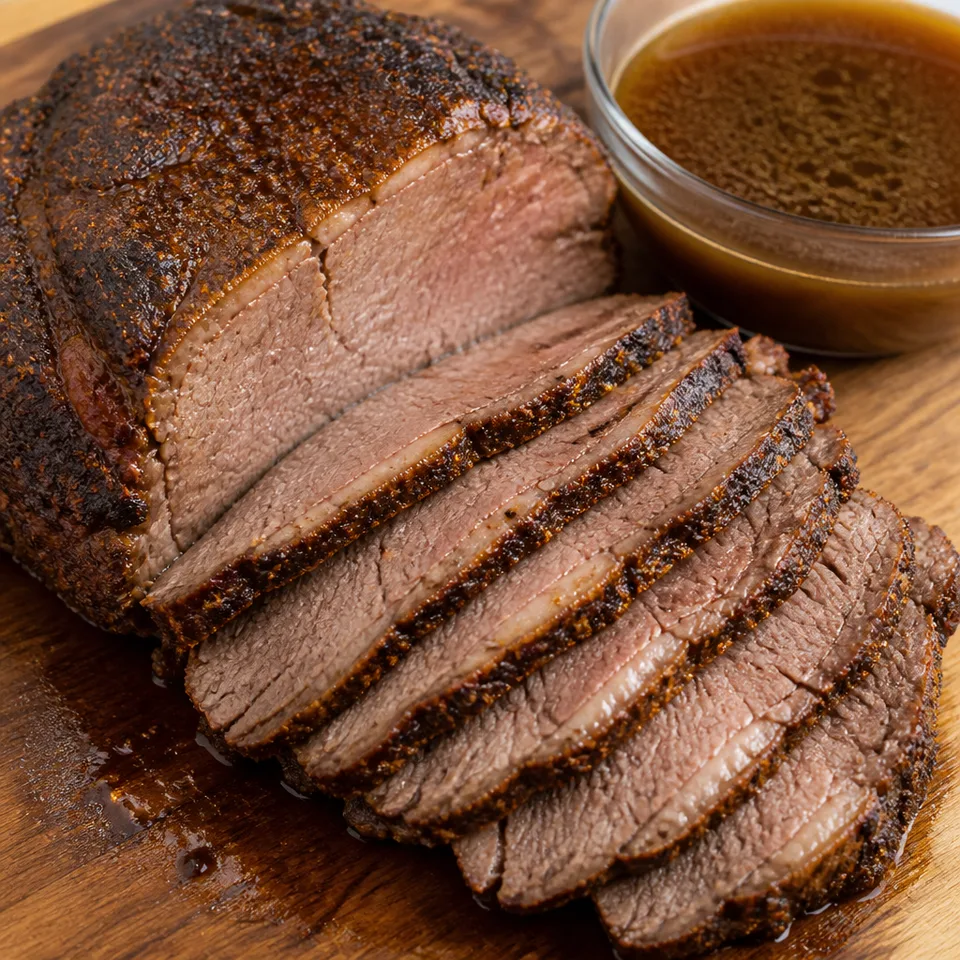
Smoked Rump Roast is made with rump roast, beef broth, and pale lager beer.
- Prep
- 15 min
- Cook
- 240 min
- Total
- 255 min
- Original yield
- Serves 9
- Ingredients
- 14 listed
Make it part of your week
Recipe categories & planning details
- Meal type
- Main course
- Cuisine
- American
- Preparation & total time
- Prep: 15 minutes or less · Total: over 60 minutes
A few quick notes
1. Allow for rising
Include the rising stage and follow the dough checks in the method.
2. Include the rest
Leave time for the resting step before continuing.
3. Prepare the first additions
Set out the ingredients needed for the first cooking step.
Get to know the ingredients
rump roast
In the method: Pat the roast dry with a paper towel.
beef broth
In the method: Pour beef broth and beer around the roast into the pan.
pale lager beer (a pilsner works well)
In the method: Pour beef broth and beer around the roast into the pan.
Let’s make it
Choose your servings, then check things off as you go.
Original recipe: Serves 9. Original quantities shown.
Check ingredients as you prepare them. These checks stay on this page.
Ingredient note
Source: 3 pound rump roastIngredient note
Source: 2 cups beef brothIngredient note
Source: 1 cup pale lager beer (a pilsner works well)Ingredient note
Source: 1/3 cup brown mustardIngredient note
Source: 1 teaspoon garlic pasteIngredient note
Source: 2 teaspoons horseradishIngredient note
Source: 2 teaspoons yellow mustardIngredient note
Source: 2 teaspoons worcestershireIngredient note
Source: 2 teaspoons saltIngredient note
Source: 1 teaspoon pepperIngredient note
Source: 2 teaspoons paprikaIngredient note
Source: 2 teaspoons cuminIngredient note
Source: 2 teaspoons chili powderIngredient note
Source: 2 teaspoons onion powder
How to make it
0 of 12 steps completeMake room for Smoked Rump Roast
Review ingredients in your pantry before anything is added. Meal plans use your household size; grocery-only additions use the servings selected above.
The last little job
Finish as directed
Slice and enjoy.
A little more help as you go
Match the cuts in the method
Use the chopping, slicing or cutting preparation specified.
Include the drying step
Pat the ingredient dry where the method directs.
A few questions you might have
What should I prepare first?
Set out the saucepan. Start with this step: Heat smoker to 225F degrees.
Which preparation step should I plan for?
Include the rising stage and follow the dough checks in the method.
What check should I look for as it cooks?
PLEASE NOTE: It may take longer or go quicker in your smoker so please only go by the internal temperature of the meat not by actual time (it's just a general guideline).
Is there another preparation step to plan for?
Use the chopping, slicing or cutting preparation specified.
Additional recipe notes
I used a 3 pound roast. Make sure not to forget to pat your roast dry. Use your judgement on the mustard. You’ll need enough to cover the roast. If you don’t like brown mustard, just use all yellow mustard and use as much or as little as you prefer. It’s very important to let your roast rest after smoking. You don’t want all the juices pouring out from cutting into it too soon. Letting it rests allows those juices to really reabsorb back into the meat and they won’t all come using out when you cut into it. You can use a pale ale or a pilsner beer for this. If you don’t want to use beer, you could use additional beef broth. When smoking meats you MUST use a meat probe (or meat thermometer). It is the only way to tell when the meat is at your desired doneness and not overcooked or undercooked. I cannot stress this enough! TEMPERATURES FOR MEAT: Rare: 125F degrees, medium-rare: 130F degrees, medium: 135F degrees, medium-well: 140F degrees and well-done: 160F. I pull it off when the internal temperature reaches 135F degrees to get a medium doneness. Remember the temperature will continue to slightly rise once it is removed.
Storage & reheating safety
For cooked, perishable leftovers, refrigerate within 2 hours (1 hour above 90°F), using shallow containers for prompt cooling. Keep the refrigerator at 40°F or below, use refrigerated leftovers within 3–4 days, and reheat hot leftovers to 165°F, checked with a food thermometer. Follow any shorter package limit.
These are general safety limits, not a tested storage or freezing recommendation for this particular dish. USDA leftovers guidance · Safe cooking temperatures
Recipe source: thecountrycook.net. Ingredient names and quantities may be adapted for the pantry.
Preparation notes follow the recipe shown here.