Kitchen notes · a little help before you start
Cantonese Lotus Root Stir Fry (荷塘小炒, He Tang Xiao Chao)
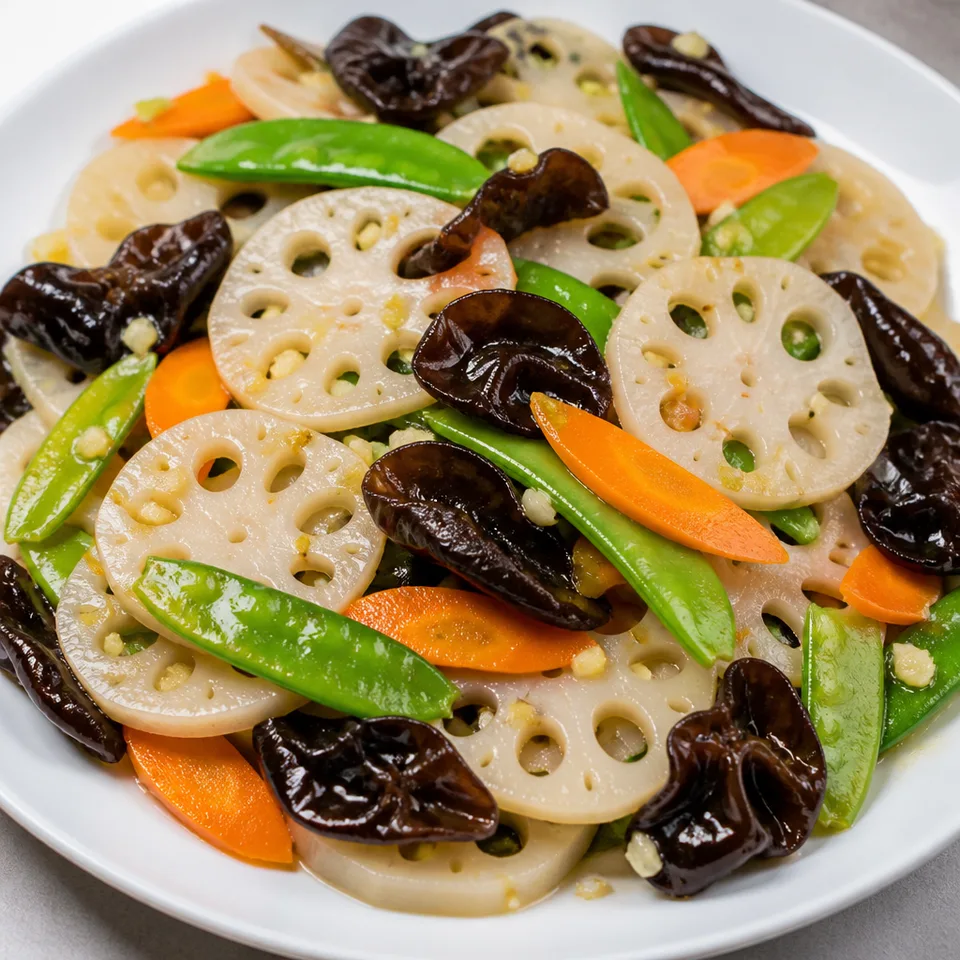
Cantonese Lotus Root Stir Fry (荷塘小炒, He Tang Xiao Chao) is made with lotus root, dried wood ear mushrooms, and mushroom powder.
- Prep
- 18 min
- Cook
- 8 min
- Total
- 26 min
- Original yield
- Serves 4
- Ingredients
- 13 listed
Make it part of your week
Recipe categories & planning details
- Meal type
- Sides
- Cuisine
- Chinese · Asian
- Preparation & total time
- Prep: 16–30 minutes · Total: 30 minutes or less
A few quick notes
1. Prepare the thickener
Mix and add the thickener at the steps specified.
2. Check when to cover
Follow the covered and uncovered stages in their stated order.
3. Prepare the first additions
Set out the ingredients needed for the first cooking step.
Get to know the ingredients
dried wood ear mushrooms
In the method: Soak the mushrooms: Add the dried wood ear mushrooms into a small bowl and add 1 cup hot water to cover.
mushroom powder (or chicken bouillon powder)
In the method: Soak the mushrooms: Add the dried wood ear mushrooms into a small bowl and add 1 cup hot water to cover.
cornstarch
In the method: Mix the sauce: Combine the mushroom powder, cornstarch and water in a small bowl.
Let’s make it
Choose your servings, then check things off as you go.
Original recipe: Serves 4. Original quantities shown.
Check ingredients as you prepare them. These checks stay on this page.
Ingredient note
Source: 2 tablespoons dried wood ear mushroomsIngredient note
Source: 1 teaspoon mushroom powder (or chicken bouillon powder)Ingredient note
Source: 1 teaspoon cornstarchIngredient note
Source: 1/4 cup waterIngredient note
Source: 1 teaspoon light soy sauce (or soy sauce)Ingredient note
Source: 2 cups lotus root (, sliced *or 1 small fresh lotus root; *Footnote 1)Ingredient note
Source: 1 small carrot (, sliced)Ingredient note
Source: 1/2 cup snow peasIngredient note
Source: 2 tablespoons peanut oil (or vegetable oil)Ingredient note
Source: 3 cloves garlic (, minced)Ingredient note
Source: 1 tablespoon minced gingerIngredient note
Source: 1/4 teaspoon saltIngredient note
Source: 1/2 teaspoon toasted sesame oil
How to make it
0 of 7 steps completeMake room for Cantonese Lotus Root Stir Fry (荷塘小炒, He Tang Xiao Chao)
Review ingredients in your pantry before anything is added. Meal plans use your household size; grocery-only additions use the servings selected above.
The last little job
Finish as directed
Serve hot as a side dish.
A little more help as you go
Match the cuts in the method
Use the chopping, slicing or cutting preparation specified.
Prepare the finishing addition
Have the final topping or garnish ready for its specified step.
Prepare the pan
Follow the pan-heating step before adding its ingredients.
A few questions you might have
What should I prepare first?
Set out the skillet. Start with this step: Soak the mushrooms: Add the dried wood ear mushrooms into a small bowl and add 1 cup hot water to cover.
Which preparation step should I plan for?
Mix and add the thickener at the steps specified.
What check should I look for as it cooks?
Immediately stir to mix well, until the sauce thickens.
Is there another preparation step to plan for?
Use the chopping, slicing or cutting preparation specified.
Additional recipe notes
If using fresh lotus root, wash it thoroughly, peel off the skin with a peeler, then thinly slice it. When cooking with fresh lotus root, you also need to blanch / steam it for a longer time. So in step 3, add the lotus root first and steam it for 2 minutes before adding the carrot.
Storage & reheating safety
For cooked, perishable leftovers, refrigerate within 2 hours (1 hour above 90°F), using shallow containers for prompt cooling. Keep the refrigerator at 40°F or below, use refrigerated leftovers within 3–4 days, and reheat hot leftovers to 165°F, checked with a food thermometer. Follow any shorter package limit.
These are general safety limits, not a tested storage or freezing recommendation for this particular dish. USDA leftovers guidance · Safe cooking temperatures
Recipe source: omnivorescookbook.com. Ingredient names and quantities may be adapted for the pantry.
Preparation notes follow the recipe shown here.