Kitchen notes · a little help before you start
Spaghetti Aglio e Olio Recipe
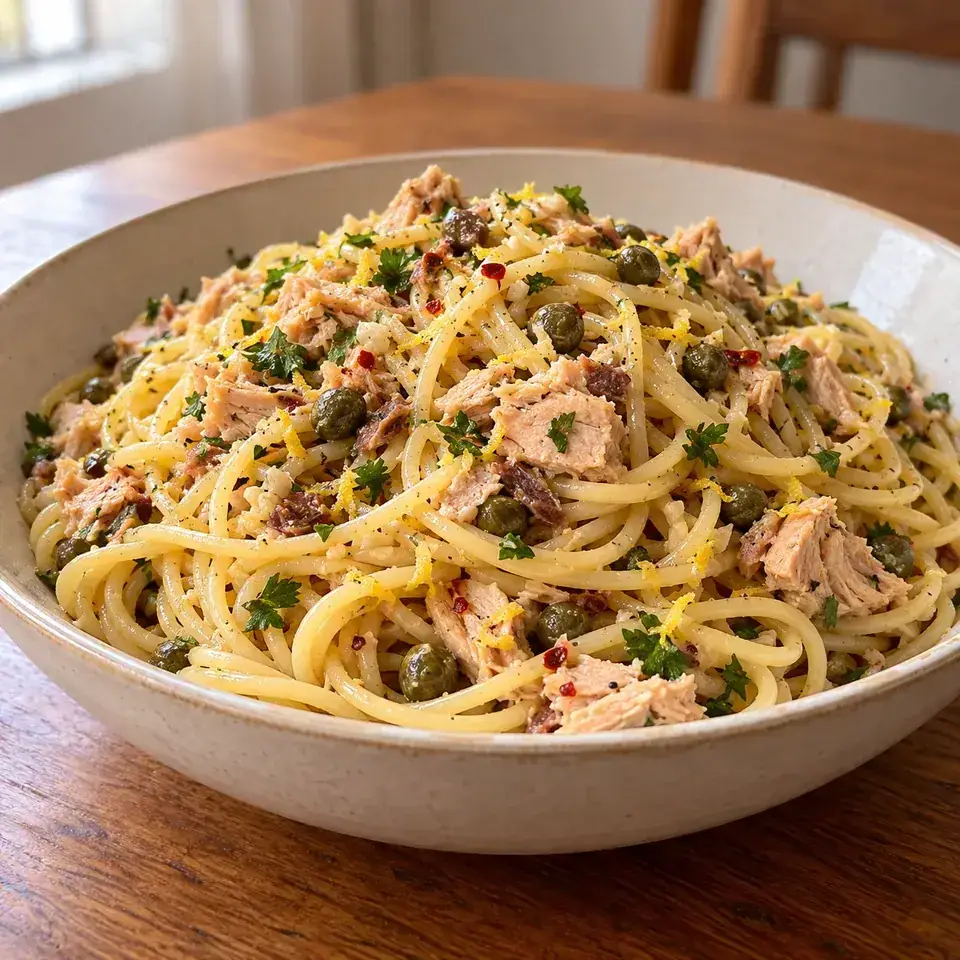
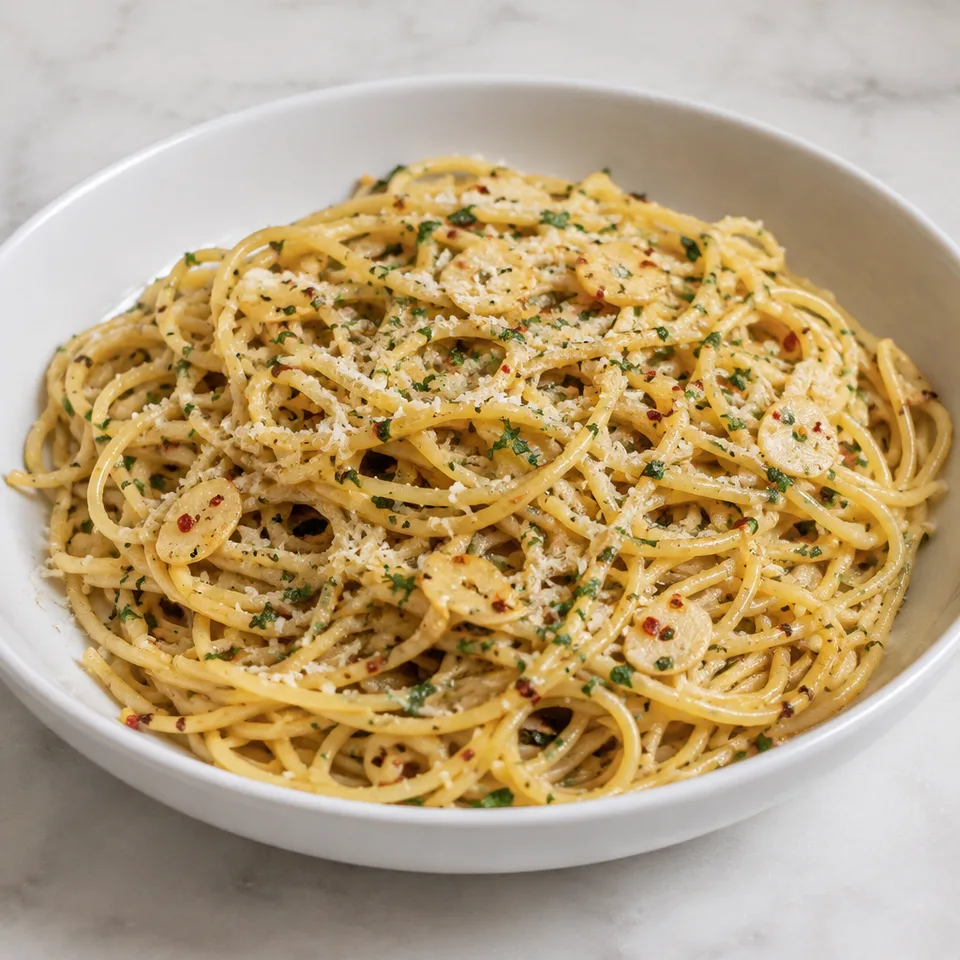
Garlicky oil clinging to warm spaghetti makes a simple bowl feel generous. Thin garlic slices give the sauce its fragrant flavor, with lemon and parsley freshening the finish. Toss the strands thoroughly and enjoy them while the Parmesan is melting lightly through the oil.
- Prep
- 5 min
- Cook
- 15 min
- Total
- 20 min
- Original yield
- Serves 8
- Ingredients
- 10 listed
Make it part of your week
Recipe categories & planning details
- Meal type
- Main course
- Cuisine
- Italian
- Preparation & total time
- Prep: 15 minutes or less · Total: 30 minutes or less
- Dish type
- Pasta
A few quick notes
1. Reserve a little pasta water
Save a quarter-cup before draining the al dente spaghetti so it is ready for loosening the sauce during the final toss.
2. Cook garlic gently
Use medium-low heat to sauté sliced garlic with oil and peppers until fragrant, keeping the garlic from burning during its brief cooking stage.
3. Coat before the cheese
Toss spaghetti thoroughly in the garlic oil first, then add Parmesan, parsley, lemon and some reserved water to bring the coating together.
Get to know the ingredients
Thinly sliced garlic
Peel the garlic and slice it thinly so it flavors the oil during the short, gentle sauté.
Divided salt
Half the salt goes into the pasta water. The remaining portion seasons the garlic and pepper mixture in the olive oil.
Grated Parmesan
Add Parmesan after coating the spaghetti in garlic oil, tossing so the cheese melts through rather than sitting only on the surface.
Let’s make it
Choose your servings, then check things off as you go.
Original recipe: Serves 8. Original quantities shown.
Check ingredients as you prepare them. These checks stay on this page.
How to make it
0 of 5 steps completeMake room for Spaghetti Aglio e Olio Recipe
Review ingredients in your pantry before anything is added. Meal plans use your household size; grocery-only additions use the servings selected above.
The last little job
Loosen to your taste
Add more reserved water only if needed for a looser coating, then serve the tossed lemon-and-parsley spaghetti while warm.
A little more help as you go
Use cracked red pepper
The cracked red pepper cooks with garlic and black pepper in the oil, giving the finished spaghetti its warm background heat.
Start with less reserved water
Use two tablespoons of reserved water with the cheese and lemon first, holding the rest for any final consistency adjustment.
A few questions you might have
Does the lemon simmer in the oil?
It goes in after the pasta has been coated in garlic oil, together with Parmesan, parsley and the first pasta-water addition.
Do I brown the garlic deeply?
Sauté over medium-low heat for about two minutes, until fragrant. Watch the garlic so it doesn't burn.
Does the parsley cook from the start?
Keep minced parsley for the final toss with cheese, lemon and pasta water after the spaghetti has met the garlic oil.
Is all the saved pasta water required?
Begin with two tablespoons, then add a little more only if you want the pasta coating to be looser.
Do I cook the spaghetti in the garlic pan?
Boil it separately until al dente, reserve water and drain, then transfer the cooked spaghetti to the saucepan with garlic oil.
Any more cooking tips?
I know Parmesan Cheese isn’t a traditional ingredient, but the salty, umami flavor of parmesan complements the garlic and olive oil beautifully. I only add enough to lightly coat the pasta, not so much that it becomes a cheesy spaghetti dish like Cacio e Pepe. I use a whole head of garlic, about 20 cloves, to make 8 servings of spaghetti aglio e olio. It may seem like a lot, but trust me, it’s what gives the dish its bold and irresistible flavor! The trick is to slice the garlic thinly so it infuses into the oil and doesn’t burn. Some classic recipes add fresh chili peppers to create ‘spaghetti aglio olio e peperoncino’ (spaghetti with garlic, oil, and chili pepper). I prefer to use cracked red pepper flakes as they’re cheaper, and I can better control the level of heat.
Storage & reheating safety
For cooked, perishable leftovers, refrigerate within 2 hours (1 hour above 90°F), using shallow containers for prompt cooling. Keep the refrigerator at 40°F or below, use refrigerated leftovers within 3–4 days, and reheat hot leftovers to 165°F, checked with a food thermometer. Follow any shorter package limit.
These are general safety limits, not a tested storage or freezing recommendation for this particular dish. USDA leftovers guidance · Safe cooking temperatures
Recipe source: budgetbytes.com. Ingredient names and quantities may be adapted for the pantry.
Preparation notes follow the recipe shown here.